
Why Do Writers Write? The Real Reasons
After ghostwriting more than 54 books and publishing over 113 of my own, I have heard every version of why people write. The reasons sort into a handful of drives, and knowing your own is the first real step.
 For Executives & Professionals
After ghostwriting more than 54 books and publishing over 113 of my own, I have heard every version of why people write. The reasons sort into a handful of drives, and knowing your own is the first real step.
 ADHD
I wrote my grandfather's 52,000-word war memoir in two weeks, 187 pages spanning the Yangtze River Patrol to three years in Japanese prison camps. People assume discipline or a system; the truth is AuDHD. When my brain decides something matters,…
 Dialogue
Foreshadowing is the quiet art of planting a hint and letting it haunt the reader, a strange detail on page three, a small object that becomes everything. It keeps pages turning because people need to know whether it pays off.…
 Emotion in Writing
Imagery is what separates reporting that something happened from making a reader feel present for it. It is not ornament, it is the engine that turns flat sentences into scenes you can see, hear, and flinch at. And it runs…
 AI
Copilot and ChatGPT are both writing assistants, but they were built on opposite philosophies, one finishes tasks inside the tools you already use, the other generates open-ended ideas from scratch. Which you want depends on what you are doing right…
 Book Reviews
Discover over 36 ways to show author appreciation, from engaging on social media to creative testimonials. Support the storytellers who enrich our lives.
 Vocabulary & Word Choice
Writers live and die by word choice, and a larger vocabulary means more options, not bigger words. Here are twelve ways to expand yours, plus how vocabulary works for ghostwriters, across professions and regions, and in invented fictional languages.
 Habits
Bad habits start small and become automatic, but they are learned behaviors, which means they can be unlearned. Here are 32 places to start, plus the cue-behavior-reward loop that makes replacement actually stick.
 Consciousness
Genre is what you write; style is how. The same scene rendered in clipped present-tense fragments hits completely differently than one told in long, sensory, flowing prose, and that difference is a lever you can pull on purpose. Here is…
 Character Development
You know character development works when the people in a book start to feel like people you know. It is the heart of narrative writing, and without it no amount of plot or world-building keeps a reader. Here are eight…
 Character Development
A character who cannot see past their own certainty is a gift to a novelist, because that blindness drives conflict and sets up revelation. After a whole series on real echo chambers, here is the craft turn: how to write…
 Vocabulary & Word Choice
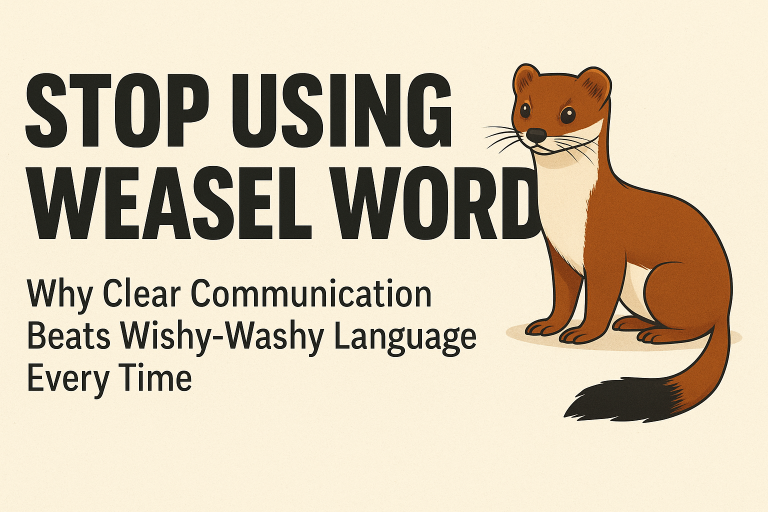
Studies suggest, many believe, it could be argued, weasel words slither through your writing sounding professional while quietly hollowing out everything you say. The name comes from the weasel's trick of draining an egg and leaving the shell intact, which…
Professional ghostwriting for executives, founders, coaches, and authors who want to get the book done right. 113+ books authored. 54+ ghostwritten for clients.
Ready to discuss your book?
BOOK YOUR PRIVATE CONSULTATIONNo pitch. No pressure.
© 2026 Richard Lowe. The Writing King. All rights reserved.