
Atul Gawande was born in Brooklyn in 1965 to Indian immigrant parents, both physicians, and raised in Athens, Ohio. He studied at Stanford, took a degree in philosophy, politics, and economics at Oxford as a Rhodes Scholar, and then medicine and public health at Harvard.
He practiced as a general and endocrine surgeon at Brigham and Women's Hospital and taught at Harvard Medical School and the Harvard T. H. Chan School of Public Health, and he has written for the New Yorker since 1998. The combination of a working surgical practice and a staff writing position is unusual and is the source of the authority in his books.
Complications, published in 2002, was a finalist for the National Book Award. Better followed in 2007, and The Checklist Manifesto in 2009.
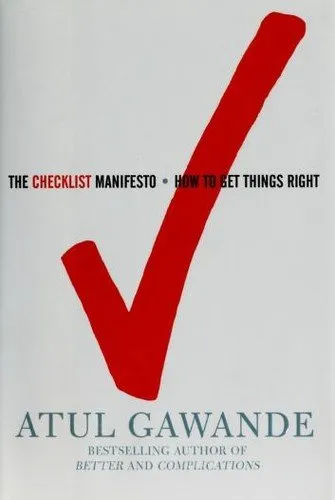
That book argues that medicine has become too complex for any individual to hold, that the constraint is no longer knowledge but the consistent application of what is already known, and that a simple written checklist prevents the failures that training does not. He led the World Health Organization program that trialled a nineteen-item surgical safety checklist across hospitals in eight cities, from Toronto to Ifakara in Tanzania, and every one showed substantial reductions in complications and in deaths.
The more interesting half of the book is the resistance. Surgeons found the checklist insulting, and Gawande includes his own initial reluctance, which is what gives him standing to describe everybody else's.
Being Mortal, published in 2014, addresses end-of-life care and is his most widely read work. He led the healthcare venture Haven, chaired Ariadne Labs, and served as assistant administrator for global health at USAID.
Atul Gawande
Professional ghostwriting for executives, founders, coaches, and authors who want to get the book done right. 113+ books authored. 54+ ghostwritten for clients.
Ready to discuss your book?
BOOK YOUR PRIVATE CONSULTATIONNo pitch. No pressure.
© 2026 Richard Lowe. The Writing King. All rights reserved.