
I joined the Science Fiction Book Club about thirty times.
Not thirty years of membership. Thirty separate times. I’d sign up, take the free or nearly free introductory books, buy the three or four books the membership required, quit, and then sign up again a few months later for another stack of introductory books. I did the same thing about a dozen times with the Military Book Club and about half a dozen with the Book-of-the-Month Club.
The clubs counted on people staying in, forgetting to mail back the little “no thanks” card and paying for books they never chose. Members like me cost them money. They wrote the rules, and I followed them to the letter.
And the Science Fiction Book Club is gone now. It stopped taking orders on February 1, 2025, after about seventy years. By the end it had turned into crap, and I’m still sad to see it go. When it was good, it was phenomenal.
What was the Science Fiction Book Club?
It was a mail-order club that Doubleday launched in 1953, and for a science fiction reader it was the best deal in America.
Every month a flyer showed up with the main selection and a list of alternates. If you didn’t want the main pick, you mailed back the card. If you forgot, the book came anyway and you paid for it. In exchange, you got hardcover science fiction and fantasy at prices well under what the bookstores charged, delivered to your door, picked by people who knew the field.
The club didn’t just resell other publishers’ books. It printed its own editions. You could tell a club copy the second you picked it up: cheaper paper, a smaller trim size, a distinctive binding, and no price on the dust jacket flap. Flip to one of the last pages and you’ll find a little code printed down near the spine, in the gutter. That code is still the quickest way to spot one.
What gives away a book club edition, from the jacket flap to the gutter code.
Why are some Science Fiction Book Club editions collectible?
Because for a lot of books, the club edition was the only hardcover ever made.
That sounds odd now. It wasn’t then.
Science fiction spent decades as a paperback genre. Plenty of novels came out as mass-market paperbacks and nothing else, sold off spinner racks in drugstores and bus stations, read until the spines cracked and the pages browned. Publishers didn’t think the readers would pay hardcover prices, so they didn’t print hardcovers. The club would print its own hardcover anyway, so the only way to own those books in hardcover was a club copy. Collectors know that, and some of those editions sell for real money now.
The club also made omnibuses, several books bound into one volume, and those were wonderful. I still own my Chronicles of Amber, the Foundation trilogy and three volumes of Dune. Everything else from those years is gone, but those survived every move.
For a lot of science fiction, the club edition was the only hardcover anybody ever printed.
The picks were the other reason the club mattered. Ellen Asher ran it as editor-in-chief for 34 years, from 1973 to 2007, and she kept the picks strong. You trusted the flyer. If the club was offering it, it was worth reading. She also built the club’s own anthologies, collections like The Dragon Quintet and Masterpieces of Terror and the Supernatural that you couldn’t buy anywhere else, and in 2009 the field gave her the World Fantasy Award for Life Achievement.
How did book club membership work?
On something called the negative option.
You joined by taking an introductory offer, a handful of books for a penny or a dollar apiece. In return you agreed to buy a set number of books at regular club prices over the next year or two. Every month the club announced its selection, and if you didn’t send back the card saying no, it shipped the book and billed you.
The introductory books lost money. The clubs made it back on members who stayed for years, bought far more than the minimum and let a lot of main selections arrive because they never got around to mailing the card. The Federal Trade Commission thought the model was enough of a trap that it wrote a Negative Option Rule in 1973, requiring clubs to spell out the terms and give members a fair chance to decline each shipment.
Who reads the fine print on a book club ad? I did, and I worked it from the other side. Join for the introductory books. Buy the minimum, three or four books. Once the commitment was done, quit. Then join again as a brand-new member and start over.
The join, buy the minimum, quit and rejoin routine, and how many times I ran it.
Thirty times with the Science Fiction Book Club. About a dozen with the Military Book Club. That one was good, too. About half a dozen with Book-of-the-Month.
I joined the Science Fiction Book Club about 30 times. Join, take the cheap books, buy the minimum, quit, rejoin. The clubs counted on people forgetting to mail the card back. – Richard LoweShare on X
What were the best book club sign-up offers?
The Book-of-the-Month Club had some of the most outrageous ones.
Book-of-the-Month started it all. Harry Scherman founded it in 1926 with a simple idea: a panel of judges would pick one good new book every month and mail it to members, who could read what everybody was talking about without driving to a bookstore. It worked. Within twenty years the club went from about 4,000 subscribers to more than 550,000, and every genre club that came later, science fiction included, copied the model.
Its introductory offers were legendary. I took two of the big ones over the years. One was the complete set of Edward Gibbon’s Decline and Fall of the Roman Empire, volume after volume of it. The other was the Compact Oxford English Dictionary, the whole giant dictionary shrunk down so small it came with a magnifying glass in a little drawer so you could read it.
Both were magnificent, and both were enormous. I got rid of them eventually because they were too big to keep moving from place to place. You don’t find many companies anymore willing to hand you something like that for joining.
That’s the same thing I wrote about in Free With a Fill-Up, the gas station giveaways I grew up with. A club that gave away a dictionary with a magnifying glass to sign you up was a company that wanted you around for years. Nobody makes that bet anymore.
Why did the SFBC shut down after 70 years?
It got passed around, and it got worse.
Bertelsmann bought Doubleday, clubs and all, in 1986. Over the next two decades the clubs moved through a series of corporate parents. In 2007 a restructuring at the parent company pushed Ellen Asher into early retirement after 34 years. In 2008 the clubs went to a company owned by a private investment firm, and in 2013 they were sold again.
Somewhere along that road the club lost what made it special. It turned into crap. The flyer that used to be worth reading cover to cover became one more catalog.
The end came as a notice on a website.
In December 2024, the website announced it would stop processing orders. After February 1, 2025, members couldn’t place orders or redeem credits. Seventy years, gone with a notice on a web page.
I was sad to see it go. It deserved a better ending than that.
The rise and fall of the mail-order book clubs, from Book-of-the-Month in 1926 to the Science Fiction Book Club's end in 2025.
Book-of-the-Month survived by turning into something else, a subscription box with a few picks a month. Many of the old genre clubs didn’t survive at all.
I traced the same pattern through a dozen industries in The Enshittification of America. Something good gets bought, then squeezed, then sold, then squeezed again, until there’s nothing left worth keeping.
How do you find old book club editions today?
At flea markets, thrift stores and estate sales, mostly. And cheap.
Years ago I gave my whole bookcase collection to a friend I don’t talk to anymore. Now I’m rebuilding it. Next weekend a friend and I are going to a flea market a few miles from my house, and I’ll be hunting for old Science Fiction Book Club editions and DVDs at a dollar or two each.
The club editions turn up cheap because most sellers don’t know what they have. To them it’s an old hardcover with a slightly worn jacket. Open the front flap. Where the price should be, a club edition usually says “Book Club Edition” instead, or nothing at all. Check the last few pages for the little gutter code near the spine. Look at the size, too, because club books often run a little smaller than the trade editions.
It’s a treasure hunt, and it’s cheap. The DVDs are the other half of the trip. A disc for a dollar or two at a flea market beats anything I’ll find on a store shelf.
Most of them aren’t worth much. A few are worth a lot, especially the books that never got any other hardcover printing. Either way, for a dollar or two you get a good book in hardcover, and you get a piece of a club that taught a lot of us what science fiction could be.
My take
The Science Fiction Book Club was phenomenal when it was good. It printed hardcovers nobody else would, put great books in one omnibus, and had an editor whose picks you could trust. Then it got passed from owner to owner, turned into crap and died. I joined it thirty times, and I’m sad it’s gone. Now I’ll be at the flea market looking for the gutter code.
Thirty memberships and a flea market
The club made its money on people who stayed in and forgot to mail back the card. I joined thirty times and left thirty times. Every one of those stacks of books was worth it.
Next weekend I’ll be digging through boxes at a flea market for the same books I used to get in the mail. If I’m lucky, I’ll find a few with no price on the flap and a little code down in the gutter.
There’s more on the books and bookstores of my area in the Writing in Tampa Bay hub, and if you’ve got a book of your own in you, my writing services are the place to start.
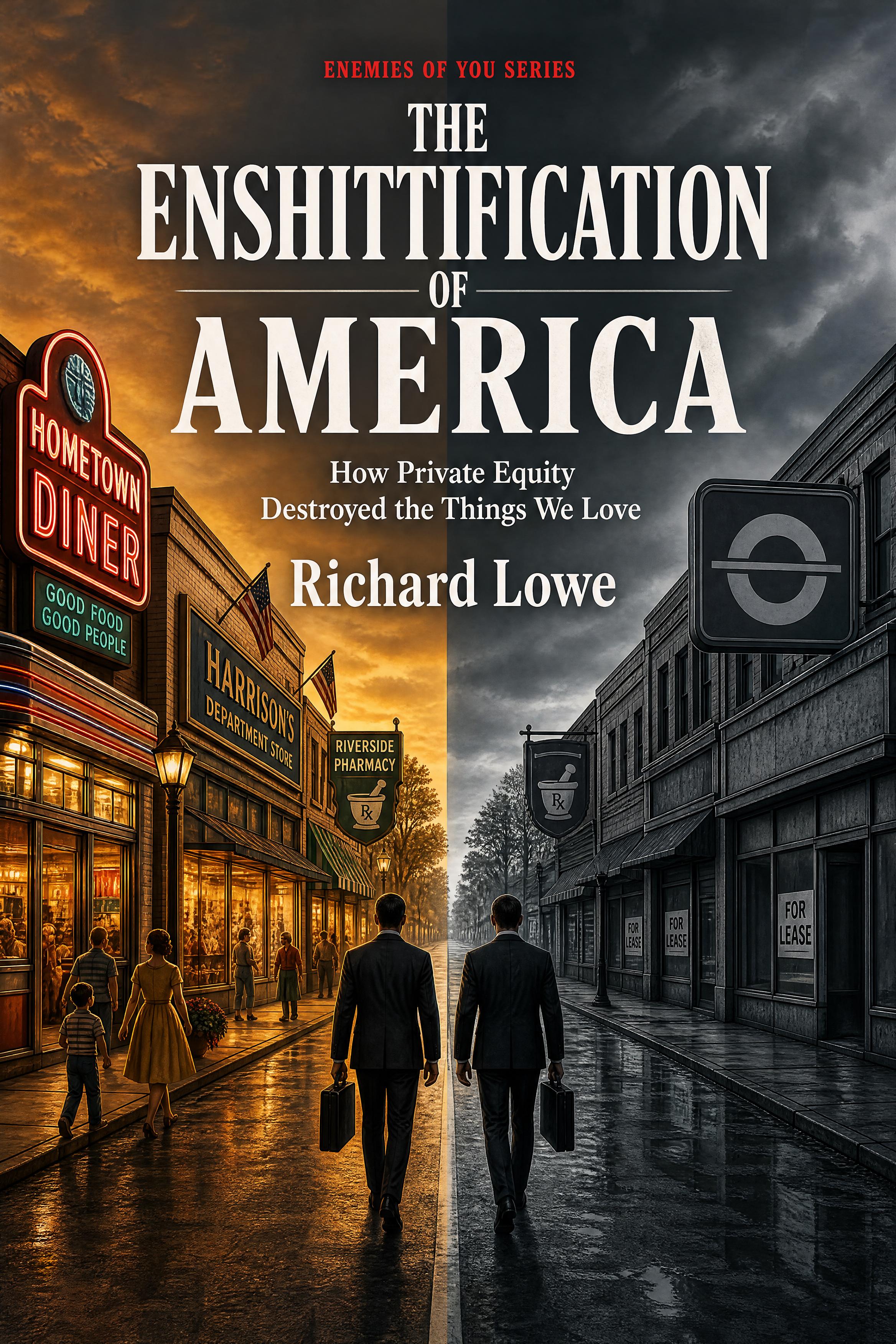
The book club’s slide is one small version of a bigger pattern. My book follows how good businesses get bought, squeezed and taken apart across thirteen industries.
