Emile Soreau drew maps of places that no longer existed, and people kept showing up at his shop asking for directions.
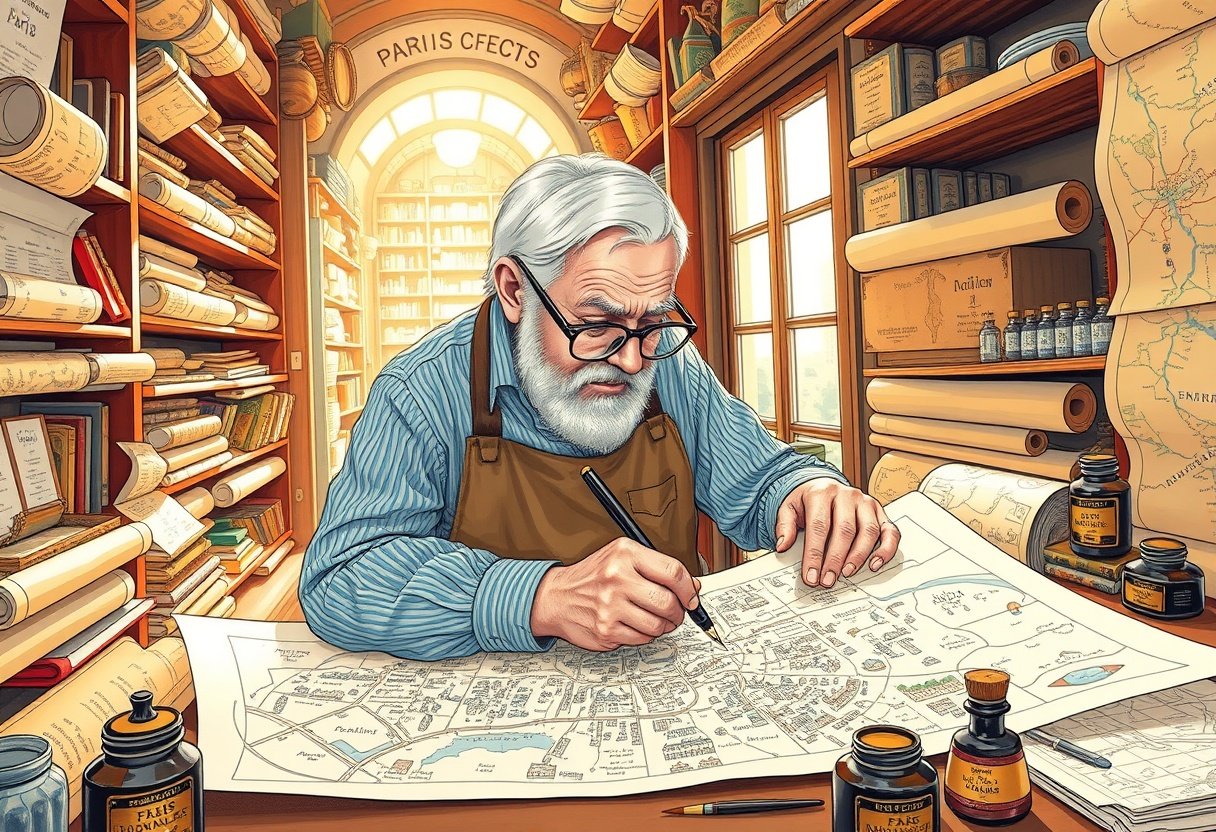
The shop was on Rue des Oubliés in the 11th arrondissement, a narrow storefront between a locksmith and a place that sold nothing but umbrellas. Emile had been there for forty years, or so the locksmith claimed. The umbrella woman said it was longer. Emile himself couldn’t remember exactly and didn’t think it mattered.
The maps were beautiful. Hand-drawn on heavy cotton paper with ink he mixed himself from recipes that predated the printing press. Each one depicted a place that had been erased: neighborhoods demolished for highways, villages flooded by dams, forests cleared for shopping centers, coastlines swallowed by rising water. Every street labeled. Every building rendered. Every garden, fence, and footpath drawn from memory or research or something Emile couldn’t explain and didn’t try to.
The customers were the strange part.
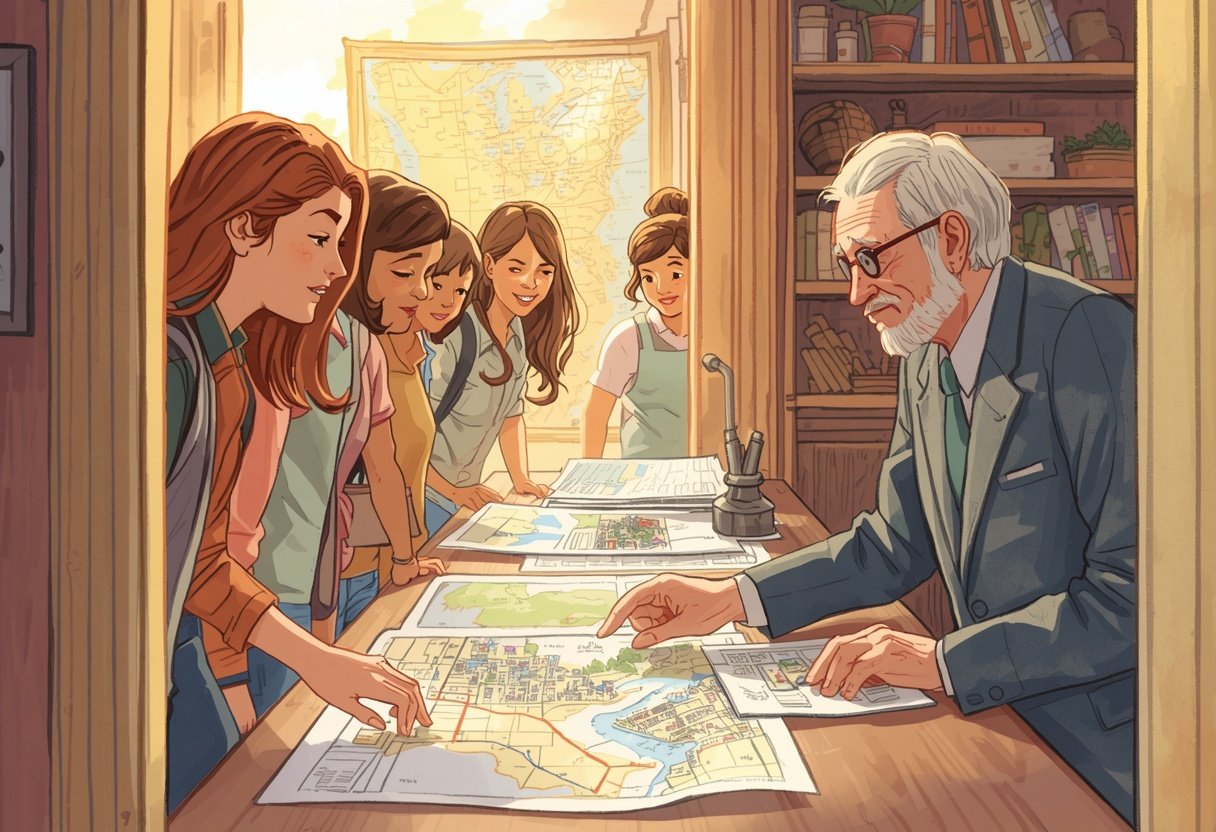
A woman came in on a Tuesday asking for a map of the old Portuguese quarter of Macau, the streets that were bulldozed in the 1990s for casinos. Emile had drawn it the previous week. He didn’t know why he’d drawn it. He never knew why he drew any particular map. The compulsion arrived and he followed it.
“My mother grew up on Rua da Felicidade,” the woman said, tracing the street with her finger. “She talked about a bakery on the corner. Here.” She pointed to a building Emile had labeled Padaria Celestino.
“You’ve been there?” she asked.
“No. I’ve never left Paris.”
“Then how did you know the name?”
Emile had no answer for this. He never did. The names came with the maps, arrived in his hand as he drew, as specific and certain as if he’d read them on the signs himself.
A man came in asking for a neighborhood in Detroit that had been razed in the 1960s for a freeway interchange. Emile had it. Every house. Every church. The barbershop where the man’s grandfather had gotten his hair cut every Saturday for thirty years.
A girl, maybe sixteen, asked for a village in Syria that had been destroyed in the war. Emile had begun drawing it three days before she walked in. The mosque. The school. The fountain in the square where her family had gathered on summer evenings. She stood over the map and didn’t speak for a long time and then she said “that’s the tree” and pointed to a fig tree Emile had drawn in a courtyard, and she started crying in a way that was quiet and old and too heavy for sixteen.
Emile never charged for the maps. People left money anyway. Enough to pay the rent and buy ink and keep the lights on. The economics of the operation made no sense, but Emile had stopped looking for sense around the same time he’d stopped questioning why his hand drew places he’d never visited with accuracy that bordered on impossible.
The maps didn’t change anything. The places were still gone. The highways still ran over the houses. The dams still held back the water. The forests were still parking lots. Emile knew this. The customers knew this.
But they came anyway. They stood over the maps and pointed at buildings and said “that’s where my mother was born” or “that’s where I learned to swim” or “that’s where I kissed her for the first time,” and for a few minutes the lost place existed again, as real as ink on paper could make it, as real as memory held in someone else’s hand.
Emile was drawing when the locksmith came by at closing time.
“What’s this one?”
“I don’t know yet.” Emile studied the map taking shape under his pen. Narrow streets. Low buildings. A river he didn’t recognize. “Someone will come for it.”
“They always do.”
“They always do.”
The locksmith left. Emile kept drawing. The map would be finished by morning. By afternoon someone would walk through the door and see the place they’d lost, and Emile would watch them remember.