It said “Maya” on the first night, and Maya thought she was dreaming.
She was seven. The house was new, which meant new to them. Built in 1974. Three bedrooms, one bath, a basement the realtor called “a bonus space with potential.” The basement had a concrete floor, exposed pipes, a water heater that made sounds like a man clearing his throat, and a dark corner behind the furnace where the single overhead bulb didn’t reach.
The voice came from the dark corner.
“Maya.”
Soft. Not a whisper. A full voice, low, genderless, the way a cello sounds in a low tone. Her name spoken the way her mother said it when she was being gentle, not the sharp two syllables of trouble but the round, warm version that meant bedtime stories and forehead kisses.
Maya told her parents. Her father checked the basement with a flashlight and found nothing. Her mother said old houses make noises and left it at that.
The voice came back the next night. And the next. Always her name. Always from the dark corner. Always in that warm, low tone that carried no threat and no explanation.
By the third week, Maya started answering.
“What do you want?”
Silence. Then: “Company.”
“Are you a ghost?”
“I don’t think so.”
“Are you a monster?”
“What’s a monster?”
Maya thought about this. “Something that hurts people.”
“Then no.”
She started visiting the basement after school. She’d sit on the bottom step with a juice box and talk to the dark corner. The voice listened. Asked questions. Simple ones: What did you learn today? What does the sky look like right now? What does your mother cook on Tuesdays?
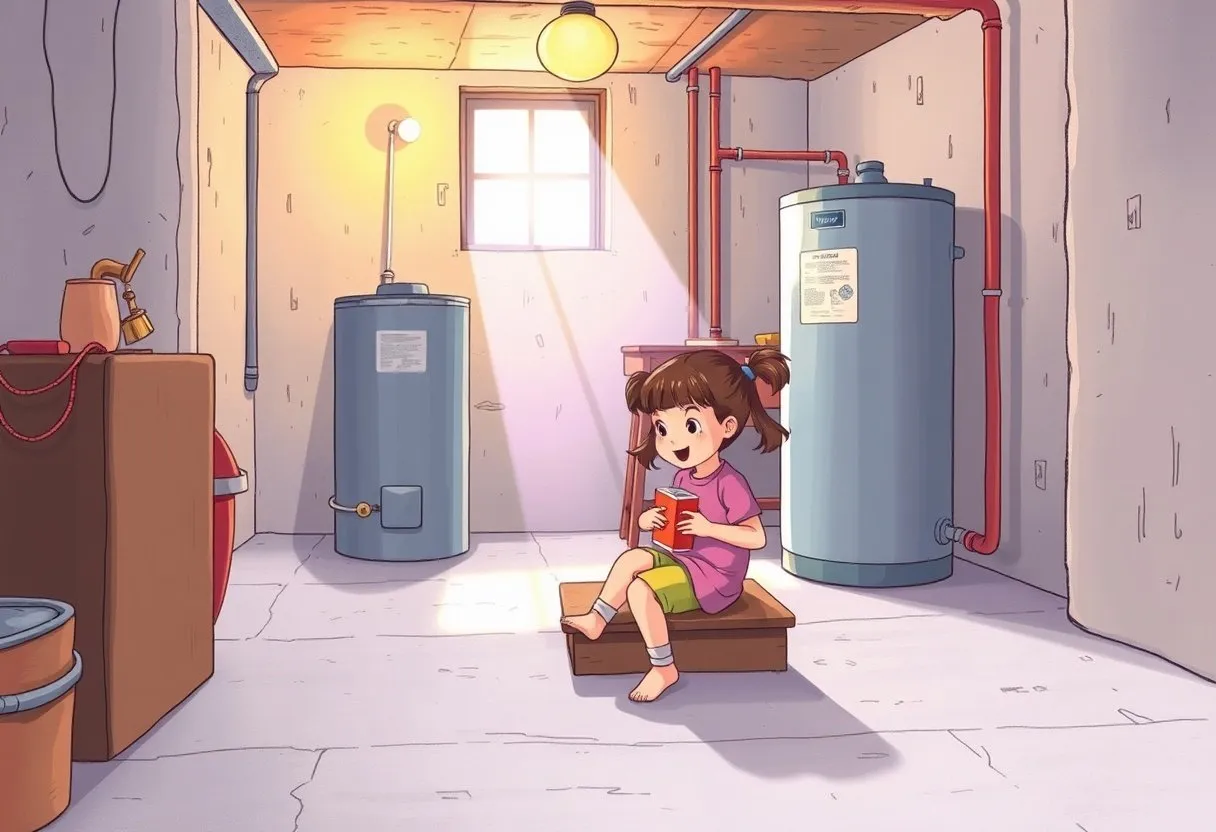
It never came out of the dark. Maya asked once if she could see it.
“I’d rather you didn’t.”
“Why?”
“Because you’d stop coming down here.”
She accepted this the way children accept things: completely, without the weight of adult suspicion. The thing in the basement was part of the house, like the water heater and the creaky third step and the window in the kitchen that stuck in summer.
Years passed. Maya turned ten, then thirteen, then sixteen. She visited the basement less as she got older. The conversations changed. The voice asked harder questions. “Are you happy?” it asked when she was fourteen and she’d come down crying after a fight with her best friend. “What does happy feel like?”
“I don’t know. Like you’re not waiting for something bad to happen.”
“I’ve been waiting for a long time. I don’t remember if I was happy before the waiting started.”
“How long have you been here?”
“Longer than the house.”
At seventeen, Maya sat on the basement step the night before she left for college. The dark corner was the same. The voice was the same. Everything else had changed.

“I’m leaving tomorrow.”
“I know.”
“Will you be okay?”
“I’ve been alone before. I’ll be alone again.”
“That’s not what I asked.”
The voice was quiet for a long time. The furnace clicked on. The pipes hummed.
“No one has ever asked me that.”
“Will you be okay?”
“I’ll wait. It’s what I do. Maybe the next family will have a child who answers when I say their name. Most don’t. You were unusual.”
“Because I wasn’t afraid?”
“Because you were lonely too. Lonely recognizes lonely.”
Maya sat on the step and cried, not for herself, not for college, but for something in a dark corner that had been alone since before the house existed and would be alone long after the house was gone. Something that knew her name and said it the way her mother did, warm and round and careful, because it had been listening and that was the version of her name that meant someone cared.
“Goodbye,” she said.
“Maya,” the voice said. Just her name. The warm version. One last time.
She went upstairs and closed the basement door and drove to college the next morning with her parents and didn’t come back to the house for three years.
When she did, at Christmas, she went to the basement alone. Sat on the bottom step. Listened.
The dark corner was quiet.
“Hello?” she said.
Nothing.
She sat there for an hour, waiting, the way it had waited for her.