Latest
It’s Not X, It’s Y: The AI Tell Shakespeare Wrote FirstWho Gets Rich From AI Data Centers? The Local, National and Global EconomyAre AI Data Centers Bad for the Environment? What’s True and What Isn’tAI Data Centers and Geopolitics: Chips, China, Spies and PowerAI Derangement Syndrome: Who Cares If the Cover Was Made With AI?How to Write a Plot Twist Readers Never See ComingBook Ads Getting Clicks but No Sales? The Problem Is the PageCan Writing a Memoir Make You Sick? The Toll Nobody Warns You AboutWhen Caregiving Ends and the Words Won’t ComeCan You Publish a Clean and a Spicy Version of the Same Book?Do You Need a Writing Buddy? What Works and What Doesn’tCan You Put Someone Who Wronged You in Your Novel?Kindle Unlimited or Wide? Where to Publish Your Debut NovelWriting Vampires: How to Build Your Own Vampire RulesWhat Software Do Novelists Use to Write a Book?What If Your Family Doesn’t Support Your Writing?ARC Reviews: Real Follow-Through Numbers, and Do Reviews Sell Books?The AI Singularity: Would a Conscious AI Even Care About Us?“Forbidden” AI Prompts: Why Viral Prompt Lists Are Mostly JunkAuthor Scam Emails: Fake Agents, Flattery and the $500 PitchWill AI Steal My Book? Turn Off Training Before You UploadThe Fear of Being Judged for Your Memoir: My Father Told Everyone to Burn MineShould You Only Use “Said” in Dialogue Tags? My Rules for Tags and AdverbsWhy a Good Book Isn’t Enough: Agents, Quiet Novels and What SellsShe Asked How to Format Her Comic for KDP. The Thread Went to War Over AI.Why Are Writing Groups So Hostile?My Ghostwriter Stopped Responding. What Do I Do?My Ghostwriter Missed the Deadline. What Are My Options?I Hate My Ghostwriter’s First Draft. Now What?Can I Get a Refund From a Ghostwriter?How Many Revisions Should a Ghostwriter Include?Can My Ghostwriter List My Book in Their Portfolio?My Family Doesn’t Want Me to Publish My Ghostwritten Memoir. Now What?Should a Ghostwriter Write a Free Sample Chapter?How Much Does a Ghostwriter Take Up Front?Can a Ghostwriter Get Me a Book Deal or a Literary Agent?Can I Work With a Ghostwriter Over Zoom or From Another Country?Ghostwriting a Tribute Book, Eulogy or Obituary for Someone You LostCan a Ghostwriter Write My Book in Spanish?Ghostwriting a Book for a Dental or Chiropractic PracticeWhy Keynote Speakers Need a Ghostwritten BookGhostwriting a Science or Research Book for General ReadersGhostwriting a Book for Teachers and EducatorsHiring a Ghostwriter for a Pilot’s or Aviation MemoirHiring a Ghostwriter for a Musician’s MemoirCan a Ghostwriter Help Me Write a Whistleblower Memoir?Hiring a Ghostwriter for an Immigrant’s StoryCan a Ghostwriter Help Me Write About Losing Someone to Suicide?Can a Ghostwriter Help Me Write a Depression or Mental Illness Memoir?Hiring a Ghostwriter for a Special-Needs Parent’s Memoir

Daniel Kahneman

Daniel Kahneman

Daniel Kahneman was born in Tel Aviv in 1934 and spent his early childhood in Paris, where his family lived through the German occupation and his father died of untreated diabetes. The family reached Palestine in 1948.

He studied psychology at the Hebrew University of Jerusalem and took his doctorate at Berkeley, then returned to Israel, where he worked on the psychological evaluation systems used by the Israeli Defense Forces, an experience that shaped his lifelong scepticism about expert judgment.

His career is inseparable from his collaboration with Amos Tversky, which began in the late 1960s and produced the work on heuristics and biases that reshaped economics, medicine, law, and public policy. Their 1974 paper in Science on judgment under uncertainty and their 1979 paper on prospect theory are among the most cited in the social sciences.

He was awarded the Nobel Memorial Prize in Economic Sciences in 2002 for that work. Tversky had died in 1996 and would have shared it, and Kahneman said so repeatedly and publicly.

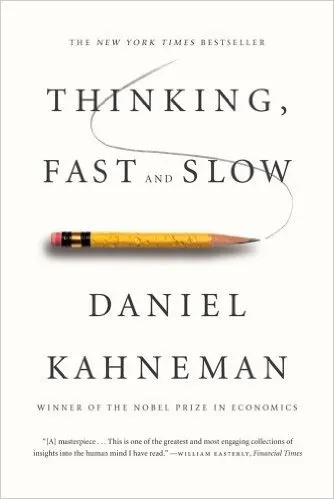
Thinking, Fast and Slow, published in 2011, is his summary of that career for a general readership, organized around two systems: one fast, automatic, and always running, and one slow, effortful, and reluctant to engage. It covers loss aversion, the planning fallacy, anchoring, availability, and the tendency to build confident stories from whatever information happens to be present.

He wrote publicly in 2017 that he had placed too much faith in underpowered studies in the social priming chapter and that readers should not accept that section, which is an unusual thing for an author to say about his own bestseller and is characteristic.

He later published Noise with Olivier Sibony and Cass Sunstein. He died in 2024 at ninety.