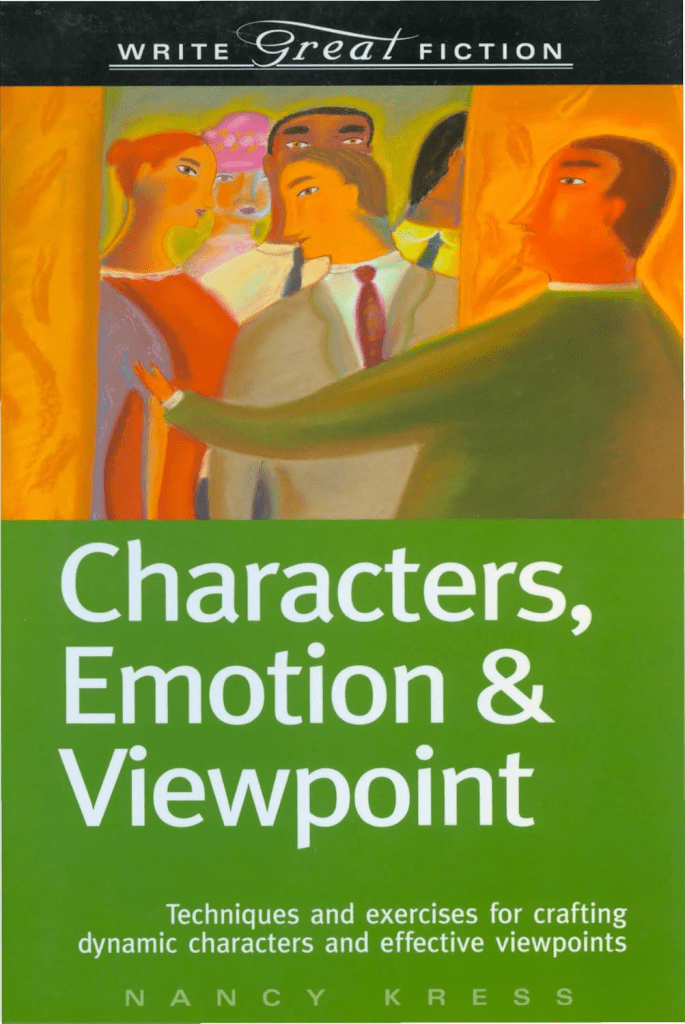
TL;DR
8/10. One of the strongest Write Great Fiction titles, covering three linked skills around the premise that fiction lets a reader live inside another mind. Exceptional on point of view, the close/middle/distant third-person distinctions, and smart on linking character to plot through frustration. Exercises make it a course. Close to essential for developing writers.
The rejection letters all say the same thing in different words: your characters are flat, the reader doesn’t care, the emotions don’t land. Characters, Emotion & Viewpoint by Nancy Kress is the book that fixes exactly those problems, and it’s one of the strongest entries in Writer’s Digest’s Write Great Fiction series. Kress is a Hugo and Nebula winning novelist. She brings a working writer’s precision to the three intertwined skills the title names, and those skills are what most often separate publishable fiction from the slush pile.
What sets the book apart is its clarity about why these three elements belong together. Character, emotion, and viewpoint aren’t separate topics; they’re facets of the single illusion fiction exists to create, the experience of living inside another mind. Kress builds the whole book around that insight.
Viewpoint, finally made clear
The standout section, the one readers single out, is on point of view, because Kress dissects it with a precision few craft books attempt.
She distinguishes the gradations of third person. Close, middle, and distant. Then she shows how the choice of psychic distance shapes everything about how a scene reads. How intimate. How ironic. How much the narration colors what’s described. Many writers use point of view by instinct and stumble when it goes wrong without knowing why; Kress gives them the vocabulary and the control to choose deliberately.
Learning the difference between close and distant third person, and when to shift between them, is the kind of craft upgrade that changes a writer’s prose permanently.
Keep reading
Point of view: choosing and controlling whose eyes we see through: Kress’s close/middle/distant distinctions, expanded into a full working approach to POV.
Watch: 7 Tips That Actually Improve Your Writing!, The King of Woe - Nico Tuzzolo
Character through frustration
The character material is equally practical, and its best idea is the link between frustration and story. Kress argues that what the character wants and what frustrates that want reveal a character and drive a plot, and that the main expression of frustration is action. This ties character directly to plot in a way that dissolves the false choice between character-driven and plot-driven writing: a well-built character generates plot by pursuing goals against obstacles.
She also covers how to plant backstory without stalling the narrative. And how to build characters who change against those who hold steady, with the changes earned instead of asserted.
Keep reading
A guide to character development: 8 steps to success: Kress’s want-and-frustration engine in the wider context of building a character.
Emotion on the page
The emotion material rounds out the trio, addressing the hardest thing to do well: making a reader feel instead of merely registering that a character feels. Kress is practical about creating scenes with real emotional impact, including the perennially botched love, fight, and death scenes, where amateur writing most often goes melodramatic or flat. As throughout, the teaching is paired with exercises and with excerpts from working writers, so a reader sees the technique in action and then practices it instead of just absorbing theory.
Her sharpest point about emotion is counterintuitive and worth the price on its own: that the strongest emotional effects usually come from restraint. The novice instinct, when a scene should be moving, is to pile on, more adjectives, more weeping, more declared feeling, and the result is melodrama that the reader resists. Kress shows that understatement, trusting the situation and the reader, and letting emotion stay slightly below the surface, tends to move a reader far more than a character announcing how much they hurt.
The reader supplies the feeling when the writer leaves room for it. This is the same lesson that governs the best fight and death scenes, where clinical understatement hits harder than operatic excess, and Kress teaches it with the authority of a writer who has made it work.
Is Characters, Emotion & Viewpoint worth reading?
It’s one of the useful craft books, strong on all three of its subjects and exceptional on viewpoint, which alone justifies the purchase for most developing writers. The integration of character, emotion, and viewpoint around the central idea of inhabiting another mind gives it a coherence many craft books lack, and the exercises make it a course instead of a lecture. It loses little; if anything it’s pitched more at the developing than the advanced writer, so a seasoned novelist may find parts familiar.
For the writer getting those flat-character rejection letters, it’s close to essential.
Explore the hub
The Writing Hub: character, viewpoint, emotion, and the rest of the craft, gathered in one place.
Frequently Asked Questions
Other Books in the Write Great Fiction Series
Other Books From – Being an Author



About the author