TL;DR
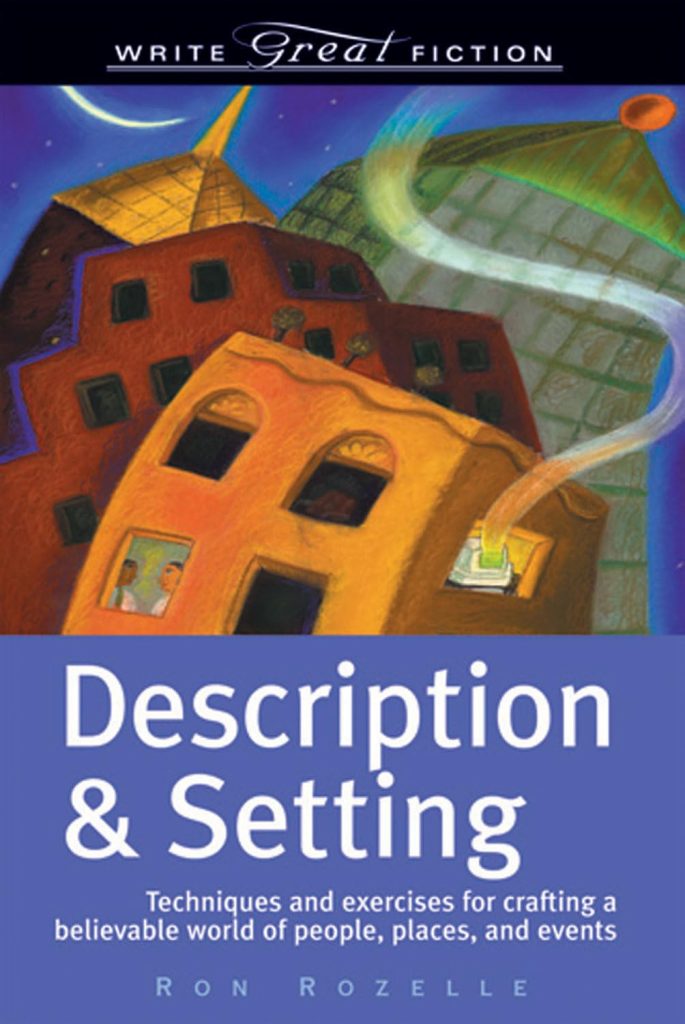
8/10. One of the stronger Write Great Fiction volumes. It teaches that description and setting must do work instead of decorate. Mood, character, plot, grounding. And it favors the telling detail over exhaustive cataloging. Clear, practical guidance on the hardest judgment: how much is enough. Pitched at developing writers, and reliably useful for flat descriptions and empty-stage settings.
How much description is too much? When does setting stop serving the story and start stalling it? Description & Setting by Ron Rozelle answers those questions with the calm authority of a working writer and teacher, and it’s one of the stronger entries in Writer’s Digest’s Write Great Fiction series. Beginners handle these two elements badly in opposite directions. Too much inert description, or too little grounding. The book teaches the balance that makes a world feel real without drowning the story.
Description and setting are deceptively hard. Done well they’re nearly invisible, immersing the reader without their noticing; done badly they’re the paragraphs readers skim. Rozelle’s subject is how to land in the first category.
Description that does work
Rozelle’s central principle echoes the best craft thinking. Description should never be inert decoration. It should always be doing a job, establishing mood, revealing character through what they notice, advancing the story, or grounding the reader physically in a scene. He teaches how to choose the telling detail over exhaustive cataloging. One sharp image conveys more than a paragraph of inventory. He also teaches how to weave description into action and emotion instead of parking it in static blocks readers learn to skip.
The emphasis on selection, on the right detail instead of all the details, is the heart of good descriptive writing. Most beginners inventory a room like an insurance adjuster, and Rozelle is right to beat that habit out of them.
Keep reading
Imagery in writing: making description do real work: Rozelle’s telling-detail principle, in the fuller craft of vivid description.
Watch: World Building, Setting & Description in Your Novel | PREPTOBER 2023, Heart Breathings
Setting as more than backdrop
On setting, Rozelle makes the case that a well-rendered place is an active element, shaping mood, influencing character, and tying into plot, instead of a static stage the action happens in front of. He covers how to make a setting specific and alive, how setting and description interlock, and how much grounding a scene needs, the judgment about quantity that beginners most often get wrong.
Treating setting as a painted backdrop is one of the dumbest habits in fiction, and he takes it apart without lecturing. The balance he strikes, enough to immerse, not so much that it stalls, is the practical wisdom a developing writer needs, and he conveys it with clear examples instead of abstract rules.
Keep reading
Setting and world-building that pulls readers in: Rozelle’s active-setting principle, in the wider craft of building immersive places.
What are the limitations of Ron Rozelle’s Description & Setting?
The caveats are minor. As a fundamentals-series volume it’s pitched at developing instead of advanced writers, so a seasoned stylist may find its lessons familiar. Its subject overlaps with other books, dedicated setting guides cover some of the same ground, though Rozelle’s pairing of description and setting in one coherent treatment is a sensible combination. And like any craft book it teaches principles a writer must then practice; reading it doesn’t substitute for the work of applying it. None of that dents it for me. A seasoned stylist can skip it, and everyone else has work to do.
Is Description & Setting worth reading?
It’s one of the better Write Great Fiction volumes and a useful treatment of two elements writers commonly mishandle, with the right central principle, that description and setting must do work instead of decorate, and clear, practical guidance on the hardest judgment, how much is enough. It loses little, mainly for being pitched at developing writers and for subject overlap with other books.
For a writer whose descriptions feel flat or whose settings feel like empty stages, or who simply never knows how much is too much, it’s a clarifying, practical, and reliable guide. Rozelle answers the how-much question with more sense than most craft writers manage. That alone makes it a strong entry in a strong series.
Explore the hub
The Writing Hub: description, setting, and the rest of the craft, gathered in one place.
Frequently Asked Questions
Other Books in the Write Great Fiction Series
Other Books From – Being an Author