TL;DR
6/10. A Writer’s Digest genre reference for grounding amateur-sleuth mysteries, strongest on making it believable that an amateur, not the police, solves the crime. Its mid-1990s procedural and forensic detail is now dated, so a modern writer must check and update it heavily. Useful in principle, dated in particulars.
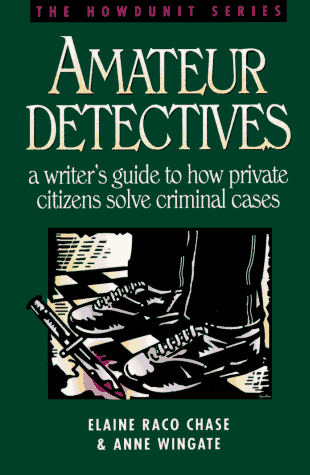
Amateur Detectives by Elaine Raco Chase is a specialized reference book for mystery writers, part of Writer’s Digest’s Howdunit series, aimed at helping authors write amateur-sleuth fiction that holds up to scrutiny. Its purpose is narrow and practical: to supply the factual grounding a writer needs so their non-professional crime-solver behaves and investigates in ways that feel convincing instead of absurd. Judged as the genre reference it is, it does a useful, if dated, job.
The amateur detective, the nosy neighbor, the bookshop owner, the retired teacher who keeps stumbling onto bodies, is a beloved mystery tradition, and also a credibility minefield, since real investigation is done by professionals with resources an amateur lacks.
What does Amateur Detectives offer?
The book supplies the procedural and factual detail a mystery writer needs to keep an amateur-sleuth story plausible: how investigations work, what evidence means and how it’s handled, what an amateur could realistically discover and what would be beyond them, and how to construct a mystery that plays fair with the reader. It’s a fact-and-procedure resource, the kind of grounding that keeps a knowledgeable reader from throwing the book across the room at an implausible deduction. For a writer who loves the cozy-mystery tradition but lacks investigative knowledge, it fills real gaps.
Keep reading
Writing a mystery that plays fair and still surprises: the fair-play construction Raco Chase grounds, taken into full mystery craft.
Grounding the implausible premise
The book’s most useful contribution is helping a writer manage the central challenge of the subgenre: making it believable that an amateur, instead of the police, solves the crime. Raco Chase offers practical ways to give an amateur sleuth plausible access, motivation, and capability, so the reader accepts the premise instead of asking why the professionals aren’t handling it. That problem, the believability of the amateur’s involvement, is the thing most likely to sink this kind of story, and concrete strategies for it are the book’s real value.
Keep reading
Research for fiction: how much, and how to hide it: the factual grounding this book supplies, and how to wear it lightly in a mystery.
What are the limits of Amateur Detectives?
The significant caveat is age. The book is from the mid-1990s, and investigative procedure, forensic science, and especially the role of technology in both crime and detection have changed enormously since, so a contemporary mystery writer can’t rely on it for current accuracy and will need to supplement it heavily with up-to-date research. A modern amateur sleuth has a smartphone, the internet, and DNA databases that didn’t exist when this was written, and those tools reshape what’s plausible.
The book also is narrowly a factual reference instead of a craft guide, so it teaches grounding.
Is Amateur Detectives worth reading?
As a genre reference it’s a solid, practical resource for grounding amateur-sleuth fiction, and its strategies for making the amateur’s involvement believable remain useful in principle. But its mid-1990s vintage means much of the procedural and forensic detail is outdated, and a modern writer must treat it as a starting point to check and update instead of a current authority. It has a modest place on the shelf for the cozy-mystery writer, held back by the years that have passed since its facts were current. Useful in principle, dated in particulars.
Explore the hub
The Writing Hub: mystery, research, and the rest of the craft, gathered in one place.
Frequently Asked Questions
Other Books in the Howdunit Series





Other Books From – Being an Author

About the author