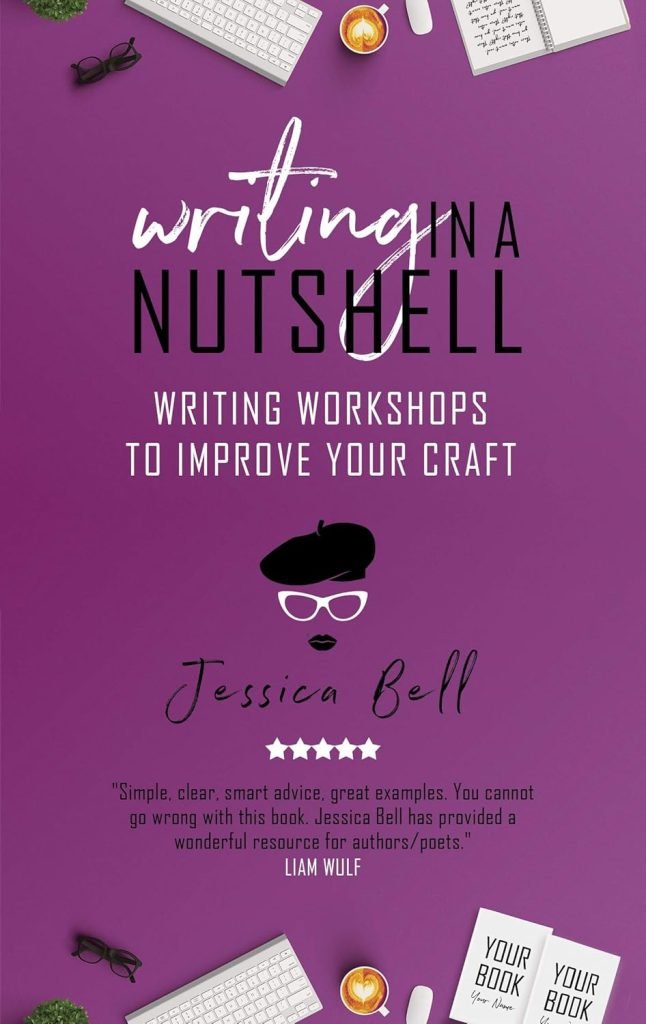
TL;DR
6/10. A concise, practical craft guide built around hands-on writing workshops, valuable for offering targeted, exercise-driven instruction on specific skills, grounded in the author’s experience as writer, editor, and publisher. A useful, accessible tool for applied practice, held to the middle by its short, selective scope and overlap with similar craft-improvement books.
Writing in a Nutshell by Jessica Bell is a concise, practical craft guide built around writing workshops designed to improve distinct skills, written by a writer, editor, and publisher. Instead of a sweeping theoretical treatment, it gives focused, workshop-style instruction on particular elements of craft, aiming to give a writer concrete, practical ways to sharpen their work. The compact, exercise-oriented approach suits a writer who wants targeted practice on one skill at a time instead of a full course.
The workshop framing is what I respect here. Bell makes you practice instead of nodding along, and that’s how skills improve. The trouble is the size. A book this short has to pick its battles, and it leaves a lot of ground uncovered.
Workshop-style practice
The book’s value is its hands-on, workshop approach to specific craft skills.
Bell draws on experience as a writer, editor, and publisher. He structures the book around focused workshops that walk a writer through particular techniques and hand them concrete exercises to apply, more useful for real improvement than passive reading, since craft develops through practice. For a writer who wants to work on specific skills in a targeted, applied way instead of absorb general theory, this exercise-driven format delivers practical, practical instruction.
The compactness is part of the appeal too, offering focused help without the bulk of a full textbook, suited to a writer who wants to improve particular aspects of their craft efficiently.
Keep reading
Sharpening specific skills through focused practice: Bell’s workshop exercises, in the wider craft of deliberately improving your writing.
Accessible and applied
The book’s accessibility is a strength. By keeping things concise and practical, and grounding instruction in workshops a writer works through, Bell makes craft improvement feel manageable and immediate instead of abstract or overwhelming. The author’s three perspectives, writer, editor, and publisher, give the guidance a practical, industry-aware grounding. The applied format means a writer comes away with exercises done and skills practiced instead of just concepts encountered.
For a writer who learns by doing and wants efficient, hands-on instruction on specific aspects of craft, this targeted, workshop-based approach is exactly the kind of practical help that produces real, if focused, improvement.
Keep reading
The specific writing weaknesses worth working on: the targeted skills Bell’s workshops address, in the wider craft of better writing.
What are the weaknesses of Writing in a Nutshell?
The caveats are about scope and depth. As a short guide it’s necessarily selective and limited in depth.
It covers specific skills through workshops instead of offering a full craft education, so a writer wanting thorough or advanced treatment of any topic will need fuller resources; it’s targeted practice. Its workshop format also depends on the writer doing the exercises, like any applied book, it helps only those who engage.
And its territory overlaps with the large body of craft-improvement and workshop books available. These are the normal limits of a brief, applied craft guide instead of flaws, and within its modest, practical scope it offers hands-on help.
Is Writing in a Nutshell worth reading?
It’s a concise, practical, accessible craft guide built around hands-on writing workshops, valuable for its targeted, exercise-driven instruction on specific skills, grounded in the author’s experience as writer, editor, and publisher, that suits a writer who wants applied practice instead of general theory. It deserves a fair rating for that accessible, practical approach. It’s held to that level by its modest scope: short and necessarily selective instead of broad, dependent on the writer doing the exercises, and overlapping with the large body of similar craft-improvement books.
For a writer who learns by doing and wants efficient, focused practice on particular aspects of craft, it’s a useful, manageable tool; for a complete craft education, it’s one targeted piece. A sound, hands-on craft guide within its scope.
Explore the hub
The Writing Hub: craft, practice, and improving your writing, gathered in one place.
Frequently Asked Questions
Other Books From – Being an Author



About the author