TL;DR
5/10. A reference collecting over two thousand phrases for describing weapons, wounds, and combat. It can prompt a writer stuck on an action scene, but the phrases are raw material that risk producing generic prose, and it teaches no craft. A handy but limited tool, easily outgrown and no substitute for the skill itself.
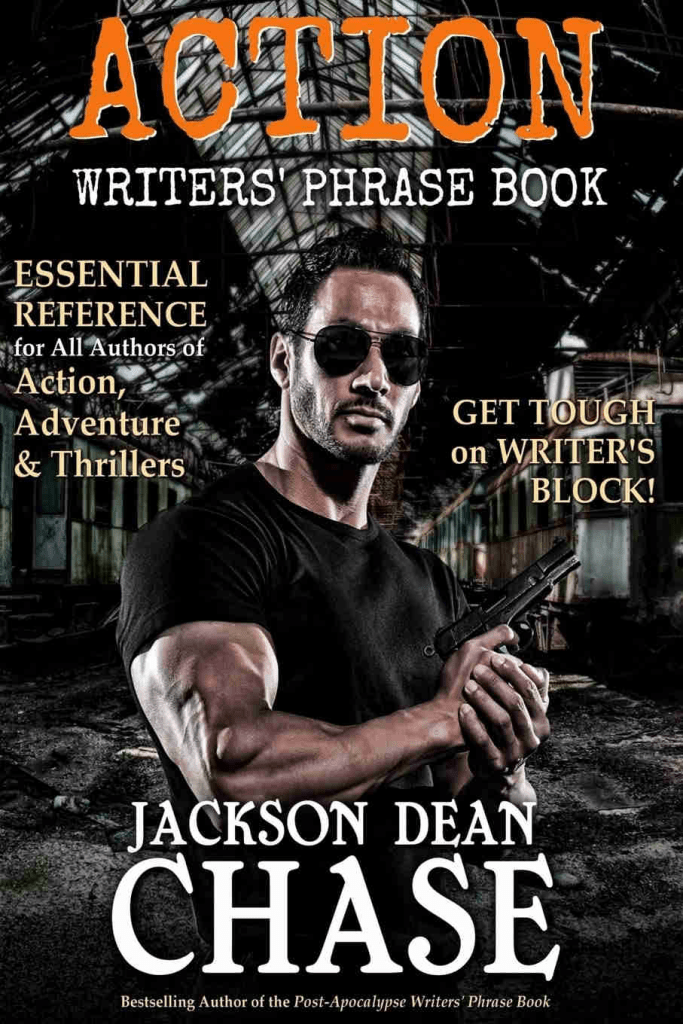
Action Writers’ Phrase Book by Jackson Dean Chase is another entry in the phrase-book and word-list corner of self-published craft writing, this one a collection of over two thousand ways to describe weapons, wounds, explosions, combat, and the rest of the action-scene vocabulary. Like the verb lists and reaction catalogs it shares a shelf with, it’s a reference tool instead of a book. The question is whether the convenience justifies the purchase, and I’m skeptical. Two thousand canned phrases sounds like a cure for a stalled fight scene until you notice it’s a recipe for writing like everyone else.
The need it targets is specific and real. Action scenes have their own demanding vocabulary. A writer working outside their experience can stall hunting for the right word. Describing a firefight. A sword wound. An explosion. Finding the right physical, technical, or sensory word.
What does Action Writers’ Phrase Book offer?
The book organizes thousands of descriptive phrases and terms by category. Weapons, wounds, blood, explosions, and the physical sensations of violence. Fully loaded, as the marketing puts it, for modern, historical, and futuristic combat. For a writer staring at a fight scene with no idea how to describe the sound of a particular weapon or the look of a particular wound, it gives a menu to browse and a jolt toward vocabulary they might not have reached on their own. As a brainstorming aid for action-heavy genre fiction, it can break a stall.
Keep reading
Writing action scenes that keep readers’ pulses up: the craft of action this phrase book supplies vocabulary for, in full.
The familiar problem
The catch is the one that applies to every list of this kind, and it applies sharply here. A phrase pulled from a list is raw material that still has to be shaped to the moment, the character’s perception, and the rhythm of the scene. Worse, a writer leaning on canned phrases risks exactly the clichéd, generic action prose the book is meant to cure, since pre-written descriptions are by definition not original to your scene.
The best action writing comes from precise observation and a character’s particular experience of violence, not from a bank of interchangeable phrases. The tool can prompt or it can flatten, depending on the hand.
Keep reading
Strong verbs do the work so adverbs don’t have to: precise verbs beat canned phrases in action. The craft of vivid, specific motion.
The right way to use it, if you do
If a writer keeps it on the shelf anyway, the productive use is the same as for any word bank: as a jog toward a word you’ll then make your own. Read an entry, find the term that fits the weapon or wound in your scene, then write the description yourself in your character’s voice and the scene’s rhythm, using the term as a seed instead of a finished plant.
The danger is the writer who lifts whole phrases intact, because a phrase written by someone else for no particular scene will always sit slightly wrong in yours, like a quotation dropped into a conversation it wasn’t meant for. The two thousand phrases are raw ore; the writing is still the smelting, and no list does that part for you.
Is Action Writers’ Phrase Book worth reading?
It’s a usable but distinctly limited tool. The vocabulary it collects can help a writer who freezes at action scenes and needs a prompt, and the specialized focus on combat and injury fills a narrow gap. But it teaches no craft, the phrases risk producing generic prose if leaned on, and a writer would do better learning to observe and describe action precisely than reaching for a canned bank of terms.
It sits low on the scale for the same reason as its companions: a real but narrow use, easily outgrown, and a tool that can worsen the problem it targets. A writer stuck on a gunfight can flip through it for a word. A writer who leans on it will turn out generic crap, and no phrase bank will save him.
Frequently Asked Questions
Other Books in the Writers' Phrase Books Series

Other Books From – Writing and Language
About the author