
You’ve built something. A company, a career, a body of expertise, a life story worth telling. You know the book should exist. You also know you aren’t going to write it yourself.
That’s a realistic assessment of where your time and skills are best spent. You built the business. You lived the story. You developed the expertise. A ghostwriter turns all of that into a book that represents you at the level your audience expects. I have ghostwritten 54+ books. This page covers why people hire ghostwriters and what the process looks like.
Why hire a ghostwriter when you know your subject cold?
Knowing your subject cold was never the hard part. Finding months of uninterrupted writing time on top of a full working life is the hard part, and most experts who try end up with three chapters in a drawer and a book they stop mentioning. I think hiring the writing out is one of the smartest calls an expert can make, and there’s nothing second-rate about it.
You know you aren’t going to write the book yourself.Share on X
Writing a book takes hundreds of hours. That includes the drafting, the planning, the research, the revision, and the polish. A 60,000 word manuscript represents months of focused work, and that’s for someone who writes professionally. For more, see why ghostwriting costs what it costs and how to hire a ghostwriter.
If you’re running a company, managing a practice, building a brand, or living a life that demands your full attention, those hundreds of hours don’t exist in your schedule. You could spend two years writing evenings and weekends, or you could spend six months working with a ghostwriter who captures your voice through interviews and delivers a complete manuscript while you keep doing what you do.
Most of my clients are executives, entrepreneurs, consultants, and public figures. They have the knowledge. They have the stories. What they don’t have is 500 hours to sit at a keyboard.
Why isn’t expertise enough to write a good book?
From Conversations With Influencers
Erik Boemanns moved into cybersecurity through a legal degree and compliance work, and argues certifications help but aren’t required if you pivot from an adjacent role. He explained the route on Conversations With Influencers.
Expertise earns you the right to write the book. It doesn’t hand you the craft, and I think the experts who assume it does are the ones most likely to publish something that makes them look worse than they are.
Being an expert in your field doesn’t make you a skilled writer, any more than being a skilled writer makes you an expert in your field. These are different disciplines. Professional writing is structure, pacing, voice, narrative arc, audience awareness, and the ability to make complex ideas accessible without dumbing them down.
A memoir needs emotional architecture. A business book needs a structure that builds logically and keeps readers engaged. A self-help book needs to balance personal story with practical application.
You wouldn’t perform your own surgery or argue your own case in court. Hiring a ghostwriter is the same principle: you bring in a professional whose specific skill set matches the task.
What can a ghostwritten book do for your business?
I tell clients up front that they’re very unlikely to earn their money back through book sales. The return comes from using the book as the foundation of their marketing, and that’s where clients have picked up consulting contracts, speaking work, courses and, in one case, a promotion.
For most of my clients, the book is the tool that drives everything else.
Books I have ghostwritten have helped clients raise $30 million in venture capital. One client’s book led to a TEDx talk. Others have landed traditional publishing deals and used their books as the foundation for consulting work, speaking and courses.
A book positions you as the authority in your space. It’s a credential that no amount of social media content, podcast appearances, or conference panels can replicate. When a prospect is deciding between you and a competitor, and you have a professionally written book that shows your expertise, that’s a significant advantage.
What goes wrong when experts write their own books?
I don’t blame experts for the drafts they produce. They wrote a first draft, and first drafts are supposed to be rough. It’s risky to publish it anyway, because a book with your name and photo on the cover keeps turning up in search results long after you’d like it gone.
I’ve seen what happens when people try to write their own books without the craft to support their ideas. The expertise is real. The stories are strong. But the manuscript reads like a first draft because it’s a first draft, written by someone who doesn’t write professionally. A weak manuscript does more damage than no manuscript at all. A poorly written book undermines the authority it was supposed to establish. Readers form judgments about your competence based on the quality of the writing, whether that’s fair or not.
A ghostwriter makes sure your ideas get the execution they deserve. The writing is clean. The structure holds. The voice sounds like you on your best day, not like someone struggling with sentence construction at midnight after a full workday.
How involved are you when you hire a ghostwriter?
Readers form judgments about your competence based on the quality of the writing, whether that’s fair or not.
Be wary of any ghostwriter who says they can write your book without spending real hours listening to you. Whoever skips the interviews is writing a stranger’s book and putting your name on it, and your readers will hear the difference on the first page.
Ghostwriting is a collaboration. You provide the raw material, the ghostwriter provides the craft, and the process starts with interviews.
I conduct detailed sessions where you talk about your experiences, your expertise, your stories, and your perspective. These interviews are where the book gets built. I capture your voice, your cadence, your way of explaining things.
The goal is a manuscript that sounds like you wrote it, because the ideas, the stories, and the voice are yours. The structure, the pacing, and the prose are mine. From there, I write.
You review chapters as they’re delivered and provide feedback. We revise together until the manuscript represents exactly what you intended. The result is a book you’re proud to put your name on because it’s your book. I just did the writing.
What Does Hiring a Ghostwriter Cost?
I won’t pretend this is cheap, and I don’t trust anyone in this business who does. A bargain ghostwriter is the most expensive hire an expert can make, because you pay once for the book and then keep paying, for years, in what it says about you.
I set my rates by service, with milestone-based payments tied to project phases. Current ghostwriting pricing is on the ghostwriting page. You’re not paying everything upfront, and you’re not paying everything at the end. Each payment corresponds to completed work you’ve reviewed and approved. Quality ghostwriting isn’t inexpensive. But compare the cost to the return. A book that helps you raise capital, land speaking engagements, attract clients, or establish authority in your field pays for itself many times over. The clients who get the most value from their books are the ones who treat the investment seriously and participate actively in the process.
My take
Expertise won’t write the book for you, no matter how well you know the subject. Most experts who try end up with a first draft in print, and readers judge their competence by it. Hire a ghostwriter who spends real hours interviewing you, and walk away from anyone who offers to skip that part. A bargain writer costs you once for the book and then for years in what it says about you. Pay for the craft and stay in the process.
What Happens After Your Ghostwritten Book Is Done?
A ghostwriter writes the book. What happens after publication is up to you. Some clients self-publish. Others pursue traditional publishing deals. Some use their books as lead generation tools, handing copies to prospects and speaking at industry events. Others build courses, consulting structures, or media platforms around the content. I can advise on publishing strategy, and my publishing service can get the book into print, but the promotional energy comes from you. The best ghostwritten book in the world does nothing if it sits in a box. The clients who get the most from their investment are the ones who actively use the book as a business tool after publication.
The book on this: The Ghostwriting Advantage is 48 chapters on the decision, including what the arrangement costs, what it returns, and how to tell whether your book is one worth hiring for.
Paying for a good book and then leaving it in a box is the waste I hate most in this business. You did the hard part by getting it written. Put it in front of the people you want to work with, hand it out when you speak, and build your marketing on it. If you’re not willing to do that, I’d tell you to keep your money.
Schedule a free consultation to discuss your book project, or start smaller with the Book Discovery Intensive. It ends with a strategy and a sample chapter.
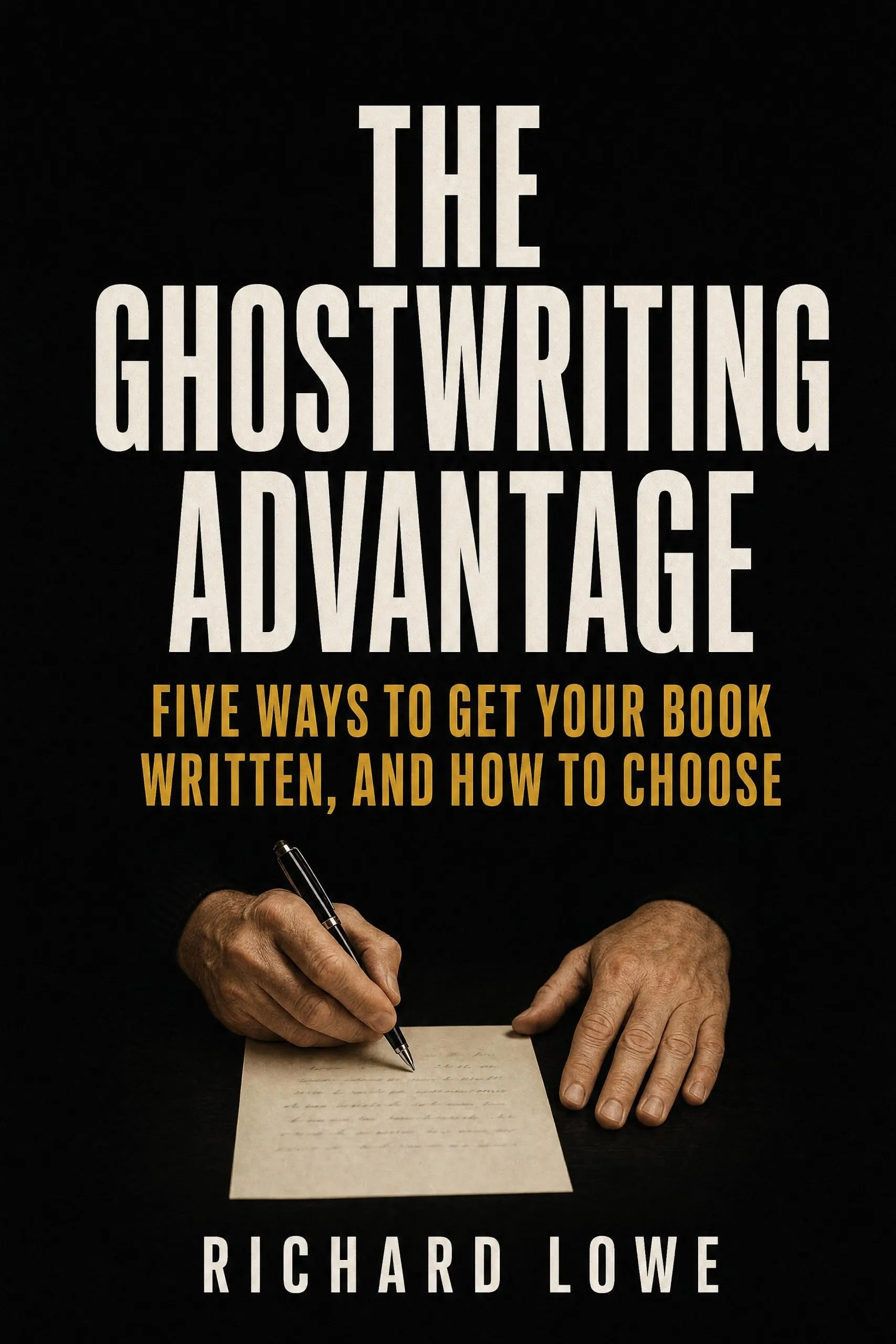
The Ghostwriting Advantage is my book on how to get your book written for you. I wrote it from the 54+ books I’ve ghostwritten for clients.
Frequently Asked Questions
There’s one question worth asking before you sign with any agency, and most buyers never think of it. It’s in You Interviewed the Salesperson. A Stranger Wrote Your Book.
For current rates and what drives them, see the full pricing guide: What Does a Ghostwriter Cost?
