TL;DR
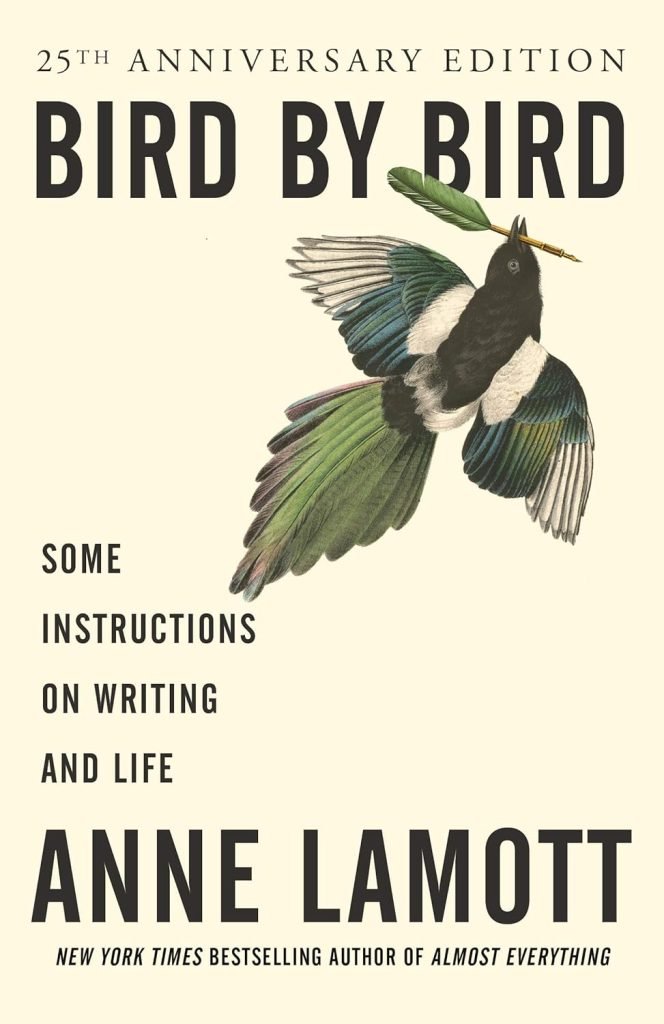
8/10. The honest, funny counterweight to every confident craft manual. Lamott skips technique and goes after the fear, doubt, and perfectionism that kill books. The one-inch frame and the case for bad first drafts are worth the read. Deliberately light on craft and digressive, and the voice won’t click for everyone, so pair it with a craft book.
Every other book on this shelf tells you what to do. Bird by Bird tells you how it feels to do it, the dread, the envy, the certainty that you’re a fraud, and then gives you permission to write anyway. Anne Lamott wrote the warm, funny, anxious counterweight to the brisk confidence of the typical craft manual, and for a certain kind of stuck writer it’s the more useful book.
The title comes from a story about her brother, ten years old and paralyzed by a school report on birds due the next day, and their father’s advice: just take it bird by bird, buddy.
That’s the entire philosophy. You don’t write a book. You write the small piece in front of you, then the next one, and you refuse to look at the terrifying size of the full project.
The Ideas Writers Steal From It
Two phrases from this book have entered the language of writing advice. The first is the one-inch picture frame: when the task feels impossibly large, write only what you can see through a frame an inch square, just this small moment, this single memory. The second, which I’ll keep clean, is her permission to write terrible first drafts.
Lamott insists that all good writing begins with bad first drafts, that the only way to the good version is through the messy one, and that the writer who waits to get it right the first time never starts.
That permission is the most useful thing in the book. Perfectionism kills more manuscripts than lack of talent ever has. Lamott names the fear, mocks it gently, and frees you to put down words you know are bad, because bad words on a page can be fixed and a blank page cannot.
Keep reading
Stop these 76 bad writing habits to improve your skills: Lamott frees you to write badly first. This is what to fix on the second pass.
Watch: 12 truths I learned from life and writing | Anne Lamott, TED
Honest About the Life
Lamott is unusually honest about the parts of the writing life that other books skip. The envy you feel when a friend gets the deal you wanted. The way publication doesn’t fix the things you hoped it would fix. The radio station of self-loathing that plays in a writer’s head. She writes about these with humor instead of despair, and that makes the book a comfort instead of a wallow.
Her own voice is the argument for her advice. It’s loose, digressive, self-deprecating, and alive, and it shows you what a real human voice on the page looks like better than any chapter explaining voice could. You finish the book feeling less alone, which for a working writer is worth more than another list of rules.
Keep reading
6 causes of writer’s block and how to destroy it: the fear Lamott writes about is the root of most blocks. How I handle it.
Is Bird by Bird worth reading?
It’s light on technical instruction, and a writer looking for structure, plot mechanics, or a system won’t find one here. That’s both the point and the limit. Read it alongside a craft book. But for the emotional reality of writing, the fear and the doubt and the stubborn need to do it anyway, nothing else on the shelf comes close. I reread it when the work feels impossible, and it helps every time.
Explore the hub
The Psychology of Writing Hub: the inner life of writing. That’s Lamott’s whole subject.
Frequently Asked Questions
Other Books From – Being an Author




About the author