TL;DR
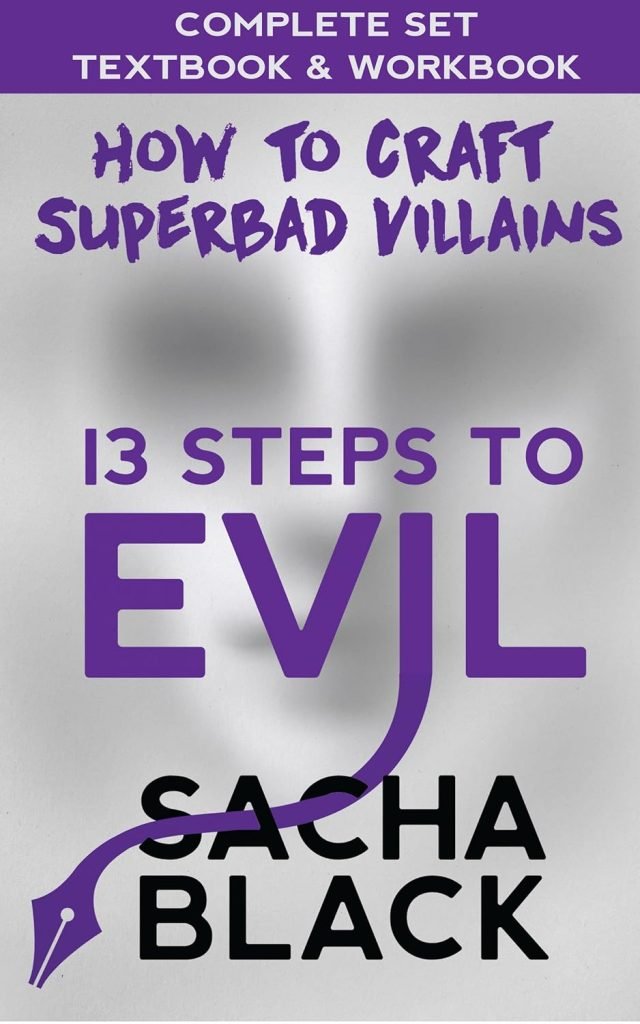
8/10. The targeted fix for cardboard villains. Black treats the antagonist as a full character and drills the one lesson that matters most: a great villain believes they’re right. The profane, casual voice divides readers, but the method is sound.
13 Steps to Evil by Sacha Black is a focused, practical guide to writing villains who are characters instead of obstacles. It works through the antagonist’s psychology, motivation, flaws, and function in the story, with examples pulled from books and film. If your heroes are strong and your villains are cardboard, this is the targeted fix.
Black writes in a loose, profane, energetic voice that reads more like a smart friend talking you through it than a textbook. That tone is divisive, and I’ll come back to it, but the underlying structure is disciplined. Each step builds on the last, and by the end you have a working method instead of a pile of tips.
Cardboard villains are my pet peeve in fiction, and they’re everywhere. A hero is only as interesting as the problem pushing back on them, so a lazy antagonist kills a book that might otherwise work. A whole book about the other side of the fight is overdue.
What is the argument in 13 Steps To Evil?
Her central claim is that a weak villain caps the strength of the entire story.
A protagonist can only be as gripping as the force opposing them. A flat, lazy antagonist drags everything down with it, no matter how good the hero is. So the villain deserves the same care you give the protagonist. Black treats the antagonist as a full character who happens to stand on the wrong side, not a function that exists to generate trouble for the hero.
This is the right frame, and most writers get it backward. They pour their attention into the hero and treat the villain as a plot requirement. The result is a story with a strong engine and weak brakes. Black makes you slow down and build the opposition with intent. A neglected villain shortchanges the hero, and it’s an easy mistake to miss from inside the draft. Every scene of opposition is a chance to test the protagonist, and a flimsy antagonist wastes all of them.
Keep reading
Why your characters feel flat: psychology-first character development: the same psychology that builds a real hero builds a real villain. Start here if your antagonist reads as a cutout.
Watch: How to Write Superbad Villains (with Sacha Black), The Writer's Mindset
What the Steps Cover
The book moves through the components in order.
Motivation that makes sense from inside the villain’s head. Backstory that explains the villain without excusing them. Flaws that make the villain human, and the harder note, the redeeming streak that makes them uncomfortable to hate. She covers the relationship between the villain and the hero, the way a good antagonist is a dark mirror of the protagonist, and how to calibrate the threat so it frightens.
She also sorts villains into types, from the sympathetic and tragic to the evil, so you can decide what you’re building before you build it. Having a vocabulary for the kinds of villain is more useful than it sounds, because it stops you from defaulting to the same snarling antagonist every time. The villain-types breakdown deserves more credit than it gets. A decision to build a tragic antagonist instead of a monstrous one changes every decision after that, and it keeps a writer from reaching for the same sneering bad guy out of habit.
The Lesson That Matters Most
The strongest idea is that a good villain believes they’re right. The villain who twirls a mustache and announces their evil is boring, because no real person experiences themselves as the bad guy.
The villain who has a coherent worldview, who makes arguments you can’t easily dismiss, who would be the hero of their own version of the book, is the one that keeps a reader up at night. Black hammers this point, and she’s correct to.
A villain with a defensible reason is far more disturbing than one with a body count. This is the lesson I’d pin above every thriller writer’s desk. The villain who’s sure of their own righteousness is the one who frightens me, because certainty is scarier than cruelty, and Black understands that better than most craft writers.
Keep reading
How to write mental illness in fiction: 6 guidelines: villains are where writers most often turn a condition into a costume. How to handle it instead.
What are the limits of 13 Steps To Evil?
The casual, profane tone is the main thing that divides readers. Some find it fun and motivating. Others find it grating and wish she’d get to the point with less swearing and fewer asides. It’s a matter of taste, and you’ll know within a chapter whether the voice works for you.
I like the profanity. A craft book that sounds like a person is a relief after the stiff textbook voice most of them use, and her swearing gets the point across faster than a dry lecture on antagonist psychology ever would.
The book is also pitched at developing writers instead of veterans. A novelist who has already built a few strong antagonists will find stretches that confirm what they know instead of teach something new. But the organization is clean, the examples are well chosen, and the central lesson about letting the villain be right is worth the price even for an experienced writer who needs the reminder.
For a developing writer with a hero worth reading about and a villain nobody remembers, this is the fix I’d point to first. It stays an 8 because veterans will recognize chunks of it, and I’d still make a seasoned novelist sit through the chapter on letting the villain be right.
Explore the hub
The Psychology of Writing Hub: villains live or die on psychology. The mental side of character work is collected here.
Frequently Asked Questions
Other Books From – Writing and Language


About the author