
Guillermo del Toro makes the monster the hero, and he’s won three Oscars doing it.
He turned 62 yesterday. Born in Guadalajara on October 9, 1964, he grew up on horror films and monster stories, made short films as a teenager and studied filmmaking at the University of Guadalajara. His first feature, Cronos, a strange and tender vampire film, won the top prize at the Critics’ Week at Cannes in 1993.
Since then he’s given us The Devil’s Backbone, the Hellboy films, Pan’s Labyrinth, Crimson Peak, The Shape of Water, his stop-motion Pinocchio and his Frankenstein. The Shape of Water won Best Picture and Best Director. Pinocchio won Best Animated Feature.
He’s also a writer in the plainest sense. He co-wrote The Strain trilogy of vampire novels with Chuck Hogan, worked on the screenplays for the Hobbit films and has written or co-written nearly everything he’s directed.
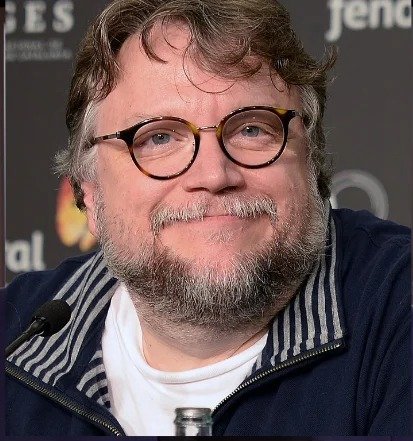
Guillermo del Toro in 2017. Photo by GuillemMedina, CC BY-SA 4.0, via Wikimedia Commons, cropped.
I gave Pan’s Labyrinth a ten out of ten, Cronos an eight and Crimson Peak a seven. So when he talks about writing, I listen. Over the years he’s handed out a lot of advice in interviews, and it boils down to nine ideas. Here they are, in my words, with my own take on each.
Why does Guillermo del Toro make monsters the heroes?
To him, the monster is more human than anyone else in the story, because it hides nothing. It’s the character who has stopped pretending.
Del Toro has said, in an interview with The Guardian, that everything we try to deny about our bodies and our lives, that we’re fallible, mortal, imperfect, that we smell and screw up, is exactly what makes us human. The monster carries all of it out in the open. So, given the choice between Dr. Jekyll and Mr. Hyde, he’d rather spend the evening with Hyde.
For a writer, that’s permission to stop sanding the rough edges off your characters. The creature in The Shape of Water and the faun in Pan’s Labyrinth work because they’re strange. Their strangeness is the appeal. Your monsters, literal or not, deserve at least the care you give your heroes. Del Toro’s Frankenstein makes the same case for the most famous monster of all, a creature more wronged than wrong. I wrote about how that creature lost his voice on the way from Mary Shelley’s novel to the screen.
What does Guillermo del Toro say about finding your voice?
That the stories have all been told, but your voice hasn’t.
His point is that every artist is building a new combination out of things that came before. Two thousand years in, every song has been sung. What nobody has heard yet is you, and your voice includes your flaws as well as your strengths. He treats the two as the same thing.
I agree completely. Readers don’t come back for a plot they could get anywhere. They come back for the way one particular writer sees things. I’ve written about why AI never writes in your voice, and his argument is the human version of mine. The defects are part of the signature.
Should writers read for research or for pleasure?
For pleasure, mostly.
Del Toro’s advice is not to read or watch purely as research. Go to the books and films you love, because they pull out something you already had in you. Research has its place. But a writer who only reads to study ends up writing like a textbook.
I write science fiction, horror and a lot more, and the genres I write are the ones I’ve loved for decades. I love vampire movies, Cronos among them. That love is why I’ll write a vampire novel one of these days. Nobody assigned it to me, and nobody had to.
Every story has been told. Your voice hasn’t been heard yet. Del Toro is right, and it’s the best case for writing your book anyway. – Richard LoweShare on X
Why does Guillermo del Toro keep several projects going at once?
Because they feed each other.
He’s famous for his notebooks, packed with sketches and notes for many projects at the same time. He’s described that kind of mental promiscuity as having four or five things going in the notebooks so they can feed off one another. An idea that’s stuck in one project turns out to be the answer in another.
That’s how my working day runs too. I take six to eight clients a year and work on several books at once, each at a different stage, and I split my day into blocks: a client in the morning, my own books in the afternoon, a client in the evening. Moving between projects keeps each one fresh. When I come back to a book after a few hours on something else, I see it more clearly.
Is it better to write by instinct or by rules?
Del Toro comes down hard on instinct. He’s said that putting reason over emotion is, in his words, bullshit. Artists suffocate themselves in rules, he says, and he finds fantasy liberating.
I’m with him. Writing rules are a bit much. If a rule works for you, use it. I write how I feel, in the voice of the character and the story. Some of it is grammatically correct. Some of it is wildly off. I don’t write to the Chicago Manual of Style or any other style guide. A rule is a tool. Pick it up when it helps and put it down when it doesn’t.
Instinct shows up in how I build a novel, too. My novels start with an idea and a first chapter, then an outline. After that I write whichever chapters strike me and connect them, spreading outward from five or ten big plot points like drops of ink. And the characters take over. Each one develops its own personality and arc, and at some point they can override the plot I planned. That’s instinct doing its job.
What does “make the stories that need you” mean?
It means writing the book that wouldn’t exist without you.
Del Toro told The Hollywood Reporter that you shouldn’t make the films you need, but the films that need you. The ones nobody else would make. Your voice lives in those stories.
Plenty of writers chase what’s selling this year. The better question is which story you’re uniquely placed to tell. What have you lived through, studied or obsessed over that almost nobody else has? Which subject do you know so well that you get annoyed when other books get it wrong? Those are the books that need you, and readers remember them. Nobody but del Toro would have made a romance between a mute cleaning woman and an amphibian man into a Best Picture winner. That’s the standard.
How should writers handle the antagonist?
Give the villain the same understanding you give everyone else.
Talking about The Shape of Water, del Toro explained that if the film asks us to understand the “other” instead of fearing it, the same rule has to apply to the antagonist. So he wanted the audience to see what drives Strickland: his resentment, the pressure he’s under and why his goals have to collide with the heroine’s.
A villain without reasons is a cardboard obstacle. A villain with reasons is a threat, because you can see why he won’t stop. The same holds outside fiction. In memoir and business books, the person who stood in the way rarely thought of himself as the villain, and the page gets more honest the moment you let the reader see his side of it. I’ve written more about this in why villain motivations fall apart.
What does Guillermo del Toro say about love stories?
He treats the love itself as the story. Everything else is background.
His advice is that if your lovers differ in sex, religion, age, politics or even species, let that be a plain fact of the story. Focus on their love for each other. The Shape of Water is the proof. The film never asks whether a woman can love a fish man. It shows that she does.
Once a story stops arguing about whether a love is allowed, it can get on with the far more interesting question of what that love costs and what it gives. Readers feel the difference. A love story that lectures loses them. A love story that believes in its lovers carries them along.
What is Guillermo del Toro’s simplest writing advice?
If you want to write, write.
He’s pointed out that writing is one of the few arts you can do with almost no resources. You don’t need a crew, a budget or permission. You need paper and time. A director has to talk dozens of people and a studio into his vision before a single frame exists. A writer just has to sit down at a desk. That’s a freedom most writers forget they have.
That’s the one I’d push further. Plenty of people who want to write a book never start. They wait for the perfect time, the perfect idea or a perfect first sentence. Start badly. Fix it later. A rough draft you can edit beats a perfect book that only exists in your head.
Make the monster
Del Toro’s career is a long argument that the strange, the flawed and the frightening are where the beauty is. His advice to writers follows the same line. Love what you love, trust your instincts, give everyone, even the villain, a heart, and write the story only you can write.
If you’re working on a book and want help finding your voice in it, the Writing Hub has more on craft, and my book coaching is built for exactly that. Then go make your monster.

