
Picture a buyer choosing between two consultants. They can’t test either one’s expertise before signing or lay the two methodologies side by side, and they have no way to tell whether one consultant’s twenty years produced deeper insight than the other’s ten.
It’s unfair, and it hits good people hardest. Brilliant experts lose work every day to shallower competitors who had a book on the table, and the brilliant ones act surprised every time. The buyer can’t see inside your head, so they pick the person who put their thinking somewhere it can be checked. What buyers can evaluate is authority signals: a published book, speaking credentials, media mentions, and a body of visible work that shows you’ve organized your thinking into something serious enough to share publicly.
This creates an economic reality that frustrates skilled professionals: the market doesn’t reward the best expert. It rewards the recognized expert. Competence and compensation aren’t as tightly linked as most professionals believe, and the gap between the two is where income disappears.
How Do Buyers Decide Between Experts?
When a prospect needs to hire an expert, they face an information problem.
Brilliant experts lose work every day to shallower competitors who had a book on the table, and the brilliant ones act surprised every time.
They need to evaluate expertise they don’t possess, and that’s why they’re hiring an expert in the first place. They can’t judge the quality of advice before receiving it. They’re making a purchase decision under uncertainty. For more, see mit research shows ChatGPT weakens your brain – a profession and why AI writing is soulless.
Under uncertainty, buyers default to proxies. They look for signals that reduce their perceived risk.
A published book is one of the strongest proxies available because it shows several things at once: the expert has organized their thinking into a sustained argument, the expert was willing to put their ideas on the public record where they can be scrutinized, and the expert has committed enough to their field to invest the time and resources required to publish. None of these signals guarantee that the expert is better than an unpublished competitor. But they reduce the buyer’s perceived risk, and reducing perceived risk is what closes deals at premium rates.
This is why two consultants with identical experience and identical results can charge dramatically different rates. The one with the book is easier to trust before the engagement begins, whether or not they’re better. And in professional services, pre-engagement trust is what determines who gets hired and at what price.
I don’t like it either. Buyers are scared of making the wrong hire, and anything that calms that fear wins. A book calms it better than any polished bio ever written.
What Is the Commodity Trap for Experts?
When buyers can’t distinguish between experts based on visible authority, they default to price comparison. If you and your competitor both look like competent professionals with similar credentials and no distinguishing authority signals, the buyer’s rational decision is to hire the cheaper option.
This is the commodity trap, and it’s where most skilled professionals spend their careers.
They compete on price because they’ve given the market no other basis for comparison. They lower their rates to win proposals. They justify discounts because some revenue is better than no revenue. Over years, their effective hourly rate stagnates or declines even as their expertise deepens.
The commodity trap is cruel because it punishes the people who care most about the work. They keep getting better at the job and cheaper on the invoice, and it hurts to see skilled people keep marking themselves down while their knowledge grows.
The trap deepens because competing on price consumes the time and energy that could be spent building authority. You’re too busy delivering services at commodity rates to write the book, develop the speaking career, or build the visible body of work that would lift you out of price competition permanently.
Published authority breaks the commodity trap because it gives buyers a reason to choose you that’s nothing to do with price. They’re not comparing your rate against three other consultants. They’re hiring the person who wrote the book on this topic. That’s a different buying decision with different economics. That shift in the buying decision is the strongest argument for writing the book that I know of. You stop auditioning against three strangers on price, and the first conversation starts with the prospect already half convinced.
How expertise becomes authority
Expertise
What you know, but invisible to buyers
A book
Turns that knowledge into proof they can hold
Authority
A permanent asset that ends the commodity trap
Without a book, buyers can’t tell you from every other expert, and they pick on price. The book is what breaks the tie.
What the Data Shows
The 2024 Business Book ROI study quantified what published authors experience after publishing. The results explain why authority changes the economics of expertise. Sixty-eight percent of authors reported increased credibility with prospects and clients. Fifty-nine percent saw increases in podcast and interview requests. Sixty-one percent said their personal brand was worth more after publishing.
The median revenue for ghostwritten books was $92,500 with median gross profit of $43,250. Ghostwritten books were four times as profitable as self-written ones. The revenue didn’t come primarily from book sales. It came from what the book generated: speaking engagements (median $30,000), consulting opportunities (median $50,000), workshops and training ($40,000), and organizational bulk sales ($64,000).
Eighteen percent of authors generated more than $250,000 in total revenue. These numbers represent the economic difference between visible and invisible expertise. The book isn’t the product. The book is the authority signal that changes how the market values everything else you do.
Those numbers match everything I believe about this business. Most people judge a book by its royalty checks, and that’s the wrong scoreboard. The value shows up in the rooms it gets you into.
Why is authority a permanent asset?
Heard elsewhere
One client’s book earned a CEO foreword and helped raise millions in venture capital, and that’s the argument for influence over expertise alone. Richard discussed it on TalRadio.
The most important economic difference between authority and invisibility is durability. Your expertise produces income only when you’re actively working. A published book produces credibility whether you’re working or not.
While you sleep, your authority influences a prospect who discovers your book at 2 AM while researching their problem.
For more on what authorship really earns you, hear this conversation. A conference organizer who finds your book while building a speaker lineup is evaluating your credentials without any effort on your part. A journalist who needs an expert source searches for authors, not for invisible consultants with impressive but undiscoverable track records.
This durability changes the economics of your career over time. An invisible expert’s income is directly tied to hours worked. A published expert’s income includes a growing stream of opportunities generated by the authority asset. The gap between the two widens every year because the book keeps working while the invisible expert keeps trading time for money. The durability point convinces me most. A book works nights and weekends and never asks for a raise, while an invisible expert has to show up in person for every dollar.
My take
Buyers can’t measure your skill, so they measure your signals. It’s unfair, and it isn’t changing. A book is the signal that keeps working while you sleep. It reaches the conference organizer building a lineup and the journalist hunting for a source. Without one, your income stays tied to your hours. Stop waiting to be discovered for your talent. Put your thinking in a book people can find.
What does waiting to build authority cost?
The economics of authority compound in both directions. Every year you’re published, the book generates more opportunities as more people discover it, recommend it, and associate you with the expertise it represents. Every year you’re not published, your competitor’s authority advantage grows while you remain in the commodity market.
The waiting does the most damage. Every expert who plans to write the book someday is handing that someday to a competitor who’s writing theirs right now.
I have ghostwritten 54+ books for executives, entrepreneurs, and public figures.
This is what my executive ghostwriting handles for you. The clients who produce the best results are the ones who publish before they feel ready, before they think the market is perfect, and before their competitor publishes first. My clients have used their books to raise over $30 million in venture capital and receive TEDx speaking invitations.
The economic case is simple. My ghostwriting rate and monthly payment terms are on my ghostwriting services page; proposals are priced on the book proposal service page. The typical timeline is four to eight months. The ROI study data suggests that the investment pays for itself through the credibility and opportunities the book generates. If you want to discuss the economics of publishing for your specific market and expertise, schedule a conversation.
The AI-Enhanced Book Promotion Handbook covers platform building, authority strategy, and the numbers behind what generates business returns. The AI-Enhanced Book Proposals Handbook covers developing a book concept designed to serve strategic goals.
Expertise that stays invisible is a waste, and I think it’s a sad way to spend twenty years getting good at something. You earned the knowledge. Put it where buyers can see it, and stop letting less skilled competitors win the work on visibility alone.
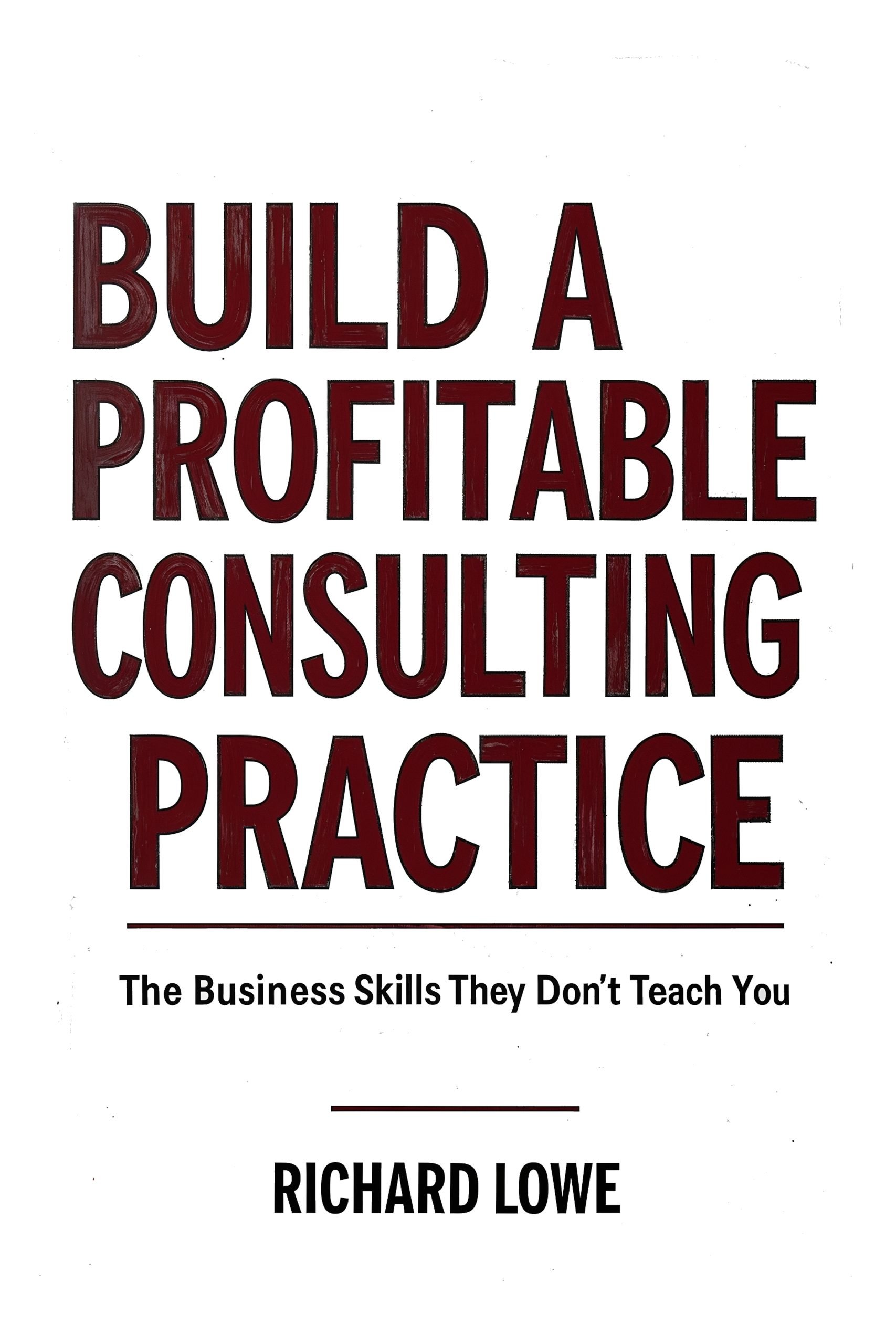
Contracts pay the bills, and expertise alone doesn’t. I wrote Build a Profitable Consulting Practice about the part of consulting nobody teaches, from forty years of doing it.

