TL;DR
7/10. A friendly beginner’s guide to fantasy world-building that maps every system a built world needs and how they interlock. Useful for a paralyzed new writer, especially a teen. Goes wide instead of deep, asks more questions than it answers, and leans hard on self-promotion. Right book for the right reader.
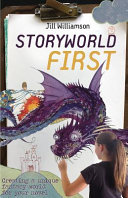
Where do you start when you have to build an entire fantasy world from nothing? That’s the question Jill Williamson opens Storyworld First with, and it’s the right one, because the blank-page paralysis of world-building is exactly what stops most beginning fantasy and science fiction writers cold. The book is a friendly, wide-ranging beginner’s guide to answering it. Judged as an entry-level primer, it does a useful job, and a book that gets a stuck beginner moving beats a dense treatise that scares them off.
Williamson writes fantasy and science fiction for teens and adults, and the book carries the tone of an encouraging mentor walking a new writer through the territory. It’s aimed squarely at beginners, and especially at younger writers. That shapes both its strengths and its limits.
The breadth it covers
The book’s value is its checklist of everything a built world needs a writer to consider. Williamson works through astronomy and how it shapes a world, magic systems, government and politics, map-making and terrain, invented history, religion, technology, languages, and culture, and how all of these interlock instead of sitting in isolation. For a beginner who has one cool idea and no notion of the dozen other systems a believable world requires, this map of the territory is useful.
It turns up the questions you didn’t know to ask, the first thing an overwhelmed world-builder needs.
Keep reading
World building for fiction writers: obsessive world-building done right: Williamson maps the territory for beginners. The deeper version of how the systems interlock.
Wide instead of deep, by design
The real limitation, and the most common complaint from readers, is that the book goes wide instead of deep. Each of those big subjects, magic, religion, government, could fill a book of its own, and Williamson necessarily gives each a brisk overview instead of thorough treatment. More pointedly, several reviewers note that she asks a great many useful questions without supplying many answers. That means the book is a thinking-prompt instead of a how-to.
For a beginner that’s the right approach, since world-building is a matter of making your own choices, but a writer hoping for concrete methods and worked solutions will come away wanting more.
Keep reading
How to make a fantasy map that actually serves your story: the map-making Williamson introduces, taken further into practical method.
The lesson worth keeping: systems interlock
The single most valuable idea in the book, and the one that lifts it above a bare checklist, is Williamson’s insistence that the elements of a world aren’t independent. A world’s astronomy shapes its calendar and its religion; its geography determines where cities rise and what wars get fought; its technology and its magic system constrain what the economy and the government can be.
A beginner’s instinct is to invent each piece in isolation, a cool magic system here, a map there, a pantheon somewhere else, and the result is a world that feels like a collection of props instead of a place. Williamson’s repeated push to ask how each choice affects the others is the difference between a setting and a world, and it’s good advice that more experienced world-builders sometimes still need reminding of. Plenty of published fantasy reads like a prop closet, so this lesson is no beginner-only luxury. It’s the best idea in the book.
Keep reading
Writing science fiction: world-building, characters, and getting published: the interlocking-systems principle applied to building a believable speculative setting.
The self-promotion caveat
One recurring irritation is worth flagging. Williamson uses her own novels as examples throughout, and several readers find the frequency of self-reference grating, to the point of wondering whether part of the book’s purpose is to sell her fiction. Using your own work to illustrate craft is legitimate. Page after page of it starts to feel like a catalog. That density is a flaw. It doesn’t sink the book, but it makes me trust the instruction a little less.
Is Storyworld First worth reading?
For an absolute beginner, especially a teen writer, who’s paralyzed by where to start on a fantasy world, this is a friendly, encouraging, and useful map of everything they need to think about. For an experienced writer or anyone wanting deep, methodical world-building instruction, it’s too shallow and too question-heavy to satisfy.
It’s a solid starter that knows its audience, held back from a higher mark by its lack of depth and the heavy self-promotion. Put it in front of a paralyzed beginner and it’ll do real good. Put it in front of a working novelist and they’ll be bored fast.
Explore the hub
The Writing Hub: world-building, structure, and the rest of the craft, gathered in one place.
Frequently Asked Questions
Other Books From – Being an Author