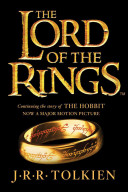
TL;DR
10/10. The foundation of modern fantasy and the best textbook ever written on world-building. Its depth is decades of mostly invisible invention the reader feels but never sees. Slow pacing and archetypal characters are the price of its ambition. Essential, both as a reading experience and as a craft education.
It’s the book every fantasy novel written since has had to answer to. The Lord of the Rings didn’t invent the genre. It set the shape of it so completely that for fifty years afterward writers were either imitating it or consciously rebelling against it. Both are a kind of tribute.
As a reader it’s one of the towering achievements of the twentieth century. As a writer, it’s the single best textbook on building a world so deep the reader believes it extends past the edges of the page.
The story itself is simple enough to summarize and impossible to reduce. A hobbit inherits a ring of terrible power and must carry it across a continent to destroy it in the only fire that can, while the dark lord who forged it bends the world toward war to get it back.
What makes the book what it’s sits underneath that quest. Middle-earth has a history older than the story. Languages with roots. Songs with authors. Ruins with names. And Frodo’s walk is one thread pulled through an enormous, pre-existing weave of history.
I’d rank it above anything else in the genre without a second’s hesitation, and the fashion of treating it as a dusty relic is dead wrong. Every fantasy novel you’ve enjoyed in the last fifty years is standing on this one’s shoulders, whether its author admits it or not.
Depth as the main subject
The depth is the result of decades of invention that mostly never appears on the page. Tolkien built the languages, the histories, the genealogies, and the mythologies first, over a span of years, and then told a story that moves through that material like a traveler through a real country.
The reader feels the iceberg even though they only see the tip, and that felt mass separates Middle-earth from the thousand thinner worlds that copied its surface.
The practical lesson is uncomfortable, because it can’t be shortcut. You can’t fake that depth with an appendix and a map. Middle-earth feels real because Tolkien knew a thousand things he never told you. That knowledge shaped every choice he did put on the page. The name of a hill. The fragment of a song. The way a character references an event you never see. The depth shows because it exists.
It’s also why so many Tolkien imitators bore me. They copied the elves and the dark lord and skipped the decades of homework underneath, and you can feel the hollowness by chapter three.
Keep reading
World building for fiction writers: obsessive world-building done right: Tolkien is the patron saint of the method. How to build a world the reader feels past the edges of the page.
Watch: JRR Tolkien on how WW1 inspired The Lord of the Rings | BBC Global, BBC Global
What it does superbly, in craft terms
Beyond the world, several craft choices reward study.
The pacing is patient in a way modern publishing would never allow. It works because the slow open sets up the later momentum. The long walk through the Shire makes the eventual stakes feel heavier. The handling of scale is masterful, the way Tolkien moves between the intimate, two hobbits exhausted on a mountainside, and the epic, armies clashing before a black gate, without losing either.
And the prose shifts tone deliberately, plain and warm among the hobbits, high and archaic among the kings, so that the language itself tells you where on the map you are.
That shift in register is something I wish I saw more often. Most fantasy prose sounds the same whether you’re in a tavern or a throne room, and Tolkien shows how much a writer throws away by flattening it.
The use of poetry and song, which modern readers often skip, is doing real work. Each poem is written in the voice and tradition of the culture that sings it. That deepens those cultures without a paragraph of explanation. It’s world-building smuggled inside verse.
A modern editor would probably cut those songs, and I’d fight that editor, because the poems carry more world-building per line than most chapters in modern fantasy.
Keep reading
Imagery in writing: 7 secrets to captivate readers: Tolkien’s landscapes are characters. How description builds a world instead of padding a scene.
What are the flaws in The Lord of the Rings?
It’s not flawless, and pretending otherwise helps no one. The pacing that rewards patience will lose readers raised on faster openings, and the first hundred pages test even devotees.
The characterization is archetypal instead of psychologically deep; these are figures in a myth more than people with the messy interiors a modern literary novel demands. Female characters are few, and the prose can tip into the ponderous when the kings start speaking.
The opening chapters are my one real gripe. I’d forgive a reader for wandering off before the hobbits ever leave the Shire, and I’d never tell a new writer to open their own book that slowly.
A writer learning from this book should take the world-building and the handling of scale, not necessarily the pacing or the character model, both of which a contemporary novel usually can’t afford.
None of that dislodges it from the first rank. The flaws are the cost of its ambitions, not failures of execution, and the ambitions are why it endures.
Is The Lord of the Rings worth reading?
It’s essential, both as one of the great reading experiences in the language and as the definitive demonstration of world-building as an act of patient, mostly invisible invention. Every fantasy writer owes it a debt whether they’ve read it or not. Read it for the experience, then read it again as a writer watching how the depth was built, and you’ll come away with more than most craft books can teach.
I don’t hand out perfect scores lightly, and this one earns it. The slow start is the price of admission, and the reward is a world that still feels more real than most of the ones published this year.
Explore the hub
The Writing Hub: world-building, structure, and the rest of the craft, gathered in one place.