Latest
What an AI Detector Score on Your Manuscript Is WorthThe One-Hour Call Before I Quote Your BookWhen a Client Thinks the Ghostwriter Used AIMonthly or Milestone: How Ghostwriting Gets BilledWhen Your Memoir Should Be a NovelWhat It Costs to Fix an AI-Written ManuscriptThe Clients Who Pay and VanishThe Quotation Marks That Get Authors SuedThe Work You Would Never Have StartedWhen Your Own Memoir Sounds Like BraggingWhat Belongs on a Copyright PageThe Hugging Face AI Agent Attack: An Operations ReadingBehind the Book: The Mysterious Island, Neb’s SideHow to Organize Decades of Memories Into a MemoirWhy Rotten Tomatoes Sucks: The Score Does Not Mean What You ThinkWhy Amazon KDP Sucks: They Terminated My Account OvernightIngramSpark: How I Publish Now and WhyWhy Fiverr Sucks for Ghostwriting: The Buyer’s SideWhy eBay Sucks Now: A Seller’s Numbers and a Buyer’s WarningThe Ghost Story TraditionThe Gothic TraditionThe Christmas Ghost Story TraditionResurrection as a Narrative StructureBooks to Give a WriterThe Beach Read ArgumentWhy It’s a Wonderful Life Failed on ReleaseWhat to Read in SpringWhat to Read in SummerWhat to Read in OctoberHow Warner Bros. Dismantled a $17 Billion Cartoon EmpireThe Imaginary Scarcity TrapThe Graph That Goes Vertical Is Usually Somebody Else’sSubstack Is Not Collapsing. The Promise Was.The Disasters That Happen to Ordinary PeopleToba: The Winter That Almost Ended UsJay Stifflemire: Nothing Ever Gets Written DownGeorgie-Ann Getton: I Forgot I Had Free WillAI Detection Cannot Be Evidence, and Publishing Is Using It That WayAI Consciousness Left Philosophy and Entered the LaboratoryThe Office Block Where the Bedrooms AreThe Web Got Fenced: What AI Search Costs Small SitesBlack Tuesday: The Web Ring War Nobody Outside It NoticedWhat the AI Visibility Industry Sells, and What the Evidence SaysBlack Tuesday: The Original ring-master.net Page, 2000Behind the Book: Peacekeeper, The Dissolution WarsBehind the Book: Real World SurvivalBehind the Book: Publish Your BookBehind the Book: ReincarnationBehind the Book: Sell Your BooksBehind the Book: Show Don’t Tell

A Game of Thrones

A Game of Thrones
Category:Fiction
Publisher:Bantam Spectra
Published:August 1, 1996
Pages:694
ISBN:9780553103540
Language:English
Share:

Buy Now

Description:

TL;DR

9/10. Martin’s genre-redefining epic, first of A Song of Ice and Fire, weaving the fight for the Iron Throne through many viewpoints and no character is safe. Sprawling, morally complex, ruthlessly unsentimental.

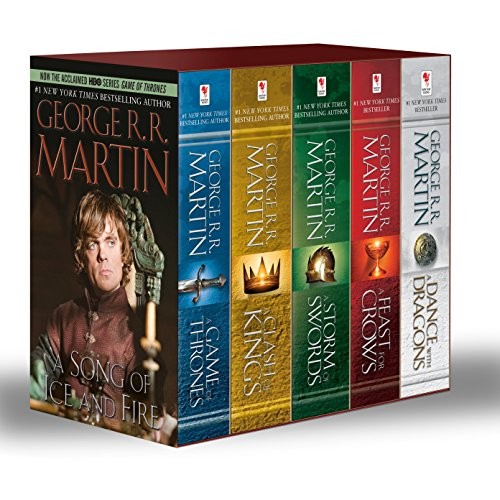
A Game of Thrones by George R. R. Martin is the first volume of A Song of Ice and Fire and the book that redefined modern epic fantasy. Published in 1996, it weaves the struggle for the Iron Throne of Westeros through many viewpoint characters, noble houses, and betrayals, where honor gets you killed and no character is safe. Sprawling, morally complex, and ruthlessly unsentimental, it set a new standard for the genre. It earns a high rating.

What sets the book apart is the texture of its world. Westeros feels less invented than excavated, a place with centuries of history, rival cultures, religions, and grudges, all of which press on the characters and shape their choices. Martin grounds his fantasy in the logic of medieval power, where marriages are alliances, honor is a liability, and the throne is worth any amount of blood, and that hard realism is what makes the dragons and magic, used sparingly, land with such weight when they appear.

What makes A Game of Thrones work?

The book’s defining achievement is its moral complexity and refusal of fantasy convention. Martin populates Westeros with characters who are neither heroes nor villains but flawed people pursuing competing interests, and he established his reputation by killing major characters when the story demanded it, shattering the genre’s assumption that the protagonist is safe. This unpredictability and the absence of clear good-versus-evil give the book a tension and realism epic fantasy rarely achieved before.

Explore the hub

The Entertainment Hub: the books that shaped how we read, gathered in one place.

What does A Game of Thrones teach about craft and character?

The multiple-viewpoint structure is the other key to the book’s power. By rotating among characters across rival houses, Martin lets the reader inhabit every side of the conflict, so that loyalties shift and there’s no single ‘correct’ perspective. Tyrion Lannister, the witty, underestimated dwarf navigating a world that despises him, is among the great anti-heroes of modern fantasy, and the slow-burn political intrigue rewards readers who track its many threads. The world-building is dense, detailed, and lived-in.

Why does A Game of Thrones still hold up?

The novel endures because it permanently raised the bar for what epic fantasy could do. By treating his imaginary world with the moral seriousness of historical fiction, no plot armor, no tidy justice, no guarantee that virtue is rewarded, Martin made the genre safe for adult complexity and forced a generation of writers to abandon comfortable conventions.

The book’s influence reaches far beyond the page, but its real achievement is on it: a sprawling, lived-in world where politics, family, and power feel consequential, and where the reader can never relax into knowing who will survive. That sustained uncertainty is rare and difficult, and Martin makes it look effortless.

What are the weaknesses of A Game of Thrones?

The caveats are substantial. The book is long, with a huge cast and many viewpoint threads that demand attention and can overwhelm newcomers. It’s graphically violent and sexually explicit, with grim subject matter throughout, and as the opening of a still-unfinished series, it sets up far more than it resolves. The pace is deliberate. These are characteristics of ambitious, sprawling epic fantasy instead of flaws.

Is A Game of Thrones worth reading?

A Game of Thrones by George R. R. Martin is the book that redefined modern epic fantasy, valuable for its moral complexity, its willingness to kill major characters, its multi-viewpoint structure, and anti-heroes like Tyrion Lannister, set in dense, lived-in Westeros. Held from the top by length, grim content, and being an unfinished series opener. Genre-defining.

Frequently Asked Questions

What is A Game of Thrones about?
George R. R. Martin’s 1996 epic fantasy, first of A Song of Ice and Fire, weaving the struggle for the Iron Throne of Westeros through many viewpoint characters and noble houses where honor gets you killed and no character is safe.
Why did A Game of Thrones redefine fantasy?
I think A Game of Thrones redefined fantasy through its moral complexity and its refusal of genre convention. Martin populates Westeros with characters who are neither heroes nor villains but flawed people pursuing competing interests. He built his reputation by killing major characters whenever the story demanded it, which shattered the assumption that the protagonist is always safe. That unpredictability, combined with the absence of a clear good versus evil, gives the book a tension and realism that epic fantasy rarely achieved before.
How does the multiple-viewpoint structure work in A Game of Thrones?
The multiple-viewpoint structure is one of the keys to the book’s power. Martin rotates among characters across rival houses, letting me inhabit every side of the conflict as I read. Loyalties shift constantly because there’s no single correct perspective offered to the reader. This structure is part of what makes the dense, detailed world-building feel so lived-in and rewards readers who track its many threads.
Is Tyrion Lannister an anti-hero?
Yes, among the great anti-heroes of modern fantasy, the witty, underestimated dwarf navigating a world that despises him through intelligence and political maneuvering instead of conventional heroism.
What should readers know before starting A Game of Thrones?
I want readers to know that the book is long, with a huge cast and many viewpoint threads that demand attention and can overwhelm newcomers. It’s graphically violent and sexually explicit, with grim subject matter running throughout. As the opening volume of a still-unfinished series, it sets up far more than it resolves. The pace is deliberate, but I see that as a characteristic of ambitious, sprawling epic fantasy instead of a flaw.

About the author

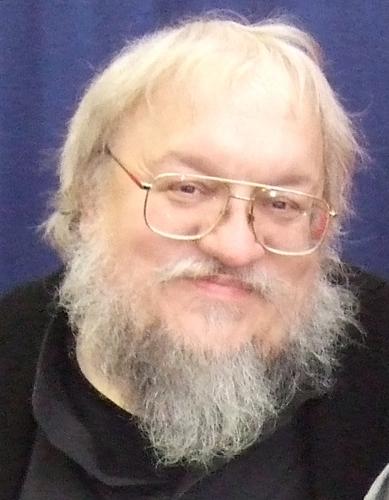
George R. R. Martin

George R. R. Martin

George Raymond Richard Martin, born in 1948 in Bayonne, New Jersey, and often referred to as GRRM, is an American author and screenwriter of fantasy, horror, and science fiction. He sold his first stories while still in college and earned degrees in journalism before beginning his writing career in earnest in the 1970s. His early work spanned science fiction and…

More about George R. R. Martin

Back