TL;DR
8/10. A modern classic of fantasy, justly celebrated for its lovely, disciplined prose, strong first-person voice, and immersive, character-driven story of Kvothe. It gets a high rating on its merits. One well-known problem keeps it out of the top tier. It opens a trilogy still unfinished after many years, so the larger story has no conclusion yet.
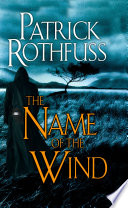
The Name of the Wind by Patrick Rothfuss is among the most celebrated fantasy novels of the century so far, and the acclaim is earned. The first book of the Kingkiller Chronicle, it tells the story of Kvothe, a legendary figure recounting his own life, his childhood in a troupe of traveling players, his years as a near-feral orphan, and his daring entry into a fabled school of magic, in a first-person frame narrative praised for its beauty.
With over a million copies sold, a Quill Award, and rapturous praise from George R.R. Martin, Ursula K. Le Guin, and Brandon Sanderson, it’s a modern classic, held back from the very top tier by one significant, well-known problem outside the book itself. Rothfuss writes sentences I’d read aloud just to hear them, and I’m happy to call this a modern classic. I’m also irritated with it in a way I can’t shake, and the irritation has nothing to do with anything on the page.
Nearly everyone agrees on the prose. Rothfuss writes with what reviewers call a poet’s hand. The language is a real part of the pleasure, lyrical without tipping into purple.
Prose and voice
The book’s most distinctive strength is its writing and its narrative voice. Rothfuss tells Kvothe’s story as a first-person account, the hero narrating his own legend. The device works beautifully. It gives the prose an intimacy, a music, and a control that lift it well above typical genre fare. Le Guin praised the true music in the words, and that’s the right phrase; the language is lovely, carrying the reader through even the quieter stretches on style alone.
For a writer it’s a lesson in voice, and in lyrical prose that stays disciplined. A strong narrative voice can become as much a reason to keep reading as the plot. The writing is the book’s signature.
Voice like this is rare enough in epic fantasy that it makes me a little jealous. Too much of the genre reads like it was written to deliver plot and nothing else, and Rothfuss proves a fat fantasy doesn’t have to settle for that.
Keep reading
First-person voice and the storyteller narrating his own legend: Rothfuss’s frame narration, in the craft of point of view and voice.
Character and immersion
The other great strength is Kvothe himself and the world he moves through.
The novel is a deep, immersive coming-of-age story, following a magically gifted young man through tragedy, hardship, and longing. Kvothe is a vivid protagonist, and his intelligence, arrogance, and grief make him feel real. The world is richly built, the magic system thought through, and the famous magic-school section, often compared to other fantasy schools, plays out with its own distinct logic and isn’t even the whole focus.
Readers report being thoroughly absorbed, surprised to reach the end of so thick a book, the mark of immersion done right. For a writer, it’s a strong example of character-driven fantasy and world-building that justifies the reader’s investment. I like Kvothe because of his arrogance. A gifted hero who knows he’s gifted and pays for that knowledge makes a far more interesting lead than the humble farm boy the genre keeps recycling.
Keep reading
Fantasy world-building and character-driven storytelling: Rothfuss’s immersive world and vivid hero, in the craft of writing fantasy.
The unfinished-series problem
Here’s the significant caveat, and it’s real. The Name of the Wind is the first book of a trilogy that remains unfinished: the second volume appeared in 2011, and the third, long awaited, has still not been published well over a decade later, with no firm date. This matters because the book is explicitly Day One of a larger story, building mysteries and momentum toward a conclusion that readers can’t yet reach and may wait many more years for, if it comes at all.
This is where I lose patience. Selling readers the first day of a three-day story and then leaving them waiting well over a decade is hard to forgive, however lovely the prose. Readers made a commitment when they bought book one, and they deserve an ending. A reader should go in knowing they’re starting a story without a known ending. Some readers also find the book’s leisurely, indulgent pace and its very accomplished hero not to their taste, though these are smaller, more personal objections than the unfinished trilogy.
Is The Name of the Wind worth reading?
It’s a modern classic of fantasy, justly celebrated for its lovely, disciplined prose, its absorbing first-person voice, and its immersive, character-driven story, the rare epic fantasy that absorbs a reader on the strength of its writing as much as its plot. It gets a high rating on its own considerable merits. What keeps it from the very top is the significant, well-known problem that it opens a trilogy still unfinished after many years, so a reader commits to a story whose ending remains out of reach.
For the writing and the world, it’s well worth reading and a fine study in voice and immersion. The missing ending is still a sore point, though, and if cliffhangers frustrate you, wait until the third book exists.
Explore the hub
The Entertainment Hub: modern fantasy and the books worth the immersion, gathered in one place.
Frequently Asked Questions
Other Books From – Fiction

About the author