
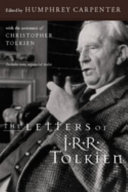
John Ronald Reuel Tolkien (1892-1973) was an English writer, poet, philologist, and university professor who became the most influential fantasy author of the twentieth century. He was born in Bloemfontein, South Africa, and brought to England as a small child. Orphaned young after the deaths of both parents, he was raised in the West Midlands, a landscape that later colored the Shire and other corners of his invented world. He won a place at Exeter College, Oxford, where he fell in love with the languages and literatures of northern Europe, including Old English, Old Norse, Gothic, and Finnish.
Tolkien served as a signals officer in the First World War and fought at the Battle of the Somme, where he lost several of his closest friends. That experience marked his imagination and his writing for the rest of his life. After the war he built a distinguished academic career, first as Professor of Anglo-Saxon and later as Merton Professor of English Language and Literature at Oxford. His lecture on Beowulf, The Monsters and the Critics, changed how scholars read that poem for generations.
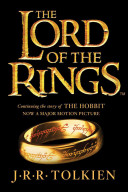
For his own pleasure Tolkien invented languages, and to give those languages a living history he built an entire mythology around them. That private legendarium produced The Hobbit in 1937 and its enormous sequel, The Lord of the Rings, published in 1954 and 1955, which together created the template for modern epic fantasy. He belonged to the Inklings, the Oxford literary circle that also included his friend C. S. Lewis.
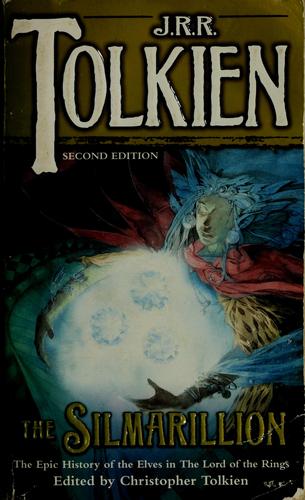
Much of his deeper mythology appeared only after his death, edited by his son Christopher, beginning with The Silmarillion in 1977. Tolkien's invented peoples, places, and languages have shaped fantasy fiction, film, and gaming ever since, and his books have sold hundreds of millions of copies in dozens of languages.
John Ronald Reuel Tolkien
J. R. R. Tolkien
J.R.R. Tolkien
Professional ghostwriting for executives, founders, coaches, and authors who want to get the book done right. 113+ books authored. 54+ ghostwritten for clients.
Ready to discuss your book?
BOOK YOUR PRIVATE CONSULTATIONNo pitch. No pressure.
© 2026 Richard Lowe. The Writing King. All rights reserved.