TL;DR
7/10. The mythology beneath the trilogy, and a real slog as entertainment. Its value is to the writer: it’s the visible iceberg of Tolkien’s world-building, the answer key to his famous depth, and a warning about letting backstory become the text. Read it as a master’s notebook.
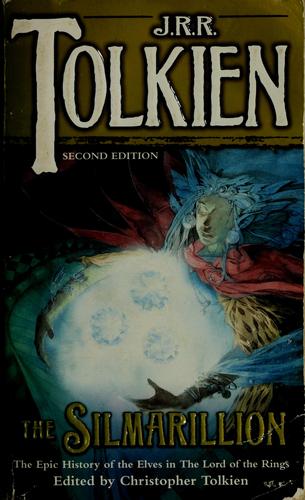
Most readers who love The Lord of the Rings buy The Silmarillion, read thirty pages, and shelve it forever. That’s the starting point for any review of this book. It’s the mythology and deep history of Middle-earth, the vast backstory that gave the famous trilogy its sense of depth, assembled and published after Tolkien’s death by his son Christopher from a lifetime of unfinished manuscripts.
Reading it’s less like reading a story and more like reading the Book of Genesis crossed with Norse myth: a creation, a pantheon, a fall, wars over cursed jewels, the rise and ruin of elf kingdoms across thousands of years. There are dozens of names, few scenes in the novelistic sense, and almost no one to follow for long. It’s glorious and it’s exhausting, often on the same page.
I have mixed feelings about this book. Part of me admires it enormously, because nobody else has ever shown their homework on this scale. The other part wants to hand it back with a note asking where the story went.
Why it matters to a writer anyway
Here’s the reason it deserves a place on a working writer’s shelf despite being nearly unreadable as entertainment.
This is the iceberg. The Lord of the Rings feels deep because all of this existed underneath it, and The Silmarillion is that underneath, made visible. For a writer trying to understand how Tolkien achieved his famous depth, this book is the answer key. It shows you the staggering volume of invention that produced the felt mass of Middle-earth, the thing every thinner fantasy world lacks.
The lesson is double-edged, and worth stating plainly. On one hand, it proves that deep world-building is real labor, and that the depth readers feel in a great fantasy comes from a mountain of material most of which never gets published. On the other hand, it’s a warning. The Silmarillion is what happens when the backstory becomes the text. It shows, by being hard to read, exactly why all that invention should normally stay underneath the story instead of becoming the story. The mass should stay underneath, where readers feel it.
This is the lesson I most want fantasy writers to take from it, because I see writers make exactly this mistake all the time. They fall in love with their own lore and pour it onto page one, and the reader drowns before the story starts. Tolkien kept this material under the trilogy for good reason.
Keep reading
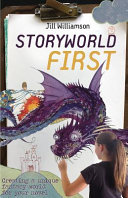
World building for fiction writers: obsessive world-building done right: this is the iceberg beneath the trilogy. How much to build, and how much to show.
Watch: Tolkien's The Silmarillion Audiobook - free -part 1, freeaudiobook
The passages that come alive
It’s not uniformly difficult. Certain tales within it, the fall of Gondolin, the tragedy of Túrin, the love of Beren and Lúthien, are real narratives with real emotional force, and they show what Tolkien could do in the mythic tone when he focused on a single thread. A writer can learn a great deal from how these stories compress an entire heroic life into a few pages while keeping the weight of legend. The contrast between these passages and the drier chronicle sections is itself instructive about the difference between history and story.
Beren and Lúthien alone would justify the book for me. When Tolkien narrows down to one pair of lovers, the mythic voice suddenly carries real heartbreak, and I wish the whole volume had that pulse.
What the structure teaches about scale
There’s a subtler lesson here for any writer attempting a large, multi-generational story. The Silmarillion moves through enormous spans of time, and Tolkien handles that compression in a way novels rarely have to.
He zooms from the creation of the world down to a single doomed love affair and back out to the fall of a civilization, and the shifts in distance are deliberate. When he wants you to feel the weight of an age passing, he summarizes in the voice of chronicle.
When he wants you to feel a death, he slows down into scene. Watching him choose, page by page, when to pull back into myth and when to drop into the particular is a working education in narrative distance, the writer’s control over how close the reader stands to events.
Most writers work at one fixed distance for an entire book, usually close. The Silmarillion is a demonstration of the opposite, a story told almost entirely at long range, with brief, devastating descents into closeness. You’d rarely write a whole novel this way, but understanding that the dial exists, and that you can turn it, is one of the more advanced things a writer can take from any book, and few books make the mechanism this visible.
Of everything in the book, this is what I’d most want a writer to steal. Most novels sit at one distance from start to finish, and plenty of them would be better if their authors knew they could pull the camera back.
Is The Silmarillion worth reading?
I can’t recommend it as a reading experience to anyone but the devoted, and I won’t pretend the chronicle sections are anything but a slog. But as a writer’s document, a window into how the deepest fictional world ever built was made, it’s close to essential, and the handful of fully realized tales inside it are worth the price on their own. Read it not as a novel but as a master’s notebook, and adjust your expectations accordingly.
On those terms it belongs on a writer’s shelf. As a book to curl up with, it exhausts me, and I won’t blame anyone who stops at page thirty.
Explore the hub
The Writing Hub: world-building and the rest of the craft, gathered in one place.