TL;DR
8/10. The authorized and still-definitive 1977 life of the author, written with full access to his papers and family. It traces the orphaned childhood, the Somme, Oxford and the Inklings, and the decades-long creation of Middle-earth. Authoritative, complete, and humane, a little reserved by virtue of being authorized, and the essential starting point for understanding Tolkien.
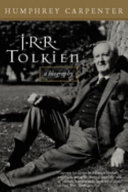
How does an Oxford philology professor, by his own account a quiet and conventional man, come to invent the world that defined modern fantasy? J.R.R. Tolkien: A Biography by Humphrey Carpenter is the authorized, and still the definitive, answer. It was written in 1977, with the cooperation of the Tolkien family and unrestricted access to Tolkien’s papers. It remains the principal life study of the twentieth century’s most influential fantasy author, and for any reader, or writer, curious about the man behind Middle-earth, it’s the essential starting point.
Carpenter was a serious biographer who would go on to chronicle the Inklings as a whole. His access here was complete. The papers, the diaries, the family and friends. The result has the authority that only the authorized life can claim.
I find the gap between the quiet professor and the world he built endlessly interesting, and it’s why I think every fantasy writer should spend time with this book. We like to imagine great creators as wild geniuses struck by lightning. Carpenter shows a man grading exam papers and grieving his friends while the languages grew in the background for decades, and that picture moves me more than the myth ever could.
The life behind the work
The biography’s value is its full, well-sourced account of a life more eventful beneath its quiet surface than one might expect.
Carpenter traces Tolkien from his birth in South Africa through an orphaned childhood in near-poverty. The formative love for Edith Bratt. The devout Catholic faith that shaped him. The trauma of the Somme, where he survived the First World War and lost nearly all his closest friends, an experience that marked his work permanently. He then follows the Oxford academic career, the deep friendship with C.S. Lewis and the Inklings, and the decades-long, painstaking process of creation that produced The Hobbit, The Lord of the Rings, and the lifelong mythology of The Silmarillion. It’s a complete, humane portrait.
The Somme chapters moved me most. Losing nearly every close friend in one war and then going home to build a mythology full of fellowship and loss isn’t a coincidence I can read past.
Keep reading
Writing biography: turning a life into a narrative: Carpenter’s authorized life of Tolkien as a model of the biographer’s craft.
Watch: J. R. R. Tolkien: A Biography - Humphrey Carpenter, Full Audiobook
What it gives a writer
For a writer, the book is an interesting study in how a major creative work comes into being. It shows that Middle-earth was the product of decades of slow, obsessive labor instead of a sudden inspiration. Tolkien’s invented languages came first, and the world grew to house them. It also shows that the famous opening line about a hobbit arrived unbidden while he graded exam papers.
His process could hardly be further from mine. I don’t usually outline first. I write the first chapter, then outline, then write whichever chapters grab me and connect them, the thing I call the ink blot method. Tolkien started with languages and let a world grow around them for decades, and I find it bracing to see both roads end in finished books.
The picture of creation it offers, patient, private, rooted in a scholar’s love of language and myth and in the losses of his life, is a useful corrective to romantic notions of inspiration. A writer learns that the most influential fantasy ever written was built, painstakingly, over a lifetime.
I wish every writer waiting for inspiration would read this part. The most influential fantasy of the last century was built slowly over a lifetime, and the romantic idea that a masterpiece arrives in a flash has stalled more would-be novelists than any bad review.
Keep reading
What writers can learn from how Tolkien built Middle-earth: the decades-long, language-first process this biography documents.
What are the weaknesses of J.R.R. Tolkien?
The book has an interesting tension at its heart. Tolkien himself believed that examining an author’s life reveals very little about the workings of their mind, and Carpenter, to his credit, acknowledges this, even conceding the biography may not finally explain why Tolkien wrote what he did.
Some readers find the result somewhat reserved or dry, and Christopher Tolkien reportedly found the first draft heavy with quoted letters; the book is respectful and authorized, which brings completeness and access but also a certain decorousness, it’s not a probing or revisionist account. And being from 1977, it predates the flood of posthumous material Christopher Tolkien later published, though Tolkien scholars note it’s aged unusually well regardless.
The reserve is my main complaint. An authorized life treads carefully around the family that opened the doors, and I kept wanting Carpenter to push harder on the man behind the tidy portrait. He’s too polite by half.
Is J.R.R. Tolkien worth reading?
It’s the definitive biography of a towering figure, authoritative, complete, and humane, and still the principal life study nearly five decades on. That says a great deal about its quality. For any reader drawn to the man behind Middle-earth, or any writer curious about how the most influential fantasy of the modern age was built, it’s essential.
It loses a little for the polite distance of an authorized life and for predating the posthumous scholarship, and I’d still hand it to any Tolkien reader before anything written since. Start here, then go to the later scholarship to fill in what Carpenter was too decorous to chase.
Explore the hub
The People Hub: the lives behind the books, gathered in one place.
Frequently Asked Questions
Other Books From – Biography and Memoir