Latest
He Banned AI From His Writing Group. His Own Cover Got Called AI Slop.Who Writes the Fake Fan Mail Authors Get? Inside the Scam CompoundsSMS Appointment RemindersDarrell Stern: Stop Being Invisible, Become UnmissableJoe Rockey: Ghostwriting His BookFree BooksHow to Turn Your Expertise Into a Book People Want to Read | The Expert MethodWhat’s New at The Writing King: Week of October 25, 2026Challenger Remembrance Day: The Engineer Who Wouldn’t SignJoel Salomon: The Truth About MoneyReddit Is Putting Up a Login Wall. Wikipedia Won’t Be Far Behind.Victoria Chemko: The Body Is the First TechnologySir Patrick Stewart: A TributeA Year in the Bank: ADHD, Face Blindness and the Freedom to Walk Out | The Impossible Puzzles Show, Episode 326A Yale Economist Says We Won’t Be Missed. He Forgot the Bread Line.Walter Koenig: A TributeI Don’t Post Bad ARC Reviews. I Send the Author a Note.AI Has Paid Off Outside Tech. Apollo Is Reading the Wrong Scoreboard.The Little Red Book of Stuff That Works!Your Kids Are Your Own FaultGrow a PairYou’re Broke Because You Want to BeIt’s Called Work for a Reason!No Time for TactShut Up, Stop Whining, and Get a LifeWilliam Bessette: AI Enablement and Child Welfare TechnologyFree Book Planning ToolsWhat’s New at The Writing King: Week of October 18, 2026Ghostwriting by the Numbers: Timelines, Word Counts and the First CallPromising Young Woman (2020) ReviewBillions for AI, Pennies for the Plumbing: AI Companies Should Pay to Keep PHP AlivePHP2Shell: AI Found a 22-Year-Old Crack Under Your Website in Two DaysPetrov Day: The Officer Who Didn’t Believe the ComputerKindle Unlimited Is Now Kindle+. AI Audiobooks Just Joined the BuffetChina Is Using Bots to Fan the Data Center Backlash. The Backlash Is Still Real.The Society of Authors Signed an Ethical AI Charter, Then Ran From It in Eight DaysWhen to Quit Writing a Book: I’ve Abandoned Dozens, and I’d Do It AgainMo Gawdat Says the AI Dystopia Starts in 2027. Read the List, Skip the DatesGetty Images Filed for Bankruptcy. Can You Prove You Licensed Your Book’s Images?Fluff Words: Cut Them From Your Prose, Keep Them in Your DialogueWhere Can Writers Learn Storytelling From Movies? Richard Lowe Publishes 1,226 Film and TV Reviews With Writing Craft NotesWhere Are the Independent Bookstores and Public Libraries Worth Visiting in Tampa Bay? Author Richard Lowe Profiles 44 of ThemWhat Should You Know Before Hiring a Ghostwriter? The Writing King Publishes 57 New Answers, Including What to Do When It Goes WrongWhere Can You Hear Founders and Executives Tell Their Own Stories? Richard Lowe’s Leaders and Their Stories Publishes Every Unscripted Interview With a Full TranscriptAuthor Richard Lowe Publishes Eight Volumes of Enemies of You, a Researched Series on the Forces Working Against Ordinary AmericansThe Jackal (1997) ReviewThe Day of the Jackal (2024) ReviewYour First Novel Is an Apprentice Piece: What Beta Readers and Editors Can’t FixWhen the Cloud Gets Bombed: What the AWS Data Center Strikes Teach About BackupsHuman-Written Book Labels Are Gatekeeping With a Fee

Jeffrey Gitomer

Jeffrey Gitomer

Jeffrey Gitomer is an American sales trainer, speaker, and author whose books are among the most widely read in their category, and whose delivery is loud enough that a substantial number of readers cannot get past it.

He was born in New Jersey in 1946 and worked in sales and business for decades before turning to training and writing. His syndicated column Sales Moves ran in business journals across the United States, and he has delivered a very large number of seminars for corporate clients.

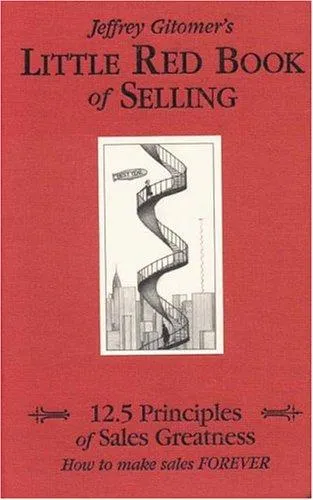
The Little Red Book of Selling, published in 2004, is his best-known work and is built around twelve and a half principles of what he calls sales greatness. The half is a joke and it is also a signal about the register of the whole book, which is deliberately unserious about a subject most people find excruciating.

Its central line does the work: people do not like to be sold, but they love to buy. That reframes the job from persuasion, which is adversarial and which everybody can feel happening to them, to the removal of whatever stands between somebody and a thing they already want. The practical consequences run through the rest of the book, particularly the material on referrals, where his position is that referrals come from doing work worth talking about and then asking, and that most people do neither.

He has published a sequence of color-coded companion volumes on networking, attitude, customer satisfaction, and social media, and runs training and certification programs. His personal branding material dates the books, since the specifics belong to a pre-social media landscape, though the principle underneath survives translation.