
How can seniors start writing a memoir?
Your life contains stories worth preserving, and material is never the problem. Eighty years of it has to become something a reader will finish, and that means deciding what mattered. At 65 I can tell you nobody wants to do that. For more, see how to write your memoir.
Your memoir is your account of your life, not a historical document.Share on X
I’ve ghostwritten 54+ books, and some of my most rewarding projects have been memoirs for seniors.
More on the memoir process. A ninety-two-year-old resort developer who spent fifty years building luxury hotels. A woman whose memoir about growing up in the Louisiana bayou became a family treasure. Each of these projects started the same way: a person with a lifetime of stories and no idea where to begin. This guide covers the practical steps for getting your memoir from scattered memories to finished book. For more, see memoir formats.
How Do You Find Your Memoir’s Purpose?
The first question to ask is “why does it matter?”
An autobiography records a life in order. A memoir picks the experiences that shaped who you are and presents them so they mean something to the reader. Some seniors write to pass down family traditions. Others want to preserve an era or a way of life that’s gone. Others came through something hard and believe their story could help someone facing the same thing, and those are the memoirs I most want to see written.
Knowing your purpose determines which stories make it in and which don’t. A memoir about building a business from nothing will include different stories than a memoir about raising a family through difficult times. Both are valid. Both require focus.
Start by asking yourself: what do I want my grandchildren to understand about my life? That question cuts through the noise faster than any writing exercise. The answer is your purpose.
How Do You Organize Decades of Memories?
The most common mistake memoir writers make is treating completeness as a virtue.
The biggest structural decision is whether to organize chronologically or thematically. Both work. Neither is inherently better. Chronological structure follows your life from one stage to the next. It works well when your story has a clear arc: a path from one place or circumstance to another. If the progression itself is the point, this is the way. It’s also the most intuitive structure for readers. That makes it the safer choice if you’re unsure.
Thematic structure groups stories by subject: family, career, faith, adventure, loss. It works well when your most powerful stories don’t fall in neat chronological order, or when the connections between experiences matter more than the timeline. A chapter on “what the Depression taught my family” might draw from stories spanning twenty years but connected by a single thread.
Create a rough timeline of your life and list the stories you know you want to include. Then look at the list and ask: should you tell these stories in order, or in groups? The stories themselves will usually tell you which structure they need.
What Should You Include in a Memoir?
You can’t include everything. A memoir that tries to cover every year, every job, every move and every family event turns into a list, and nobody reads a list for pleasure.
The most common mistake memoir writers make is treating completeness as a virtue. Writers build good memoirs by cutting, and cutting is what I push hardest on, because cutting a story you love feels like cutting away a piece of your life.
From the podcast
Catherine Napoli Bruce writes about grief and pushes back on the instinct to leave things out, on Leaders and Their Stories:
If you’re forcing yourself to fall in line, saying to yourself, I really need to be quiet about this, or I can’t express this emotion, and then you just push down, push down, push down. That works against the healing process.The material you’re most tempted to omit is usually the reason the book exists.
Include stories that shaped you, taught you something, or capture the essence of who you are. The ones your family always asks to hear again. The ones that make people laugh, cry, or say “I had no idea.” If a story doesn’t connect to your memoir’s purpose, it doesn’t belong, no matter how vivid the memory.
Someone else’s ear helps with this. When I interview memoir clients, I listen for the stories they tell with energy, the ones where their voice changes and their eyes light up. Those are almost always the strongest material. The stories they think they “should” include (because they’re historically significant or involve important people) are often the weakest, because good writing comes from passion and those stories come from obligation.
How Do You Make Memoir Stories Come Alive?
The difference between a memoir people read and one they put down after three chapters is sensory detail: what it looked, sounded, smelled, and felt like.
“We moved to a new house” is information. “The screen door banged shut behind me and the kitchen smelled like the previous family’s cigarettes and the backyard was smaller than the one we’d left and I remember thinking this was a mistake” is a memory. The second version puts the reader in the room. The first one just tells them the room exists.
Close your eyes and try to relive the moment. What do you see? What sounds do you hear? What was the weather like? What were you wearing? These details might seem trivial, but they’re what make writing feel real instead of reported.
You don’t need every sensory detail for every scene. But the moments that matter to your memoir deserve the full treatment.
Reflection matters too. It’s not enough to describe what happened. A memoir gains its weight when you share what you understood about the experience later that you didn’t understand at the time. The gap between who you were in the moment and who you became because of it holds the best memoir writing.
How Does the Interview Approach to Memoir Work?
Many seniors find it easier to talk about their lives than to write about them. There’s nothing embarrassing about that, and I wish more people knew it before they spent a year staring at a blank page. Some of the best memoirs I’ve worked on started as recorded conversations.
If writing feels overwhelming, start by talking. Have a family member record you telling your stories. There’s more in my Memoir Hub. Use the recordings as raw material. The spoken versions often capture your natural voice, your humor, and your pacing better than anything you’d write sitting in front of a blank page.
This is also how professional ghostwriting works for memoir projects. The client talks. I listen, ask follow-up questions, and identify the stories and themes that will make the strongest book. Then I write it in the client’s voice. The finished book sounds like them because the raw material came from their own words.
How Do You Revise a Memoir?
Writing the first draft is half the work. Revising it is the other half. Every good book goes through multiple drafts, and a memoir that skips revision reads like somebody emptied a shoebox of memories onto the page. Your family deserves better than the first pass. Read your work aloud. Your ear catches problems your eye misses: sentences that run too long, transitions that feel abrupt, sections where the energy drops. If you stumble while reading aloud, the reader will stumble too. Fix those spots.
Ask someone you trust to read it and tell you the truth. Not “is it good?” but “where did you get confused?” and “where did you lose interest?” Those specific questions produce useful answers. General praise feels nice but doesn’t improve the manuscript. Set the draft aside for a week before revising. Distance gives you perspective. Sections that felt brilliant when you wrote them might feel overlong when you return to them. Sections you thought were weak might turn out to be the strongest material in the book.
My take
Talk first, write second. Plenty of people stall in front of a blank page for a year when a recorder and a family member would get the stories flowing. Most people sound more natural telling a story out loud than typing it. Then revise, because a memoir that skips revision reads like a shoebox dumped on the page. Read it aloud and ask a reader where they got confused, and skip asking whether it’s good. Set it aside a week, then cut what drags.
When Should You Work With a Ghostwriter?
For some seniors, writing a memoir alone isn’t realistic. Health, energy, time or the sheer scale of the project make it impractical, and that’s what ghostwriting is for. I’ve written memoirs from a subject’s papers after they’d passed, interviewing family to fill the gaps, and those books can be good. They’re never as good as the one the person could have told me themselves, so don’t wait on this.
A ghostwriter captures your voice and organizes your stories into a coherent narrative. The ideas, the experiences, and the wisdom are yours. The craft, the structure, and the pacing come from the writer. The finished book is yours because it grew from your life and your words.
I’ve worked with clients who couldn’t write at all and clients who had written hundreds of pages of notes but couldn’t organize them into a book.
Both situations produce excellent memoirs when the process is right. Find a ghostwriter who listens well, asks the right questions and cares about getting your voice right. A writer who replaces your voice with their own has taken away the one thing your grandchildren wanted from the book, and I have no patience for writers who do that.
If you’re considering a memoir and want professional help, start with a conversation. There’s no obligation, and the first call is free.
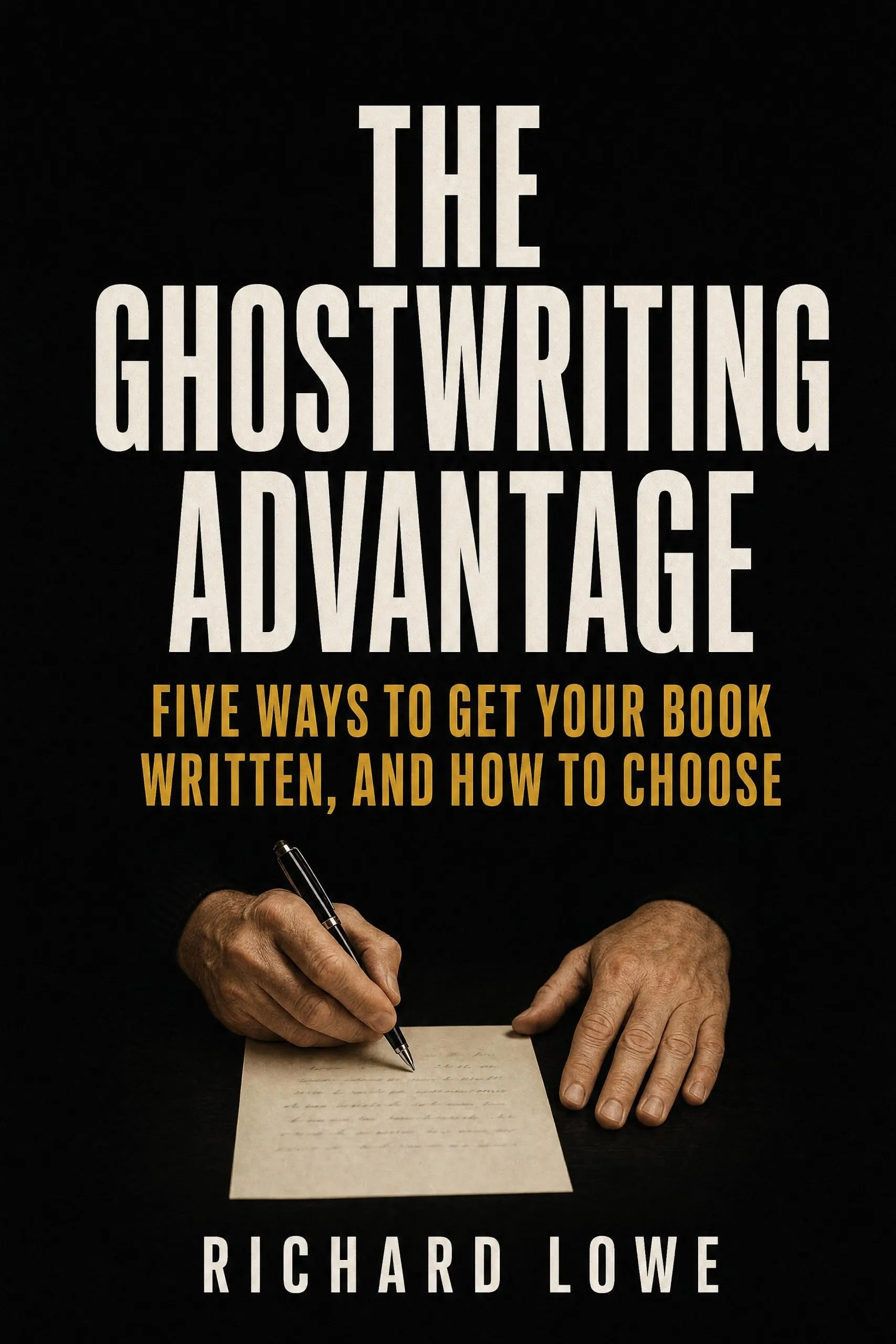
Seniors with a lifetime of stories and no wish to write them alone can read The Ghostwriting Advantage, my book on how to get your book written for you.
