TL;DR
9/10. The highest-value book on the shelf for its size: a century-old hundred pages that still teach clean prose better than anything. Omit needless words is the game. Learn the defaults cold, then break what your voice needs. Not gospel, but close to essential.
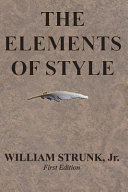
Under a hundred pages, most of them rules, and it’s shaped clear English prose for a century. The Elements of Style is the smallest important book a writer can own, and the value-per-page is unmatched on this shelf. Most craft books burn fifty pages clearing their throat. This one starts handing out rules immediately and never apologizes for any of them. Stephen King grants it the single exception to his deep suspicion of writing rules, and that endorsement is the right frame: this is the book of defaults, the baseline every writer should know cold before deciding which rules are worth breaking.
It began as William Strunk’s slim classroom manual at Cornell.
Decades later his former student E. B. White, by then a master of American prose in his own right, revised and expanded it. The pairing is the book’s secret weapon. Strunk supplies the iron rules, White supplies the grace and the judgment to know when a rule should bend.
What does The Elements of Style teach?
The most famous command is the heart of it: omit needless words. Strunk’s insistence that vigorous writing is concise, that every word should tell, is the single most useful rule in English prose. Around it sit the practical mechanics, the elementary rules of usage and the principles of composition, plus White’s chapter on style, less a set of rules than a sensibility, an argument for plainness, clarity, and respect for the reader.
The most useful advice for most writers is the war on clutter.
Qualifiers, hedges, throat-clearing, the rather and the very and the to that pad a sentence without strengthening it. Cut them and the prose stands up straighter. A sentence leaning on a very and a rather is a sentence that didn’t trust itself, and that kind of flab makes me want to reach for a red pen. It’s the same instinct behind choosing one strong word over a weak word propped up by modifiers.
Keep reading
Strong verbs do the work so adverbs don’t have to: the omit-needless-words principle applied at the level of the verb.
Watch: Ten Principles of Style: On Strunk & White, Paul Griffin
The Two Voices Inside the Book
Part of what makes the little book endure is the tension between its two authors, and that’s more instructive than it first appears. Strunk is the drill sergeant. His rules are blunt, absolute, and sometimes overstated, and read alone they could produce a writer who’s correct and lifeless, every sentence trimmed to regulation length. White is the counterweight.
His added chapter on style isn’t a set of commands at all but a meditation on voice, ear, and the moments when a good writer should set the rules aside for the sake of rhythm or feeling. The book works because it holds both at once: the discipline and the judgment to know when discipline becomes a cage.
For a developing writer that pairing is the main lesson, larger than any single rule. Concision and correctness are necessary but not sufficient; they’re only the floor. A writer who absorbs only Strunk writes clean, dead prose. A writer who absorbs only White, without the underlying discipline, writes self-indulgent mush. Both are a pain to read, and the mush is worse. The point of the book is that you need both, the rules in your bones and the taste to break them on purpose, and the two authors model that balance in the same hundred pages.
Reading them together teaches a young writer that style is what’s left after correctness is handled.
The Caveats, and Why It Still Wins
It’s not gospel, and treating it as gospel has done some harm. A few of its grammar pronouncements are dated or were dubious to begin with, and linguists have spent years pointing out where Strunk overreached, especially on the passive voice, which the book warns against while occasionally using it. White’s prose style suits a mid-century formality that not every writer should imitate.
So read it as a foundation. Learn the rules cold, internalize the instinct toward concision and clarity, and then break whatever needs breaking for your voice. A writer who knows these rules and chooses to violate one is doing something different from a writer who never learned them. This book makes you the first kind.
Keep reading
Stop these 76 bad writing habits to improve your skills: Strunk names a few. Here’s the longer list of what clutters prose.
For its size and price it remains the highest-value book on this shelf. It won’t teach you to tell a story or build a character, and a writer who owns only this one will produce clean sentences that add up to nothing. But it teaches the sentence, the substrate everything else is built on, and it’s survived a century mostly intact. A hundred years on, most of the rules still stand, and I can’t name another craft book that will be able to say that.
Explore the hub
The Writing Hub: sentence craft and the rest, gathered in one place.
Frequently Asked Questions
Other Books From – English and Grammar