TL;DR
9/10. J.K. Rowling’s phenomenon-launching first novel, the one that introduced Harry, Hogwarts, and a wizarding world that captivated a generation. A model of immersive world-building, warmth, and page-turning narrative momentum aimed at young readers but beloved by all ages. The book that got millions of children reading, with all the cultural weight that implies.
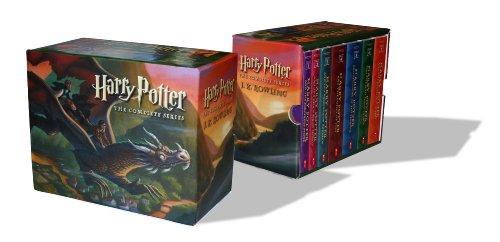
Harry Potter and the Philosopher’s Stone by J.K. Rowling (published as Sorcerer’s Stone in the United States) is the novel that launched a literary phenomenon among the most successful in history. It introduces Harry Potter, an orphaned boy living miserably with his awful relatives, who discovers on his eleventh birthday that he’s a wizard and is whisked away to Hogwarts School of Witchcraft and Wizardry, where he finds friendship, belonging, and the first hints of a dark destiny.
Warm, inventive, and irresistibly readable, the book and its sequels got an entire generation of children reading and built a fictional world of extraordinary depth. It gets a high rating as a landmark of immersive, accessible storytelling.
I’m grateful to any book that turned millions of kids into readers, before I say a word about craft. And the craft holds up. Rowling makes a miserable orphan so vivid that you want to march into that house and rescue him yourself. Whatever one thinks of the wider phenomenon, this first book’s craft is undeniable. It builds a complete, enchanting world and a propulsive story that pulls young readers in and refuses to let go.
World-building and wonder
The book’s greatest strength is its world-building. Rowling created a wizarding world of unusual richness and charm. Diagon Alley. The Hogwarts castle. The moving staircases. The sorting hat. Quidditch. The inventive magical details accumulate into a place that feels real and endlessly explorable. She filters this world through Harry’s wonder as a newcomer discovering it alongside the reader, so the magic never feels like exposition but like shared discovery.
This immersive, lovingly detailed setting is the foundation of the series’ appeal and a real achievement of imaginative construction, the kind of fictional world readers want to live inside, and so many did.
Diagon Alley is the scene I’d show any writer who thinks world-building means an info dump. Rowling lets us walk in beside Harry, gawking at everything he gawks at, and the world arrives as pure delight. The trick of letting a newcomer carry the reader in is simple, and I’m amazed how many fantasy writers still ignore it.
Keep reading
Building an immersive, believable fantasy world: Rowling’s richly realized wizarding world, in the craft of fantasy world-building.
Watch: Harry Potter and the Philosopher's Stone | Official Teaser Trailer | HBO Max, Harry Potter
Story, warmth, and accessibility
Beyond the setting, the book succeeds through warmth, momentum, and accessibility. Rowling’s plotting is brisk, with a clear mystery driving toward a satisfying climax. Her characters are vivid and instantly memorable. Harry, loyal Ron, clever Hermione, kindly Hagrid, the looming Snape, all instantly engaging. The emotional core, an unloved orphan finding friendship, belonging, and a place where he matters, has universal appeal and real heart. And the prose is clean and accessible, pitched perfectly for young readers without condescending to them.
The orphan who finally finds a place that wants him is the oldest story there is, and it still moves me. Rowling doesn’t dress it up or apologize for its sentiment, and I think that plainness is why kids fell for it.
This combination, an enchanting world, a gripping story, warm characters, and accessible prose, is exactly what made the book a gateway to reading for millions of children, an achievement of real cultural significance.
Explore the hub
The Entertainment Hub: the books that got a generation reading, gathered in one place.
What are the weaknesses of Harry Potter and the Philosopher’s Stone?
The caveats are matters of scope and taste. As the series opener and a children’s book, it’s the simplest and least ambitious of the seven, the later volumes grow darker and more complex, so an adult reader may find this first installment slight on its own. Its plot leans on some familiar fantasy and boarding-school conventions, and a few elements strain logic on close inspection.
The logic holes don’t bother me, and I’ve got no interest in auditing a children’s fantasy like an insurance adjuster. The simplicity is deliberate. This book was built to open a door for young readers, and I can’t think of one in its generation that did it better.
There’s also the separate matter of the author’s later public controversies, which lead some readers to weigh the work differently; that’s a personal judgment a reader will make for themselves. As a piece of craft aimed at its audience, the book succeeds unusually.
Is Harry Potter and the Philosopher’s Stone worth reading?
It’s a landmark of immersive, accessible storytelling, valuable above all for its rich, charming world-building, a wizarding world rendered with such loving detail that readers wanted to live inside it, filtered through Harry’s wonder as a newcomer, and for the warmth, momentum, and accessibility that made it a gateway to reading for millions of children. It gets a high rating for that undeniable craft and cultural impact.
It loses a little as the simplest, least ambitious installment of a series that deepens later, and some readers weigh it against the author’s later controversies, a personal judgment. As the book that launched a phenomenon and got a generation reading, its achievement is real. Highly recommended for its audience and beyond.
It’s the book I’d put in a reluctant young reader’s hands before any other, and I’d tell any children’s author to study how Rowling makes a kid feel welcome in a strange world within the first few chapters.
Frequently Asked Questions
Other Books From – Fiction

About the author