TL;DR
8/10. Lynne Truss’s witty, bestselling defense of punctuation turns commas and apostrophes into a pleasure. Funny, scholarly, and surprisingly moving about why these marks matter. Held from the top by a zero-tolerance stance that’s more entertaining than authoritative.
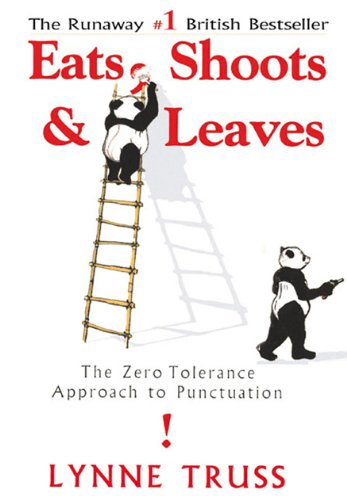
Eats, Shoots & Leaves: The Zero Tolerance Approach to Punctuation by Lynne Truss is the rare grammar book that became a cultural phenomenon. Published in 2003 in the United Kingdom and in 2004 in the United States, it spent time at the top of the bestseller lists and made punctuation, of all things, a subject people argued about at dinner.
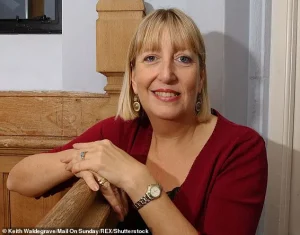
Truss is a former literary editor turned journalist and broadcaster. She mounts a spirited, funny, unapologetically passionate defense of the comma, the apostrophe, the semicolon, and the rest of the marks most people ignore until they go wrong. It gets a strong rating.
I work with punctuation every day, and most books about it read like a scold wagging a finger. I like Truss because she’s funny about it. She cares about commas the way some people care about football, and her outrage at a stray apostrophe is so theatrical that you laugh even if you’ve committed the exact crime she’s describing.
The title comes from a joke about a misplaced comma and a panda, and that joke tells you everything about the book’s method. Truss makes her case through the comedy of meaning gone wrong instead of through dry rules.
The sign. The menu. The headline whose punctuation accidentally says the opposite of what was intended. She is, as one reviewer put it, a reformer with the soul of a stand-up comedian, and the book works because she never forgets that the reader came to laugh as much as to learn.
The panda joke does more teaching than a chapter of rules ever could, and I wish more grammar books understood that. People remember the sentence that made them laugh long after they’ve forgotten the rule that made them feel stupid, and Truss built a whole book on that insight.
What makes Eats, Shoots and Leaves work?
The book’s central achievement is making punctuation feel like it matters, emotionally and not just technically.
Truss calls these marks the traffic signals of language, the small courtesies that let a sentence be understood as the writer intended. Her affection for them is infectious. Interwoven with the how-to is a real history. The invention of the question mark in the era of Charlemagne. Orwell’s dislike of the semicolon. The slow evolution of the apostrophe. It gives the book scholarly depth beneath the jokes.
It’s a how-to guide that reads like a comic essay, and that combination is why it reached millions who would never pick up a style manual. The history is my favorite part. It amuses me that somebody had to invent the question mark, and that a writer as sharp as Orwell held a grudge against the semicolon. That history makes the marks feel like tools people fought over instead of laws handed down from on high.
Explore the hub
The Entertainment Hub: the books that shaped how we read, gathered in one place.
Watch: Eats, Shoots & Leaves, by Lynne Truss, ATeacher Reads
What does Eats, Shoots and Leaves teach about craft and character?
What gives the book its staying power is Truss’s voice, urbane, exasperated, and very English, a persona she sustains so well that the reader roots for her crusade even while suspecting it’s a little mad. Frank McCourt’s foreword sets the tone, half tribute and half affectionate teasing, and Truss rewards it with prose that’s brisk, quotable, and frequently laugh-out-loud funny.
The structure moves mark by mark, the apostrophe, the comma, the colon and semicolon, the dash and the rest, so the book doubles as a usable reference even as it entertains. It’s short, fast, and built for the general reader instead of the specialist. That’s both its great strength and the source of its limits.
I’d put this book in the hands of anyone who writes for a living and thinks punctuation is the copyeditor’s problem. Somebody has to decide where that comma goes, and if you hand the job off, you’ve handed off part of your meaning along with it.
Why does Eats, Shoots and Leaves still hold up?
The book endures because it captured a real and widely shared frustration, the sense that standards of written care were slipping, and gave it a voice that was funny instead of merely cranky. Everyone has winced at a greengrocer’s misplaced apostrophe or a sign that means the wrong thing, and Truss turned that small daily irritation into a shared joke and a gentle cause.
It also endures as a gateway, the book that convinced countless readers that grammar and punctuation could be fun instead of punitive, and sent them on to the sterner style guides afterward. More than two decades on, it remains the book people name first when the subject of punctuation comes up at all.
I’m squarely on Truss’s side of that frustration. A shop sign with a wrong apostrophe tells me nobody cared enough to check it, and carelessness about small things rarely stays small. She made that irritation funny, and that took more skill than most people give her credit for.
What are the weaknesses of Eats, Shoots and Leaves?
The caveats are real. The zero-tolerance stance of the title is a comic pose, but it shades at times into outright prescriptivism, and linguists have pushed back on the idea that punctuation rules are as fixed or as morally weighted as Truss sometimes implies. The book is British in its conventions, and a few of its rules differ from American usage. That can mislead the unwary reader on the wrong side of the Atlantic.
This is where I disagree with her a little. A British rule followed on an American manuscript looks like a mistake to an American editor, and the book won’t always save you from that trap. And the zero-tolerance act, funny as it is, gives cover to the pedants who treat a comma splice as a moral failing when the real sin is writing something nobody wants to read.
It’s also, by design, more entertainment than authority, charming and useful but not a substitute for a real style manual when the question is hard. And the humor, delightful as it is, occasionally substitutes for depth on the trickier points. These are the limits of a popular book that set out to be a joy instead of a final word.
Is Eats, Shoots and Leaves worth reading?
Eats, Shoots & Leaves by Lynne Truss is the best possible introduction to why punctuation matters, valuable above all for making the subject fun and for its infectious affection for the marks most writers take for granted. I’d buy it for any new writer who thinks commas are optional. Read it for the delight and the history, then keep a sterner guide nearby for the hard cases, because Truss’s prescriptive streak is more pose than authority. It’s a small classic of popular nonfiction, and I’m grateful somebody proved grammar could sell.
Frequently Asked Questions
Other Books From – Fiction


About the author