TL;DR
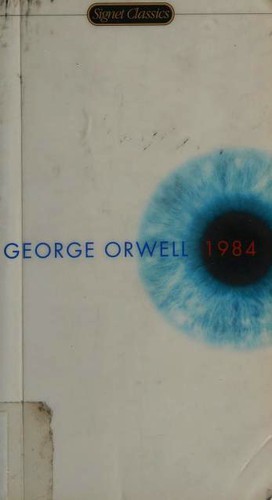
10/10. George Orwell’s towering dystopia of totalitarianism, surveillance, and the war on truth itself, the novel that gave us Big Brother, doublethink, thoughtcrime, and the memory hole. A masterpiece of political imagination whose warnings have only grown more relevant. Essential reading and among the most important novels of the twentieth century.
1984 by George Orwell is among the most important and influential novels ever written, a dystopian masterpiece whose vision of total state control has shaped how the modern world thinks and talks about power, surveillance, and truth. Set in a future of perpetual war and absolute tyranny, it follows Winston Smith, a functionary in a regime that rewrites the past, monitors every citizen, and seeks to control thought itself.
The book gave the language Big Brother, doublethink, thoughtcrime, Newspeak, and the memory hole, concepts now woven into how we describe authoritarianism. It gets the highest rating, and it deserves every point: the book still chills me to the bone with how little of it feels like fiction. What makes the novel endure is the precision of its ideas about how tyranny works, on language, memory, and the very possibility of objective truth.
The machinery of tyranny
The book’s genius is its detailed, chillingly plausible anatomy of total control. Orwell shows a regime that dominates through the manipulation of language and the past, not only through force and surveillance, the ever-present telescreen, the Thought Police: Newspeak narrows the words available for dissent until rebellious thought becomes literally unthinkable, while the constant rewriting of history destroys any fixed reality against which the Party could be judged. Doublethink, holding two contradictory beliefs at once, becomes a survival skill.
This focus on the control of thought, language, and truth, instead of mere physical repression, makes the novel so penetrating and so permanently relevant.
Keep reading
Language, power, and the control of thought: Orwell’s vision of language as a tool of control, in the wider question of politics and books.
Watch: 1984. By George Orwell. Full Audiobook., SPOKEN WORDS
Why does 1984 still hold up?
The novel’s warnings have proven unusually durable because they target tendencies that recur in every era: the manipulation of information, the assault on objective truth, the surveillance of citizens, and the demand for ideological conformity. Each generation rereads 1984 and finds fresh relevance, the mark of a work that grasped something fundamental about power instead of satirizing one regime. Orwell’s bleakness isn’t nihilism but warning, a deliberate effort to make readers vigilant about the fragility of truth and freedom.
That moral seriousness, combined with the book’s imaginative force, is why it remains required reading and a permanent reference point in political discourse.
Explore the hub
The Entertainment Hub: the novels that shaped how we think, gathered in one place.
What should you know before reading 1984?
1984 is a grim, deliberately oppressive read, by design. Orwell offers little comfort and a famously bleak ending, because the book is a warning instead of an entertainment, and a reader should come to it expecting to be disturbed instead of uplifted. Some find its later expository sections, the long passages of political theory, heavy going. But these are features of its purpose, not flaws: the darkness is the point, and the ideas justify their space.
The novel justifies its bleakness through the seriousness of what it says. Readers who skim the theory to get back to Winston are skipping the part that explains the whole damn machine.
Is 1984 worth reading?
It’s a towering masterpiece and among the most important novels of the twentieth century, valuable beyond measure for its penetrating, chillingly plausible anatomy of totalitarian control, through force and surveillance and through the manipulation of language, memory, and truth itself. It gets the highest rating as essential reading whose concepts, Big Brother, doublethink, thoughtcrime, Newspeak, have become permanent tools for understanding power, and whose warnings only grow more relevant.
It’s a deliberately grim, oppressive read with a bleak ending, by design, because it’s a warning instead of an entertainment. For understanding the modern world and the fragility of truth and freedom, it’s indispensable. Every time someone with power tells people to disbelieve their own eyes, Orwell looks smarter and the rest of us look worse off.
Frequently Asked Questions
Other Books From – Fiction


About the author