Latest
How Much AI Is Too Much in Writing? 83 Writers Drew the Same LinePost an AI Image and Unfriend MeShe Asked How to Publish Her Bedtime Story. They Called Her a Thief.The AI Hype Cycle: Why the Crash Is Coming, and Who’s Causing ItSix Claude Prompts That Get You Unstuck, and Why the Order MattersDogpiled Over AI Art at the Renaissance FaireClaude Opus 5.5: What the New Release Means for WritersTrump’s AI Force Is a Fire Department With No Fire CodeMonthly or Milestone: How Ghostwriting Gets BilledThe Hugging Face AI Agent Attack: An Operations ReadingWhat It Costs to Fix an AI-Written ManuscriptWhen Your Memoir Should Be a NovelWhat Belongs on a Copyright PageThe Clients Who Pay and VanishWhat an AI Detector Score on Your Manuscript Is WorthThe Quotation Marks That Get Authors SuedThe One-Hour Call Before I Quote Your BookWhen Your Own Memoir Sounds Like BraggingThe Work You Would Never Have StartedWhen a Client Thinks the Ghostwriter Used AIBehind the Book: The Mysterious Island, Neb’s SideHow to Organize Decades of Memories Into a MemoirWhy Rotten Tomatoes Sucks: The Score Does Not Mean What You ThinkWhy Amazon KDP Sucks: They Terminated My Account OvernightIngramSpark: How I Publish Now and WhyWhy Fiverr Sucks for Ghostwriting: The Buyer’s SideWhy eBay Sucks Now: A Seller’s Numbers and a Buyer’s WarningThe Ghost Story TraditionThe Gothic TraditionThe Christmas Ghost Story TraditionBooks to Give a WriterResurrection as a Narrative StructureThe Beach Read ArgumentWhy It’s a Wonderful Life Failed on ReleaseWhat to Read in SpringWhat to Read in SummerWhat to Read in OctoberHow Warner Bros. Dismantled a $17 Billion Cartoon EmpireThe Imaginary Scarcity TrapThe Graph That Goes Vertical Is Usually Somebody Else’sSubstack Is Not Collapsing. The Promise Was.The Disasters That Happen to Ordinary PeopleToba: The Winter That Almost Ended UsJay Stifflemire: Nothing Ever Gets Written DownGeorgie-Ann Getton: I Forgot I Had Free WillAI Detection Cannot Be Evidence, and Publishing Is Using It That WayAI Consciousness Left Philosophy and Entered the LaboratoryThe Office Block Where the Bedrooms AreBlack Tuesday: The Web Ring War Nobody Outside It NoticedThe Web Got Fenced: What AI Search Costs Small Sites

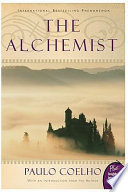
The Alchemist

The Alchemist
Author:Paulo Coelho
Category:Fiction
Published:April 25, 2006
ISBN:0061122416
Pages:210
ISBN:9780061122415
Language:English
Share:

Buy Now

Description:

TL;DR

10/10. One of my favorite books: a short, incredible fable of a shepherd’s quest that changed my point of view and that I loved every word of. Its spare, parable-like style isn’t a flaw but its strength, giving the story a timeless power. Brief, rich, and worth rereading, read in the right spirit it can be transformative.

A client recommended The Alchemist to me and I’m grateful. It turned out to be one of my favorite books. An easy ten out of ten, and better than that. Paulo Coelho’s slim 1988 fable follows Santiago, an Andalusian shepherd who leaves everything to journey toward the Egyptian pyramids in pursuit of a recurring dream of treasure. It’s short, it’s unlike most novels in how it’s written, and it’s incredible.

It had things in it that changed my point of view, and I’d happily read it again. I loved every word of it.

The most important thing to know going in is that this is a fable, not a conventional novel, and that’s exactly why it works the way it does. Read in that spirit, it’s something rare.

A book that can change how you see things

What sets this book apart for me is that it didn’t just entertain, it shifted something. Coelho’s tale of Santiago following his dream, learning to listen to his heart, to read the omens of his life, and to pursue what the book calls his Personal Legend, carries ideas about purpose, fear, and persistence that landed with me and stayed.

The central notion is that when you commit to your dream the world conspires to help you. That sounds simple until you sit with it. The book has a way of making you sit with it. Plenty of books are enjoyable; few change how a reader looks at their own life. This one did that for me, and that’s the highest thing I can say about a book.

Keep reading

Theme in fiction: a story that leaves the reader changed: the kind of resonance The Alchemist achieves, in the craft of meaning in fiction.

The style is part of the magic

It’s also not written in the standard style, and I loved that about it. Coelho writes in a spare, lyrical, parable-like voice, closer to an old folktale or a piece of scripture than to a modern novel. The choice is deliberate, and exactly right for what the book is doing. The simplicity is the form.

A fable works by stripping away the clutter so the meaning shines through. Coelho’s clean, almost mythic prose gives the story its timeless quality, the sense that you’re reading something older and truer than an ordinary novel. For a writer, it’s a beautiful demonstration that breaking from the standard novelistic style, when it fits the story, can be a strength instead of a flaw.

Keep reading

Writing allegory and fable: the power of the simple story: Coelho’s spare, mythic style, in the craft of the story that teaches and lasts.

Short, rich, and worth rereading

One of the book’s quiet virtues is how much it holds in so few pages. It’s a short, fast read and dense with meaning. The kind of book you finish in an afternoon and think about for years. It rewards rereading, because you bring something different to it each time. I find that the mark of a valuable book: not how long it is, but how much it gives you and how much it stays with you.

The Alchemist is brief and inexhaustible at once, a rare combination, and the reason I expect to return to it.

Is The Alchemist worth reading?

It’s one of my favorite books, a ten out of ten and arguably more, a short, incredible fable that changed my point of view and that I loved every word of. I came to it on a client’s recommendation, and I now pass that recommendation on without reservation. Yes, it’s simple, and yes, it’s written as a parable instead of a conventional novel, but those are its strengths, not its flaws: the simplicity carries the meaning and the fable form gives it a timeless power.

Read it in the spirit it asks for, open to what it’s to say, and it can change your thinking. I’ll read it again. A small, beautiful, lasting book, and one of the best I know.

Explore the hub

The Entertainment Hub: fiction, fable, and the books that stay with you, gathered in one place.

Frequently Asked Questions

What is The Alchemist about?
The Alchemist follows Santiago, an Andalusian shepherd who leaves everything behind to journey toward the Egyptian pyramids in pursuit of a recurring dream about treasure. Along the way he learns to listen to his heart and to read the omens that appear in his life. Paulo Coelho wrote the book in 1988 as a short fable instead of a conventional novel. The central idea running through Santiago’s journey is what the book calls pursuing your Personal Legend, your true purpose in life.
Why is The Alchemist rated so highly?
I rate it so highly because it’s one of my favorite books and it changed my point of view. It’s short, incredible, and rich with ideas about purpose, fear, and persistence that landed and stayed with me. A client recommended it to me, and it turned out to be one of the best books I’ve ever read. Plenty of books entertain, but few shift how a reader looks at their own life, and this one did that for me.
Is The Alchemist a normal novel?
No, and that’s part of its power. It’s a fable, written in a spare, lyrical, parable-like voice closer to an old folktale than a modern novel. That non-standard style is deliberate and exactly right, giving the story a timeless, universal quality.
Why does Paulo Coelho’s simple writing style work so well in The Alchemist?
A fable works by stripping away clutter so the meaning shines through, and Coelho chose that spare, parable-like voice on purpose. His clean, almost mythic prose gives the story a timeless quality, as if it were older and truer than an ordinary novel. The simplicity isn’t a shortcut around craft, it’s the form the story needed to work. For a writer, it shows that breaking from the standard novelistic style, when it fits the story, can be a strength instead of a flaw.
Is The Alchemist worth rereading?
Very much so. It’s a short, fast read but dense with meaning, the kind of book you finish in an afternoon and think about for years, and that gives you something different each time you return to it. Its brevity and its richness are a rare combination.
Who should read The Alchemist?
The book suits anyone open to reading an inspirational fable in the right spirit, especially someone thinking about purpose, dreams, or a big decision in their life. Read that way, it can leave a lasting mark, the way it did for me. It’s also a quick read, short enough to finish in an afternoon, yet dense enough that it rewards rereading. I expect to return to it myself more than once.

About the author

Paulo Coelho

Paulo Coelho

Paulo Coelho, born in 1947 and raised in Rio de Janeiro, Brazil, is a Brazilian novelist known for the rich symbolism and the spiritually motivated journeys of his characters. As a young man he rebelled against his family's expectations, was committed to a psychiatric institution more than once, and later led a turbulent, searching life that informed much of his…

More about Paulo Coelho

Back