TL;DR
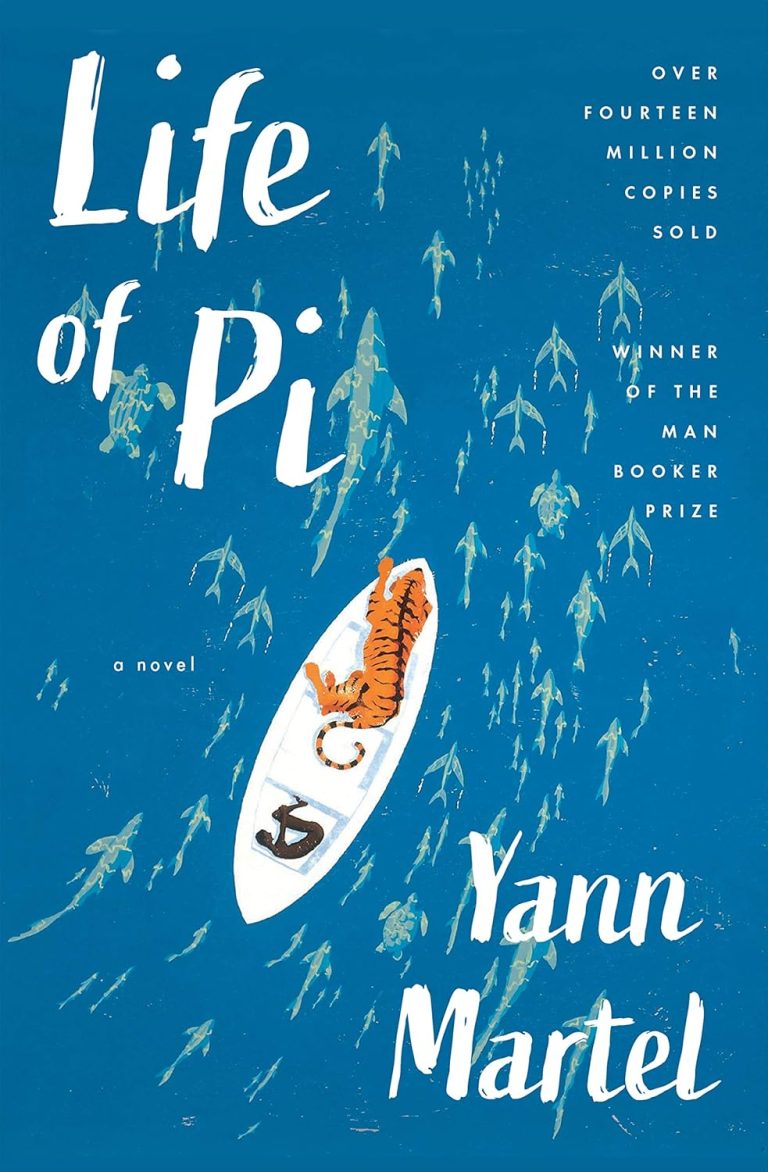
9/10. Pi Patel survives 227 days in a lifeboat with a Bengal tiger named Richard Parker. Then, in the last twenty pages, the book takes the story away and gives a second one, and asks which you prefer. That question is what the novel is about.
A cargo ship carrying an Indian family and their zoo animals sinks in the Pacific. The survivors in one lifeboat are a sixteen-year-old boy, a spotted hyena, an injured zebra, an orangutan, and an adult Bengal tiger. The population reduces quickly to two.
What follows is a survival novel of unusual patience. Fresh water, fish, turtles, the mechanics of asserting dominance over a predator in a confined space, and the slow accumulation of physical detail that makes the impossible feel procedural. Martel took an absurd premise, a boy and a tiger sharing a lifeboat, and made it read like a procedures manual, and the nerve of that still impresses me. Then he pulls the rug in the last twenty pages in a way I haven’t stopped thinking about. It won the Booker Prize in 2002 and sold in enormous numbers, and it’s one of the few literary novels of the last thirty years that most people have either read or been told the ending of.
What is the ending of Life of Pi?
Rescued and interviewed by two investigators from the shipping company who don’t believe a word of it, Pi tells a second version.
There are no animals in it. The same events, the same boat, the same duration, and human beings occupying the roles: a cook, a sailor with a broken leg, his mother, and himself. It’s short, brutal, and entirely plausible, and it takes about four pages.
Then he asks the investigators which story they prefer. Neither version changes what happened to the ship. Neither can be verified. Both account for the facts in front of them.
They pick the one with the tiger. And Pi says, so it goes with God.
That line stunned me. Four pages undo three hundred, and Martel does it with a question and a shrug.
Is the second story the true one?
The novel refuses to say, and that refusal is the entire design. Readers who conclude the second story is the truth and the first is a coping mechanism have read it one way and aren’t wrong. Readers who hold that the tiger version is what happened have read it another way and are also not wrong, because nothing in the text adjudicates.
What the book does is make the question unavoidable. You have to choose, and having chosen you have to notice what your choice was made of. If you preferred the better story, you did exactly what the novel says people do about much larger questions.
I’ve seen readers hate this, and I understand why.
It can feel like a trick, a novel withdrawing its own contract in the last act. I think that reading misses what the trick is doing. The book has spent three hundred pages making you complicit in preferring the better story, and then it shows you the choice you were making.
Why does the tiger work as a device?
Because the procedural detail is relentless.
Martel justifies the fantastical version with fish guts, sun exposure, the mechanics of collecting rainwater, the solar stills, the locker inventory, and the slow business of training a predator using a whistle and the boat’s motion. Pi’s father ran a zoo and the novel spends real time on animal behavior before the ship ever sails, so that the training reads as applied knowledge and not as magic.
Take that away and the second story would land as a correction instead of a loss. Because the first version is so physically specific, losing it costs the reader something, and the cost is the point.
This is the technical lesson and it generalizes. If you want a reader to accept something implausible, spend your specificity on the ordinary parts. The tiger is credible because the rainwater is credible.
That’s the most useful single piece of craft advice I know of in any novel, and it’s why I’d push every fantasy and science fiction writer toward this book.
Where does Life of Pi drag?
The first hundred pages, before the ship sinks, and this is the main weakness. The Pondicherry material covers zoo management, Pi’s simultaneous practice of Hinduism, Christianity, and Islam, and a set of essayistic chapters on religion and on animals in captivity. All of it is doing real work for the ending, and it’s slower than it needs to be, and a fair number of readers give up inside it.
The opening hundred pages are my one real complaint. I understand why Martel needed them, and I still think an editor could have taken a third out without costing the ending a thing.
The religious framing also asks more of a reader than the survival story does. If the closing line about God does nothing for you, the book still works as a puzzle about narrative and about what a witness owes a listener, and it loses perhaps a third of its force.
What a writer takes from it
Structural nerve, and the willingness to risk the reader’s goodwill in the last twenty pages.
Almost nobody spends an entire novel establishing a reading and then undercuts it at the end, because the risk is enormous. A reader who feels cheated won’t forgive it, and Martel knew that when he wrote it.
The reason it works is that the second story isn’t a reveal, it’s an offer. He doesn’t tell you the tiger was a lie. He gives you an alternative and steps back. That respects the reader in a way a twist ending doesn’t.
That distinction is worth carrying. A twist takes something from a reader. An offer hands them something and makes them responsible for it, and it’s much harder to write and much harder to resent.
I wish more writers understood the difference between a twist and an offer. Too many thrillers yank the rug out to prove the author was cleverer than you, and readers resent it for good reason. Martel trusts you with the choice, and I’ll always prefer the writer who does that.
Verdict
Deserved the Booker. A survival story that’s gripping on its own terms and a piece of structural nerve that very few novels attempt. Read it for the ending and then reread the middle knowing what it’s doing. That’s a different and better book the second time. Push through the opening. It’s a nine from me, and the only point it loses is in Pondicherry. The last twenty pages take a risk almost nobody else would, and I’d hand this book to any writer who thinks an ending has to resolve.
Explore further
The Writing Hub: craft, technique, and the books worth learning from.