Latest
What an AI Detector Score on Your Manuscript Is WorthThe One-Hour Call Before I Quote Your BookWhen a Client Thinks the Ghostwriter Used AIMonthly or Milestone: How Ghostwriting Gets BilledWhen Your Memoir Should Be a NovelWhat It Costs to Fix an AI-Written ManuscriptThe Clients Who Pay and VanishThe Quotation Marks That Get Authors SuedThe Work You Would Never Have StartedWhen Your Own Memoir Sounds Like BraggingWhat Belongs on a Copyright PageThe Hugging Face AI Agent Attack: An Operations ReadingBehind the Book: The Mysterious Island, Neb’s SideHow to Organize Decades of Memories Into a MemoirWhy Rotten Tomatoes Sucks: The Score Does Not Mean What You ThinkWhy Amazon KDP Sucks: They Terminated My Account OvernightIngramSpark: How I Publish Now and WhyWhy Fiverr Sucks for Ghostwriting: The Buyer’s SideWhy eBay Sucks Now: A Seller’s Numbers and a Buyer’s WarningThe Ghost Story TraditionThe Gothic TraditionThe Christmas Ghost Story TraditionResurrection as a Narrative StructureBooks to Give a WriterThe Beach Read ArgumentWhy It’s a Wonderful Life Failed on ReleaseWhat to Read in SpringWhat to Read in SummerWhat to Read in OctoberHow Warner Bros. Dismantled a $17 Billion Cartoon EmpireThe Imaginary Scarcity TrapThe Graph That Goes Vertical Is Usually Somebody Else’sSubstack Is Not Collapsing. The Promise Was.The Disasters That Happen to Ordinary PeopleToba: The Winter That Almost Ended UsJay Stifflemire: Nothing Ever Gets Written DownGeorgie-Ann Getton: I Forgot I Had Free WillAI Detection Cannot Be Evidence, and Publishing Is Using It That WayAI Consciousness Left Philosophy and Entered the LaboratoryThe Office Block Where the Bedrooms AreThe Web Got Fenced: What AI Search Costs Small SitesBlack Tuesday: The Web Ring War Nobody Outside It NoticedWhat the AI Visibility Industry Sells, and What the Evidence SaysBlack Tuesday: The Original ring-master.net Page, 2000Behind the Book: Peacekeeper, The Dissolution WarsBehind the Book: Real World SurvivalBehind the Book: Publish Your BookBehind the Book: ReincarnationBehind the Book: Sell Your BooksBehind the Book: Show Don’t Tell

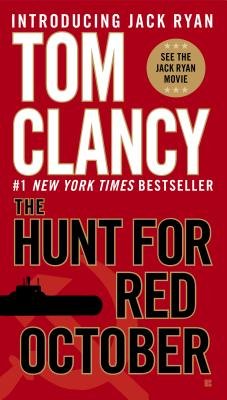
The Hunt for Red October

The Hunt for Red October
Author:Tom Clancy
Category:Fiction
Published:October 1, 1984
Pages:387
ISBN:9780870212857
Language:English
Share:

Buy Now

Description:

TL;DR

8/10. Tom Clancy’s blockbuster debut and the book that invented the modern techno-thriller, the cat-and-mouse pursuit of a defecting Soviet submarine captain and his revolutionary stealth sub, with CIA analyst Jack Ryan racing to grasp his intentions. Gripping, carefully researched, and genre-defining, if heavy on technical detail and light on character.

The Hunt for Red October by Tom Clancy is the runaway bestseller that launched his career and effectively created the modern techno-thriller. It tells the story of Marko Ramius, a Soviet submarine captain. He commands the Red October, a new ballistic-missile submarine with a near-silent stealth propulsion system, and he sets a course that sends both superpowers scrambling, while CIA analyst Jack Ryan races to work out whether Ramius intends to defect or to attack.

Meticulously researched and relentlessly suspenseful, it set the template for a whole genre of technically detailed military fiction. As a gripping, genre-defining thriller, it earns a high rating, with the caveats its style invites.

The book’s fame rests on a then-novel combination. The page-turning tension of a Cold War chase, wedded to a level of authentic military and technological detail no popular thriller had attempted.

Suspense and authenticity

The book’s twin strengths are its suspense and its authenticity. Clancy constructs a gripping cat-and-mouse pursuit across the Atlantic. He cuts between the Soviet sub, the American forces tracking it, and the political and intelligence maneuvering on both sides, with a steadily tightening tension that drives the reader forward. Underpinning all of it is the careful technical research that became Clancy’s signature. Submarines, sonar, naval tactics, and intelligence, rendered with such convincing accuracy that the book reportedly drew interest from the actual military and political establishment.

That marriage of real suspense and credible technical detail is what made the book a phenomenon and founded the techno-thriller genre.

Explore the hub

The Entertainment Hub: the thrillers that founded a genre, gathered in one place.

The Cold War template

For a writer or genre reader, the book is notable as the origin point of a durable formula: the competent professional hero (Jack Ryan, the analyst who understands what others miss), the geopolitical high stakes, the procedural authenticity, and the multi-thread plotting across military and political layers. Clancy’s success proved an appetite for fiction that takes hardware, tactics, and institutional process seriously, and a generation of military and techno-thrillers followed his template.

The Cold War backdrop gives the book genuine tension and a clear moral framework, and its influence on the thriller genre is hard to overstate, even as the specific geopolitics have become a period piece.

Keep reading

Plot, procedure, and the techno-thriller engine: Clancy’s procedural suspense, in the question of plot-driven versus character-driven storytelling.

What are the weaknesses of The Hunt for Red October?

The caveats are real and characteristic of the genre Clancy founded. The technical detail that thrills some readers bogs down others, the book devotes long passages to hardware and procedure that can read as dry or excessive to anyone not engaged by the machinery. The characterization is thin, figures tend to be competent professionals defined by role and function more than inner life, with Ryan a capable but not deeply complex hero. And the Cold War politics, gripping in 1984, now read as a historical artifact.

These are trade-offs of the procedural, plot-and-hardware-driven approach instead of flaws, and readers who enjoy that mode will find the book exemplary.

Is The Hunt for Red October worth reading?

It’s a gripping, genre-defining thriller and a genuine landmark, valuable for its tightly constructed Cold War cat-and-mouse suspense and the careful technical authenticity that became Clancy’s signature and founded the modern techno-thriller, the competent-professional hero, the procedural detail, the multi-thread military and political plotting. It earns a high rating for that suspense and influence.

It’s held from higher by the very traits that define its genre: technical detail that bogs down some readers, thin characterization built around role instead of inner life, and Cold War politics that now read as a period piece. For readers who enjoy procedural, authentic military thrillers, it’s the exemplary original. Recommended.
Frequently Asked Questions

What is the plot of Tom Clancy’s debut submarine thriller?
The story follows Marko Ramius, a Soviet submarine captain who commands the Red October, a near-silent stealth ballistic-missile submarine, on a course that sends both superpowers scrambling. CIA analyst Jack Ryan races to work out whether Ramius intends to defect or to attack. Clancy cuts between the Soviet sub, the American forces tracking it, and the political and intelligence maneuvering on both sides. That structure builds a steadily tightening cat-and-mouse tension across the Atlantic.
Why is Tom Clancy’s debut novel considered genre-defining?
I consider it genre-defining because it wedded page-turning Cold War suspense to a level of authentic military and technological detail no popular thriller had attempted before it. That combination effectively created the modern techno-thriller. It also established a durable formula: a competent professional hero, high geopolitical stakes, procedural authenticity, and multi-thread plotting across military and political layers. A whole generation of military and techno-thrillers followed that template.
What makes Tom Clancy’s submarine thriller feel authentic?
The authenticity comes from Clancy’s careful research into submarines, sonar, naval tactics, and intelligence procedure. He renders that material with such convincing accuracy that the book reportedly drew interest from the actual military and political establishment. This technical credibility, paired with real suspense, is what turned the book into a phenomenon. That marriage of accuracy and pace became Clancy’s signature and a hallmark of the genre he founded.
What are the weaknesses of Tom Clancy’s debut novel?
The technical detail that thrills some readers bogs down others, since long passages devote themselves to hardware and procedure that can read as dry to anyone not engaged by the machinery. The characterization is thin, with figures defined more by competence and role than by inner life, and Jack Ryan himself is a capable but not deeply complex hero. The Cold War politics, gripping when the book was published, now read as a historical artifact. I see these as trade-offs of the procedural, plot-and-hardware-driven approach and not outright flaws.
Who is Jack Ryan in Tom Clancy’s debut novel?
Jack Ryan is the CIA analyst who races to understand Marko Ramius’s intentions, the competent professional who grasps what others miss. This book is his first appearance, and it launches Clancy’s long-running Jack Ryan series. Ryan is capable and central to the plot, though I found him more defined by function than by inner complexity. He set the template for the analyst-hero that recurs throughout Clancy’s later work.

About the author

Tom Clancy

Tom Clancy was an American author who became synonymous with the modern techno-thriller. Born in 1947 in Baltimore, Maryland, he studied English in college and worked for years as an insurance agent, all while nurturing a deep fascination with military hardware, intelligence, and geopolitics that his poor eyesight had prevented him from pursuing through military service. Clancy's breakthrough came with…

More about Tom Clancy

Back