TL;DR
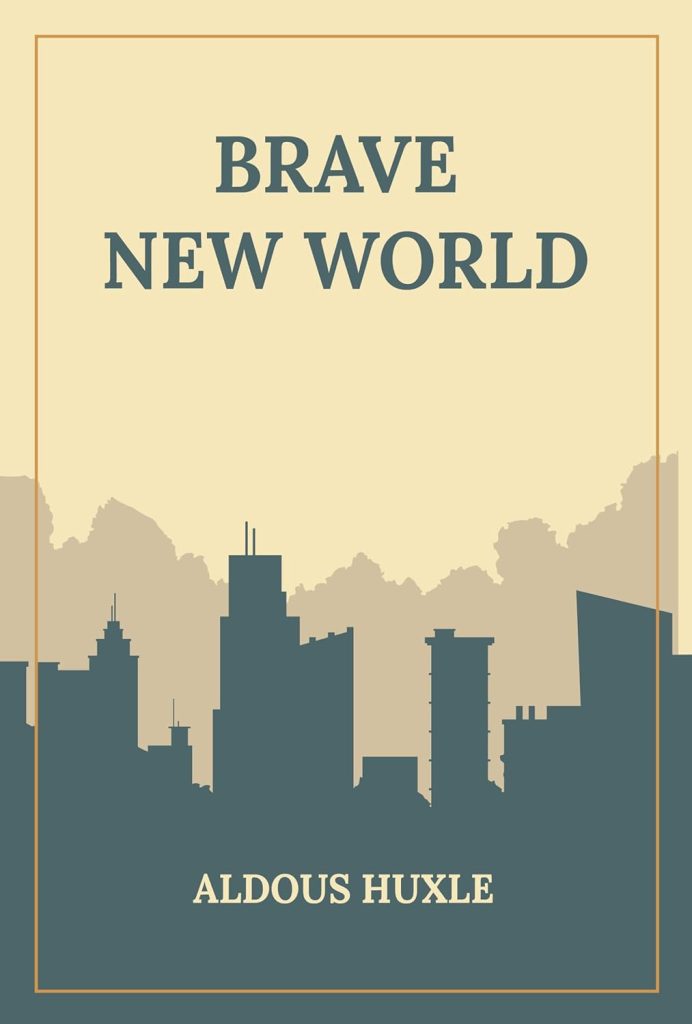
9/10. Aldous Huxley’s prophetic dystopia of a society controlled not by pain but by pleasure, engineered contentment, consumption, distraction, and a drug called soma. Often paired with 1984 as its mirror image, its warning about a population that loves its own servitude feels, to many, even more prescient. A brilliant, essential novel of ideas.
Brave New World by Aldous Huxley is one of the defining dystopian novels, and an interesting counterpoint to Orwell’s 1984. Where Orwell imagined control through pain, surveillance, and repression, Huxley imagined something subtler and, many argue, more prescient: a society controlled through pleasure, a world engineered for stability and contentment where citizens are conditioned from birth, kept docile by consumption and casual sex, and soothed by a perfect happiness drug called soma. The result is a population that loves its servitude and never thinks to rebel.
As a brilliant, idea-rich, and unnervingly relevant novel, it gets a high rating.
The book’s lasting power is its insight that the most effective tyranny might not need force at all, only the manufacture of contentment, distraction, and the elimination of any desire for freedom.
Control through pleasure
The novel’s central, prophetic idea is that those in power can control a society most effectively not by making people suffer but by making them comfortable. Huxley’s World State maintains order through engineered biology, conditioning, endless consumption, shallow entertainment, frictionless sex, and soma, the drug that erases any unhappiness, so that no one wants what they can’t have and no one questions the system. There are no jackboots because the state needs none; people are too contented and distracted to rebel.
This vision, of a populace pacified by pleasure and trivial gratification instead of crushed by force, makes the book feel so sharply relevant to a modern world of constant entertainment, consumption, and pharmaceutical comfort.
Explore the hub
The Entertainment Hub: the dystopias that shaped how we think, gathered in one place.
Watch: Brave New World (1956) - Aldous Huxley as Narrator, Roman Styran
The Huxley-Orwell contrast
Part of what makes the book endlessly discussed is its contrast with 1984. The two novels offer competing visions of how freedom dies: Orwell feared a boot stamping on a human face forever, control through pain and oppression; Huxley feared we’d come to love the technologies and pleasures that undo our capacity to think, control through gratification. Many modern readers find Huxley’s the more accurate prophecy, arguing that distraction, consumption, and engineered contentment have proven more effective than overt repression at keeping populations docile.
Reading the two together is an education in the different shapes tyranny can take, and Huxley’s contribution to that conversation is essential.
Keep reading
How societies control thought and desire: Huxley’s vision of control through pleasure, in the wider question of politics and books.
What are the weaknesses of Brave New World?
The caveats are modest. As a novel of ideas, Brave New World sometimes prioritizes its concepts over its characters and story, with figures who function partly as vehicles for the argument, so a reader seeking deep emotional engagement may find it cooler than a character-driven novel. Some of its specifics, written in the 1930s, show their age in tone and detail. And its bleak satirical vision, like Orwell’s, offers little comfort.
These are the normal characteristics of a philosophical dystopia instead of flaws, and the power and prescience of its central idea more than sustain the book.
Is Brave New World worth reading?
It’s a brilliant, essential dystopian novel and a perfect counterpoint to 1984, valuable for its prophetic vision of control through pleasure instead of pain, a society pacified by consumption, distraction, casual gratification, and a happiness drug, whose citizens love their own servitude. It gets a high rating for the depth and unnerving relevance of that idea. Many readers find it a more accurate prophecy of the modern world than Orwell’s.
It loses a little for prioritizing ideas over character and for details that show their 1930s age, the normal traits of a novel of ideas. Read alongside 1984, it’s an education in the shapes tyranny can take. Essential.