
TL;DR
9/10. A towering science fiction epic and the gold standard of integrated world-building, where ecology, religion, politics, and spice all interlock. A punishing first hundred pages and characters who can feel like chess pieces are the price. For writers, it’s a textbook on world-building and the controlled breaking of rules.
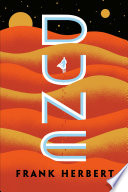
A desert planet where water is currency, giant worms guard a drug that bends space, and a betrayed heir becomes something more dangerous than a hero. Dune is one of the towering achievements of science fiction, a 1965 novel so dense with ecology, religion, politics, and prophecy that it created the template for the modern genre epic. Paul Atreides, heir to a noble house, is given control of the desert planet Arrakis, the only source of the spice that makes interstellar travel possible, and then betrayed into ruin.
What follows is part revenge saga, part messianic rise, part ecological parable.
I review it here as a writer as much as a reader, because Dune is a model of a particular kind of world-building, and also a useful warning about a few things working novelists should handle differently. It’s the best-built world in science fiction, and nothing written since has topped it.
The World Is the Achievement
Herbert built Arrakis from the ground up, and the depth is staggering. The ecology of the desert, the biology of the sandworms, the economics of spice, the religious engineering of the Bene Gesserit, the feudal politics of the Imperium. Nothing is decoration. The sandworms are tied to the spice, the spice to the politics, the politics to the religion, the religion to Paul’s rise. It’s the most thoroughly integrated invented world in the genre, and every later epic from Star Wars onward borrows from it.
The lesson for a writer is integration. Most invented worlds are a pile of cool ideas. That laziness drives me nuts. Herbert’s is a system where pulling any thread moves the others. That coherence makes Arrakis feel real instead of assembled, and it’s the highest bar in world-building.
Keep reading
World building for fiction writers: geography, culture, and story: Dune is the gold standard. This is how to build a world in which every thread connects.
Watch: Ultimate Guide to Dune | All Six Books, Quinn's Ideas
What craft choices in Dune are worth studying?
Herbert does several daring things. He head-hops deliberately, moving between characters’ inner thoughts within a single scene, a technique most modern editors forbid but which Herbert uses to build dramatic irony, letting you know what two adversaries each privately think. He front-loads invented vocabulary and trusts you to swim. He tells you the ending of scenes in advance through chapter epigraphs, then makes getting there the suspense.
These aren’t beginner moves, and a new writer who imitates them will usually make a mess of it. Herbert pulls them off through sheer nerve and command, and the head-hopping alone would get most manuscripts red-penned by a modern editor. The lesson is that the rules editors enforce are defaults for writers still learning control, and a master can break any of them for effect, but only after knowing exactly why the rule exists.
Keep reading
Writing science fiction: world-building, characters, and getting published: the craft of building a genre epic, from a writer who has done it.
The Real Caveats
It’s a demanding read. The first hundred pages bury you in terminology and politics before the story catches fire, and many readers bounce off. The characters can feel like chess pieces moved by destiny instead of fully warm people. That’s partly Herbert’s point about prophecy and partly a limit of the book. And Paul’s arc, often read as a heroic rise, is something darker that Herbert spent later books correcting readers about.
None of that dislodges it from the first rank. Dune rewards the work it demands. For a reader it’s one of the essential novels of the century. For a writer it’s a textbook on world-building and on the controlled breaking of rules. Push through the slow open and it pays off completely. A hundred punishing pages is a small price for the best damn world-building in the genre.
Explore the hub
The Entertainment Hub: stories across film, games, and books, and what writers learn from them.
Frequently Asked Questions
Other Books From – Fiction

About the author
