TL;DR
7/10. An ambitious, powerful, and disturbing grimdark fantasy debut, valuable for its momentum, moral seriousness, and bold grounding in real twentieth-century Chinese history. It gets a solid rating, held from higher by a serious originality problem, its academy-and-chosen-one structure feels familiar, and by content so extreme, including genocide and sexual violence drawn from real atrocities, that it carries a firm warning. Best entered with eyes open.
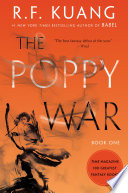
The Poppy War by R.F. Kuang is an ambitious, acclaimed, and brutal grimdark fantasy debut, the first of a trilogy that announced a major new voice in the genre. It follows Rin, a war orphan from a poor province. She aces the empire-wide examination, wins a place at the elite military academy against all expectation, and is swept into a devastating war, discovering a terrifying shamanic power as she goes.
A content note up front: this book contains extreme and graphic violence, including depictions of genocide, massacre, sexual violence, and torture, drawn from real historical atrocities. It’s not casual reading, and readers sensitive to such material should approach it knowing that.
I respect this book more than I enjoyed it. Kuang wanted readers to feel the weight of real atrocity, and she got there. The familiar frame she built around that weight bothered me a little.
Ambition and momentum
The book’s strengths are its drive and its ambition. Kuang writes with undeniable momentum.
The story moves. She’s also willing to take it into dark, morally serious territory. The cost of war. The corruption of power. The making of an avenger. That gives it a weight that lighter fantasy lacks. She roots the story in real twentieth-century Chinese history instead of the usual pseudo-medieval European template. That brings a freshness and a moral seriousness to the material, and the historical horror it draws on gives the war sections a terrible ring of truth.
For its energy, its ambition, and its refusal to look away from the true cost of conflict, the book is a strong and memorable debut.
The choice to trade the tired pseudo-European castle for real twentieth-century history is what I admire most here. Fantasy has leaned on the same borrowed Middle Ages for decades, and it’s a relief to read a writer who went looking somewhere else and came back with something that hurts.
Keep reading
Writing fantasy with real historical weight and moral seriousness: Kuang’s use of history and dark theme, in the craft of serious fantasy.
Watch: R.F. Kuang Lecture "The Poppy War in Context: Asian American Speculative Fiction" (Oct 28 2020), Dr. Erinnerung
The originality problem
The most common and most serious criticism is fair: for all its strengths, the book leans heavily on familiar structures.
The opening has a gifted poor outsider acing an exam and entering an elite academy. That reads to many as a close echo of other recent fantasy. The wider arc, from hopeful student to morally compromised survivor, can feel predetermined instead of organically discovered.
The craft is real and the combat is engaging. The architecture underneath is assembled from recognizable pieces. That produces a peculiar reading experience, gripping and familiar at once, impressive in execution yet haunted by the sense of having read its shape before. Where the historical material is fresh, the genre scaffolding around it’s not, and that tension is the book’s central weakness.
This is why I didn’t score it higher. I don’t mind a familiar shape if the writer does something new with it, but the academy chapters felt like a road I’d walked too many times, and I kept waiting for the book to turn off it.
Keep reading
The hard parts of writing fantasy, including originality: the familiar-structure problem this book wrestles with, in the real challenges of the genre.
What are the weaknesses of The Poppy War?
Beyond originality, the caveats are mostly about the content and the experience.
The brutality, while purposeful instead of gratuitous, is extreme, and the book asks a great deal of the reader emotionally, so it won’t suit everyone and should be approached with the content warning firmly in mind. The grimdark tone is relentless, with little relief. Some readers find that powerful and others find it punishing.
I don’t count the brutality against the book. Fantasy that treats war as a fun adventure does more harm than a novel that shows what war costs, and Kuang justifies her darkness. What I’d argue with is the idea that relentless equals deep. A little air would have made the blows hit harder.
And as the first of a trilogy, it opens instead of completes its larger story, though that trilogy is finished and available, unlike some. These are matters of taste and tolerance as much as quality, and they make the book a strong recommendation for the right reader and a poor fit for others.
Is The Poppy War worth reading?
It’s an ambitious, powerful, and disturbing grimdark debut, valuable for its momentum, its moral seriousness, and its bold grounding in real twentieth-century Chinese history. That brings a freshness and weight that much fantasy lacks. It gets a solid rating, held from higher by a serious and widely noted originality problem, its academy-and-chosen-one scaffolding feels assembled from familiar pieces, and by content so extreme, including genocide, massacre, and sexual violence drawn from real atrocities, that it carries a firm warning.
For a reader ready for unflinching darkness and drawn to historically grounded fantasy, it’s strong and memorable, and I’d put it ahead of any cozy war story that pretends nobody bleeds. For others, the brutality and the familiar structure will be real barriers, so go in with your eyes open.
Explore the hub
The Entertainment Hub: ambitious fantasy and the books that take real risks, gathered in one place.