TL;DR
6/10. Oxford’s authoritative, full dictionary of American English, pairing Oxford’s lexicographical rigor with an American focus, ideal for a US-market writer settling spelling, meaning, and usage. A first-rate reference, held from higher only by free, continuously updated digital dictionaries that now handle most everyday lookups.
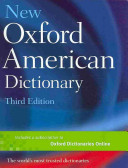
The New Oxford American Dictionary is Oxford’s flagship dictionary of American English, an authoritative, full record of the language as it is used in the United States.
For a writer working in American English, the distinction matters. The Oxford name is most tied to British usage. This is the Oxford treatment turned to American vocabulary, spelling, and idiom, making it a natural primary reference for the American market.
As a major modern dictionary judged by what it gives a writer, it’s excellent at its job, with the value and the limits any large dictionary carries.
Among the several dictionaries a writer might keep, this one’s identity is clear: Oxford’s scholarship applied to the American language, the combination a US-market writer wants. The book itself impresses me. What drags the score down has nothing to do with Oxford’s work. It’s a shame, too: thinner, faster free websites now answer most of the questions this volume was built for.
Oxford authority, American focus
The dictionary’s value is the pairing of Oxford’s lexicographical rigor with an American orientation. It gives a writer authoritative, current coverage of American English. The spellings, meanings, usage, and idiom of the language as Americans write and speak it. What it avoids are the British defaults that a writer working for a US audience must avoid.
For questions of American spelling, precise current meaning, tone, and usage, it’s a definitive reference. Its modern, large-scale coverage makes it broad enough to settle the great majority of a writer’s questions. For an American-market writer, that combination of authority and national focus is the practical sweet spot.
Keep reading
Word choice: finding the exact word, not the near-miss: the precise current meanings a strong dictionary settles, in the craft of word choice.
A record of living usage
A good modern dictionary is a record of how the language works now, and this one’s value to a writer includes its currency and its attention to real usage: the senses a word carries, the connotations and tone that determine whether it fits a given sentence, the distinctions between near-synonyms. That descriptive accuracy captures the language as it is currently used instead of as a purist might wish. For a writer, it’s exactly what helps in choosing words that read correctly to a contemporary American reader.
It documents the living language, the dictionary’s real service to anyone writing in it now.
Keep reading
Getting the most from a dictionary as a writing tool: using a dictionary for usage and nuance as well as spelling.
What are the weaknesses of New Oxford American Dictionary, Third Edition?
The caveats are those of any print dictionary in the digital age. Free, constantly updated online dictionaries now answer most quick lookups instantly, so the practical case for a print volume is weaker than it once was, and a dictionary, however authoritative, is a reference to consult instead of a book to read or a guide to writing well. A printed edition also dates as the language evolves and new words and senses emerge, where online references update continuously.
None of this is Oxford’s fault, and the dictionary itself doesn’t deserve the knock. The format is stuck fighting free, current digital tools for a writer’s everyday questions, and on speed alone it loses that fight.
Is New Oxford American Dictionary, Third Edition worth reading?
It’s an excellent, authoritative dictionary of American English, valuable to a US-market writer for pairing Oxford’s lexicographical rigor with an American focus and for documenting the living language as Americans use it. It deserves a solid place as a high-quality reference, held from higher by the realities of the form: free, continuously updated digital dictionaries now handle most everyday lookups, and any print edition dates over time.
For a writer who wants a single authoritative American dictionary on the desk, it’s a fine choice; for quick daily questions, the free online tools often win on convenience and currency. It’s a first-rate reference, and first-rate no longer counts for much when a free search box sits one click away, a sad fate for a good book.
Explore the hub
The Writing Hub: word choice, usage, and the rest of the craft, gathered in one place.
Frequently Asked Questions
Other Books From – Writing and Language