TL;DR
8/10. More than eight thousand surprising word histories in a clear, engaging style. For a writer this is more than trivia: etymology sharpens word choice and feeds the deep language-love good prose draws on. It rates above the standard dictionaries because it actively aids the craft, and unlike them, it’s a pleasure to read straight through.
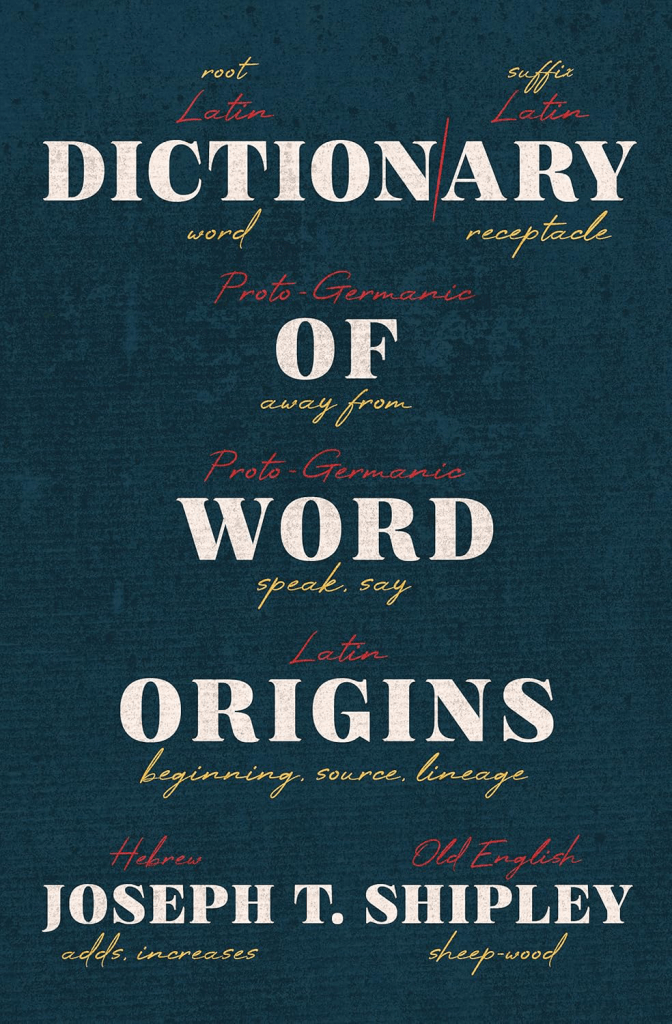
Most dictionaries tell you what a word means. The Dictionary of Word Origins by John Ayto tells you where it came from, and for a writer that’s a far more interesting and more useful thing to know. With more than eight thousand entries tracing the often surprising histories of English words, this is the rare reference that’s a pleasure to read straight through, and it deserves a higher rating than a standard dictionary because etymology is a working writer’s resource.
A word’s history is loaded with meaning a writer can use. Knowing that a term once meant something concrete, or carries the residue of an older sense, sharpens the instinct for which word is exactly right, and Ayto’s clear, informative entries make that history accessible.
Etymology as a writer’s tool
The practical case for this book is that understanding where words come from makes a writer better at choosing them. Etymology reveals the buried image inside a word, the physical metaphor at its root, the family of related terms it belongs to, and that knowledge feeds directly into precise, vivid word choice. A writer who knows a word’s history feels its connotations more keenly and can exploit the connection between words that share a root, or avoid the false friends that merely sound related.
Ayto’s entries, written in a clear and engaging style instead of dry scholarly notation, make this resource usable for someone whose business is words.
Keep reading
Etymology for writers: how word histories sharpen word choice: Ayto’s word origins put to work in the craft of choosing precise, vivid language.
A reference you read
What sets this apart from the dictionaries proper is that it rewards browsing and reading instead of only spot-checking. The surprising connections, words you’d never guess are related, meanings that have drifted or reversed over centuries, make it the kind of reference a writer dips into for pleasure and emerges from with a richer feel for the language. That readability isn’t incidental; a writer who enjoys spending time with words, turning them over and learning their histories, develops the deep familiarity that good prose draws on.
Ayto’s book feeds the love of language that underlies the craft.
Keep reading
Word choice: picking the right word, not just a correct one: etymology deepens the instinct for word choice that this skill depends on.
What are the limits of Dictionary of Word Origins?
The caveats are minor and inherent. It’s a specialized reference, so it complements instead of replaces a standard dictionary, you consult it for origins and keep the standard one for current definitions or spellings. Etymology is also a field where scholarship continues and some origins remain disputed or uncertain, so the occasional entry reflects best current understanding instead of settled fact.
And, like any reference, its value depends on a writer’s curiosity; a writer indifferent to where words come from will get less from it than one who delights in it. None of these undercut its real worth.
Is Dictionary of Word Origins worth reading?
It’s the most useful and enjoyable of the reference works a writer might keep, because etymology isn’t trivia but a direct aid to precise, vivid word choice and a feeder of the deep language-love good prose requires. It rates above the standard dictionaries here for exactly that reason: it does something for a writer’s craft that a definitions dictionary doesn’t. It loses little, only for being a specialist complement instead of a general reference and for the inherent uncertainty in some origins.
For any writer who loves words, it’s a delight and a quiet tool. Read it for pleasure and become a sharper writer by accident.
Explore the hub
The Writing Hub: word choice, language, and the rest of the craft, gathered in one place.
Frequently Asked Questions
Other Books From – English and Grammar


About the author