
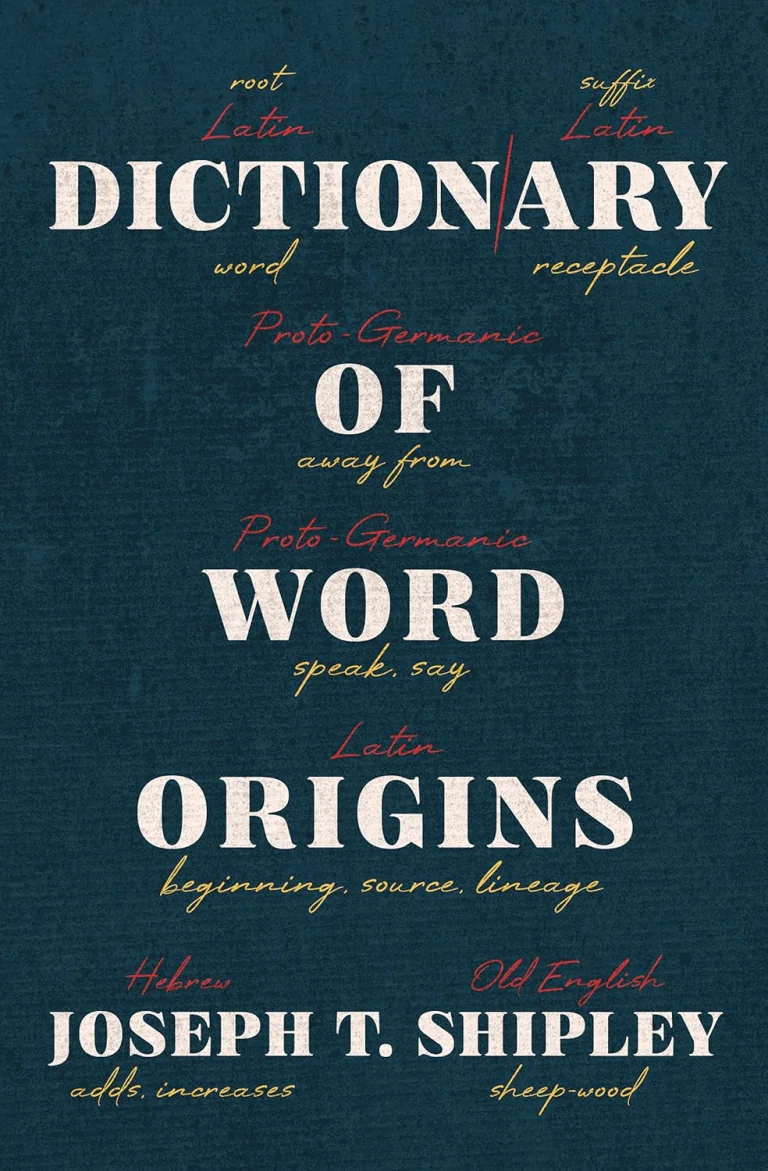
John Ayto is a British lexicographer and writer on the English language, best known for the Bloomsbury Dictionary of Word Origins, a richly browsable etymological dictionary covering the histories of more than eight thousand English words. He served as Chief Etymologist on the Bloomsbury English Dictionary and is one of the most-cited freelance lexicographers working in the English language today.
After earning a degree and conducting research on medieval English at Durham University, Ayto joined the Longman publishing house in 1974 to work on the Longman Dictionary of Contemporary English, a groundbreaking dictionary aimed at foreign learners of English. He later became managing editor of Longman's dictionary department, working on native-speaker dictionaries, and in the mid-1980s left to become a freelance lexicographer.
His freelance work has produced an unusually deep shelf of language references, including the Bloomsbury Dictionary of Word Origins, the Bloomsbury Dictionary of Euphemisms, the Oxford Dictionary of Slang, the Oxford Dictionary of Rhyming Slang, Twentieth Century Words, the Longman Register of New Words, Movers and Shakers: A Chronology of Words That Shaped Our Age, and Brewer's Britain and Ireland (with Ian Crofton). He contributed to The Oxford Companion to Food.
His method, which distinguishes his dictionaries from older etymological references, is to work forward from a word's earliest known root rather than backward from its modern form. The result is a narrative etymology in which the story of each word unfolds in roughly the order it actually happened. The Dictionary of Word Origins is widely used in MFA programs, by working writers looking for unexpected connections between words, and by language enthusiasts who treat it as a browseable history of English.
John Ayto
Professional ghostwriting for executives, founders, coaches, and authors who want to get the book done right. 113+ books authored. 54+ ghostwritten for clients.
Ready to discuss your book?
BOOK YOUR PRIVATE CONSULTATIONNo pitch. No pressure.
© 2026 Richard Lowe. The Writing King. All rights reserved.