
TL;DR: This is the most accurate fear of the bunch. AI is trained on the average, so it gives you back the average, and a book that sounds like the average sounds like everyone. The mistake is thinking you can edit your way out of it. The shallowness is built into the foundation. The fix isn’t polishing the machine’s draft.
The fix starts from your own material, in your own voice, writing toward the one specific thing the average can never hold. More on how I keep your voice on the page. Once you understand the source of the flatness, the way around it is obvious.
Will AI make you sound like everyone else?
Most of the worries in this series aim at the wrong target, but not this one.
If you hand your book to AI and ask it to write, you’ll sound like everyone else, because that’s exactly what its makers built the tool to do. I’m not going to talk you out of a fear that happens to be true. I’m going to tell you where it comes from, why editing won’t save you, and what fixes it.
This one matters to me more than most of the AI questions I get, because voice is the whole job. People hire a ghostwriter so the book sounds like them, and a book that sounds like everybody fails the only test I care about, which is whether the reader stays engaged. Whatever tool touched the draft, what I want to know is whether a reader can hear a person on the page.
Get the source of the problem right and the fix becomes obvious. Get it wrong, which most authors do, and you spend a year polishing a draft that was never going to come alive no matter how much work you poured onto its surface.
Why does AI make everyone sound the same?
AI learned to write by reading a staggering amount of what other people already wrote. When you ask it for a chapter, it gives you the center of all of it. The argument most people make, the example most people use, the conclusion most people reach, smoothed into competent sentences. That’s the definition of average, and average is the opposite of a voice.
A voice is the place where you don’t sound like the crowd, where the sentence takes a turn no algorithm would predict because no algorithm was ever exposed to your particular way of seeing things.
The machine can’t give you that turn. It can’t give it to anybody, because it doesn’t have access to the material that produces it. It’s the average. You have the specific. That’s the actual asset you bring to a book, and it’s the one thing the machine structurally can’t reproduce, no matter how good the model gets. I’ve written more about the structural reasons in why AI prose is shallow by design, and the short version is that shallowness isn’t a bug.
That’s why I get impatient with people who promise the next model will fix it. A better model gets better at producing the average, and the average is still the problem.
Why can’t editing fix AI-sounding prose?
Authors try to rescue an AI draft by editing. They swap out the obvious words, add a personal story on top, tighten the weak sentences, do a polish pass. The result still reads dead, and they can’t figure out why. The reason is simple, and it’s structural. Flatness was never in the sentences, it lived in the foundation. The piece was built from the middle of everything, and no amount of surface work turns the middle into an edge. You can’t polish your way to a voice that was never in the draft.
Most authors learn this the slow way. They spend weeks layering personal anecdotes onto a machine draft and discover the anecdotes feel pasted on instead of woven in. They rewrite sentences and discover the rewrites read better in isolation but the chapter still has nothing to say. Eventually they figure out the problem sits below the sentences, because the whole piece was generated from the average, and editing the average only gives you a tidier average.
By the time they figure this out, they’ve lost the month they thought they were saving by starting with a machine draft.
You can’t polish your way to a voice that was never in the draft.
I see the end of that road all the time. People bring me books they tried to write with AI that turned out to be crap, and they want them fixed. The fix I’d point them toward is starting over from what the author knows, because editing the average only buys you a tidier average.
How do writers avoid sounding like AI?
A writer who wants to sound like a person works the other direction. They start from real material, your actual experience, the specific thing you saw and nobody else did, the opinion you hold that the crowd doesn’t. Then they build the book outward from that, in your voice, toward the observation only you’d think to make. The average has no access to that material. It’s yours, and it’s the part of the book worth reading.
That process is slower at the start and faster at the end.
The first hours go into getting the real material out of your head by talking it through or writing it badly in a notebook, the part most authors want to skip and shouldn’t. Those hours are the writing, because what you say in them is the foundation everything later rests on. Skip that and the book is built on the average from the first sentence, and no later effort can repair that foundation.
Writers who skip those hours to save time end up with a book that could belong to anyone, and I think that’s a terrible trade for the one book with your name on the cover.
My take
It will, if you start from a machine draft. The flatness lives in the foundation, so polishing gives you a tidier average and costs you a month. Start from your own material, the thing you saw and the opinion the crowd doesn’t hold. Talk it out or write it badly in a notebook first. Those hours are the writing. Skip them and the book could belong to anyone.
What this means for your book
The rawest, most specific, most particular thing you carry is the asset, not the liability: the story you almost didn’t include because you thought it was too small, the opinion you hesitate to put on the page because not everyone will agree, the lesson you learned the hard way that no consultant would phrase the way you do. Those are the material. The machine has none of it, and the book depends on it.
So don’t feed AI a topic and clean up what it returns. Get the real material out of your head, by talking it through or writing it badly first, and protect it from being smoothed into the average.
Let AI organize and structure around it, and use it for the transcripts, the research summaries and the dull connective sections that carry no voice. Treat it as a tool and it’ll serve you fine, but the minute you hand it your voice, you’ve given away the only part of the book worth protecting.
Keep a human on the part that’s your voice, every time, because the voice is the only thing standing between your book and every other book on the shelf. The cornerstone piece on whether AI can write your book walks through where to draw that line in detail.
Give me a clumsy book that sounds like a real person over a polished one that sounds like everyone, any day, and I think most readers feel the same. If your book sounds like the average, readers will treat it like the average, and you’ll have thrown away the one thing you had that nobody else did.
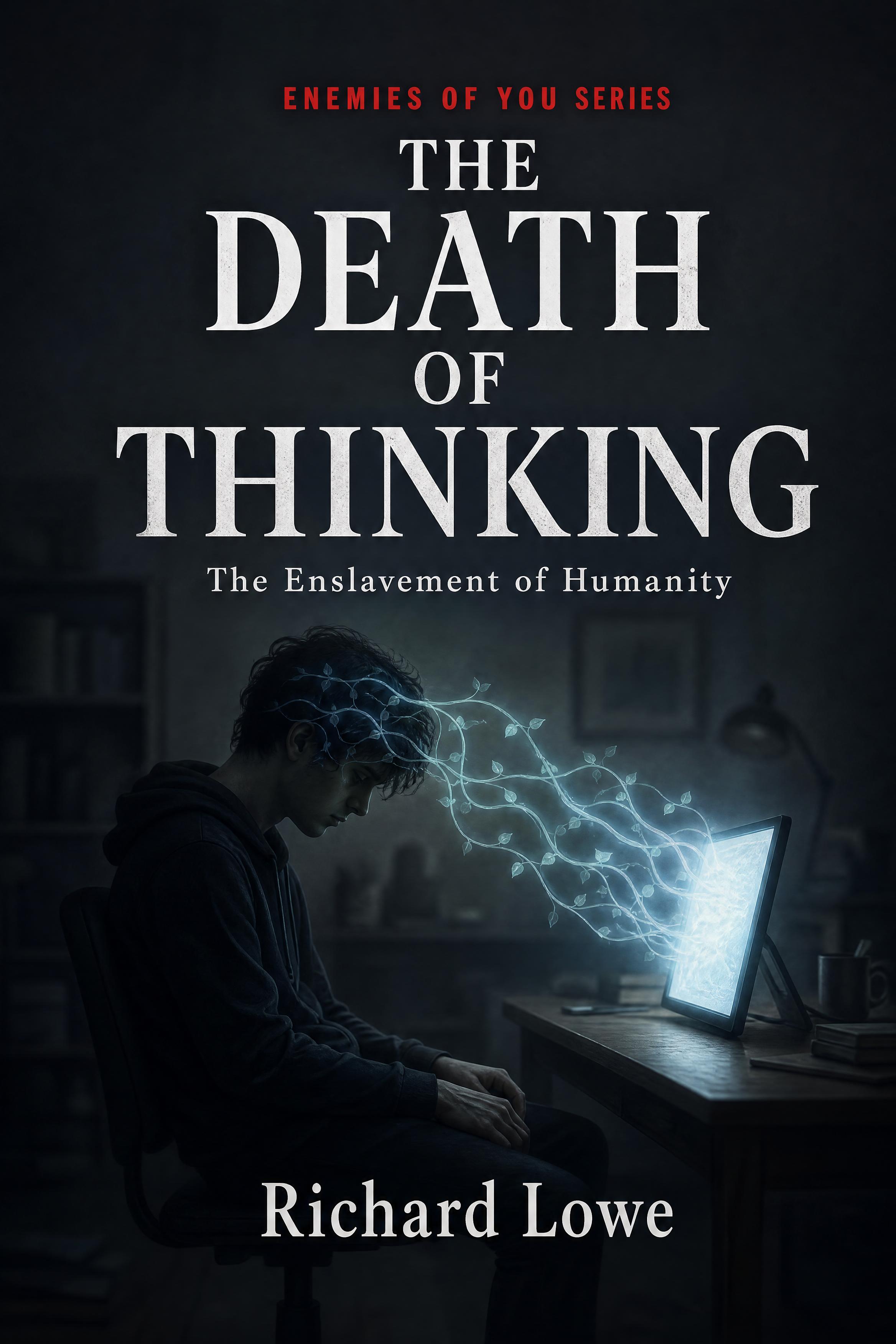
Average prose comes from average thinking handed to a machine. The Death of Thinking is my book on what outsourcing judgment costs writers, programmers, and analysts.
