
The most powerful AI model in the world got switched off on a Friday night. Not because it broke. Because the government sent a letter.
On June 12, the Commerce Department told Anthropic that no foreign national could use its two newest models, Fable 5 and Mythos 5, any longer.
Not just people overseas. Anyone who isn’t a U.S. citizen, including foreign-born people working at Anthropic itself. There was no clean way to block only those users, so Anthropic shut the models off for everyone. Every other Claude model kept running. Just the top tier went dark.
The reason, as far as anyone can tell, was a security worry.
Another company claimed it found a way to jailbreak Mythos and pull cyberattack tricks out of it. The government got nervous and dropped the hammer. Anthropic pushed back hard. They said the jailbreak was narrow, that it amounted to asking the model to read code and fix flaws, and that other public models do the same thing without anyone yanking them off the shelf. Was the government right to swing this big? I don’t know.
It’s the look of a sledgehammer aimed at a thumbtack. But that’s the government for you, and arguing about whether they overreacted skips past the part that should matter to you.
If your business runs on an AI tool, you don’t own that tool. You rent it.
Do you own the AI tools you use?
When you subscribe to Claude or ChatGPT or any of these things, you’re renting access. Same as Netflix. Same as your phone plan. The company can change the deal whenever it wants, and you get a say in exactly none of it.
I’ve watched this happen plenty of times already, in small ways. I’ve used older Claude models that simply went away. I didn’t ask for them to disappear. One day they were there, the next day I got moved to a newer model whether I liked it or not. In my case the newer ones were better, so I came out ahead. But that was luck. The company decided. I went along with it because I had no other choice.
If you want to see how much these tools differ when you’re forced to switch, I broke down the main ones in Claude versus ChatGPT versus Grok.
The Anthropic shutdown is the same thing wearing a bigger coat. A model that hundreds of millions of people used got pulled overnight. This time the order came from the government instead of the company, but the lesson lands in the same spot. The thing you depend on can vanish, and the decision happens somewhere you can’t reach.
I pay two hundred dollars a month for the top Claude plan. I use it hard. Some months I’ve come close to the ceiling. I get real value out of it, and I’m not complaining about the price or the product. But I’m clear-eyed about what I’m buying. I’m buying access that someone else controls. As long as I remember that, I can plan around it. The trouble starts when people forget it.
Ask anyone whose account got frozen overnight if you think a software company is different from the government here. I wrote about what happens when LinkedIn restricts your account with no warning. Different platform, same gut punch. You built something on top of a service, and the service decided you were done.
The News Was Loud Because Loud Sells
The way the media told this story was irresponsible. Reporters turned a narrow jailbreak, the kind of thing that happens all the time in this field, into a five-alarm fire. The headlines treated it like the end of the world. It was a normal event in a young industry, blown up to raise your blood pressure.
This one story is no worse than the rest. Every story works this way now. To get a click, the writer has to put something in there that spikes your attention. So a routine security flap becomes a crisis, and a corporate disagreement becomes a war. This isn’t new and it isn’t a conspiracy. People have been juicing their stories since before they had paper to write on. The trick is to read the loud version, find the boring fact buried inside it, and act on the fact instead of the volume.
The boring fact here is simple. A powerful tool got turned off for a while. It’ll come back, or it won’t. Either way, smart people don’t build their livelihood on a switch that somebody else can flip.
What Does Renting AI Mean If You Write With It?
This whole episode means almost nothing to your daily work if you use AI to help you write. A more powerful model went on hold. You still have a dozen tools that do the job. You open one up and keep going.
The takeaway is to stay tool agnostic, and at the level most writers work, that’s easy. Prompting Claude and prompting ChatGPT feel about the same.
I learned this from a marketing agency. When we started, they promised that if I ever left, they’d transfer all the assets to me. I fired them after about $10,000 and no return. The videos were made with AI and couldn’t be changed, so there was nothing worth transferring. The website was built in GoHighLevel, a funnel tool for marketers, and couldn’t move to WordPress. They even wanted to charge me for my own domain name. I hired a freelancer on Fiverr to retype the whole site by hand.
You ask for what you want in plain language, you get a draft, you fix it. Switching from one to the other costs you almost nothing because the skill carries over. Using AI as a real tool instead of a crutch is its own skill, and I covered that in how an AI-assisted book actually works.
That stops being true the deeper you go. The minute you build specialized prompts that only work in one tool, or workflows that lean on one company’s quirks, you’ve tied yourself down.
Now switching costs real effort. You have to test the new tool, rebuild your prompts, and figure out what broke. Staying tool agnostic is harder than it sounds, because the easy path always runs toward getting locked in. Every shortcut you take inside one platform is a small chain you’ll have to cut later.
The work of staying free is real work, and most people skip it until the day they can’t.
How Do You Build a Wall Between Your Work and the Platform?
I’ve lived by one rule for years. Never wire a tool you don’t own straight into the guts of your business. Always put a layer between yourself and the thing you’re using, so you can swap it out without breaking everything you built.
There’s a difference between using AI as a tool and baking AI into your product. Using it as a tool is safe. I prompt Claude to help me draft something, and if Claude vanished tomorrow, I’d prompt something else and lose nothing but a little time.
Never wire a tool you don’t own straight into the guts of your business.
Baking it in is the dangerous version. If your website calls an AI model every time a visitor loads a page, and that model’s company changes its prices or its rules or its whole business overnight, your site breaks and you find out from your customers.
The fix is the same fix I use for everything I don’t control.
I keep my own books, my own website, and my own voice at the center, and I treat every outside service as a part I can replace. A lot of entrepreneurs are pouring their content and their authority into AI right now. That’s fine, as long as the foundation underneath is theirs. Use AI to help build your platform. Don’t let AI be the platform.
I care about this enough to write a whole book on it. My next one, You Don’t Own Anything Anymore, is about streaming and everything else that went from something you bought to something you rent.
The whole reason a book works as a business asset is that you own it outright. That is also why expertise without authority gets you nowhere and why selling direct beats renting someone else’s storefront.
This principle has a name and a method, and it’s the spine of how I keep my whole operation from breaking when a service disappears. I’ll lay out exactly how I do it, with real examples from my own site, in a follow-up article. For now, the point is the mindset. Assume every tool you rent will someday be taken away. Build so that when it happens, you change one thing in one place and the rest of your work keeps running.
Because it’ll happen. Maybe not to you, maybe not this year. But the tension between governments and companies and the people who use these tools is just getting started. There are friendly governments and hostile ones, friendly companies and hostile ones, and they’re all going to keep fighting over who’s allowed to touch what. The Anthropic shutdown sits close to the beginning of that story. The writers who come out fine will be the ones who never confused renting with owning, and the ones who built their whole business inside somebody else’s product are going to learn the difference the expensive way.
Work With a Professional Who Understands the Difference
If you’re ready to build authority on something you own, that’s what I do. I help owners, executives, and founders turn decades of hard-won knowledge into books that carry their name and their voice, built on a platform no company can switch off.
Visit The Writing King to see more work, or contact me directly to get started.
My take
Anyone who builds a business inside a product they rent is one policy change from closing. The Anthropic shutdown proved that on a Friday night. I keep my books, my site and my voice at the center, and every outside service is a part I can swap. Do the same. Use AI to help build your platform, and never let it become the platform. Assume every tool you rent will be taken away, and plan for that day now.
People Also Ask
When you subscribe to an AI tool, you’re renting access. The company can change the deal whenever it wants, and you get a say in exactly none of it.Share on X
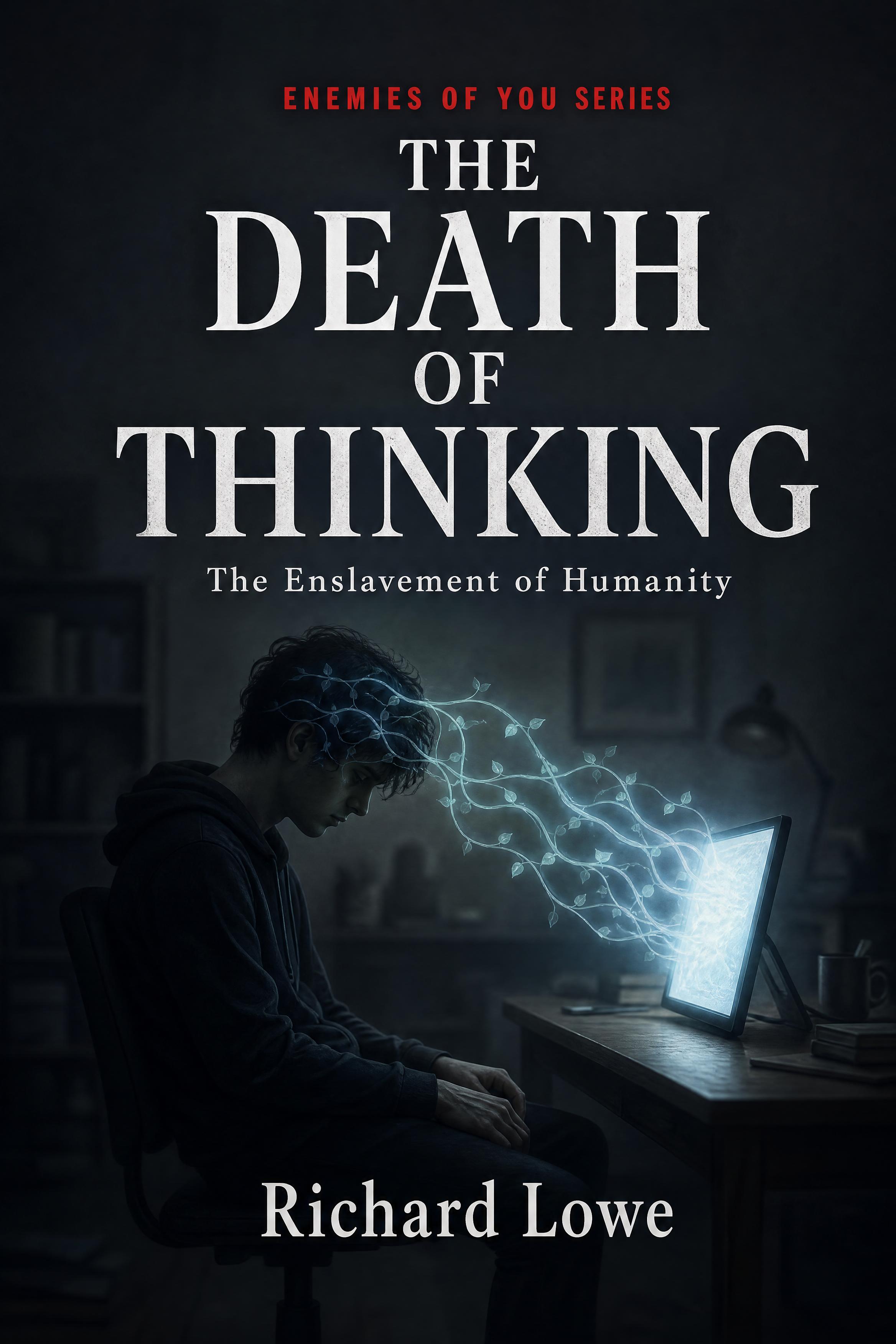
Rented tools can vanish overnight, and so can the skills you handed them. The Death of Thinking is about what outsourcing judgment costs and how the loss shows up when you need it.
I call it own the asset and rent the reach. You don’t own LinkedIn, and you don’t own YouTube. You own your website and your mailing list, the same way you own your house or your storefront. Say something wrong on LinkedIn and they can cancel your account. They can cancel it when you say everything right. I’ve seen so many people put so much effort into these channels and then lose them, and sooner or later it’s close to inevitable. A hacker might get in and blow it away.
