
TL;DR: If you think you need full ghostwriting, check which chapters you can write yourself. The technical, complex and sensitive chapters usually get ghosted, and the ones you can write but struggle to structure get coaching. That hybrid often costs less and produces a better book than full ghostwriting.
I like the hybrid model more than most ghostwriters will admit to. Some clients can write their own story chapters just fine and need help with structure and the hard material. I don’t like selling those people a full package when half the book is within their reach.
Why does the hybrid ghostwriting and coaching model cost less?
Full ghostwriting pricing depends on length and writer. Most of that fee is the writing labor itself; interviews and outlining are a smaller portion. If the author could write half the chapters with coaching support, the project cost can drop by 30 to 50 percent without compromising quality on the chapters that need professional writing. For more, see ghostwriting vs book coaching vs writing it yourself.
Full ghostwriting cost depends on the length of the book and the writer you hire.Share on X
The catch is that authors usually don’t know which chapters they can write and which they can’t until they try. The hybrid model handles this by starting with one or two chapters of pure ghostwriting (so the voice is established and the structure is set), then coaching the author through chapters they can handle, then ghostwriting the chapters they get stuck on.
When is the hybrid model the right call?
I like the hybrid model more than most ghostwriters will admit to.
Four conditions, ideally all four present. First, the author has done some long-form writing before (LinkedIn articles, a thesis, white papers, a previous book). The writing muscle exists. Second, the book covers material the author is the expert in. No amount of coaching creates expertise. It can structure expertise the author already has. Third, the author has time to write. Hybrid means the author is writing some chapters. Authors with no time should hire a full ghostwriter. Time is the condition people fudge. Clients disappear mid-book often enough that my contract puts a project on hold after 30 days without contact and treats it as abandoned at 60. In a hybrid book the author who goes quiet stalls everything, because no coach can write the chapters the author promised to write.
Fourth, the budget for full ghostwriting is tight but not impossible. The hybrid model saves money but the author has to invest time. If the budget is unlimited, full ghostwriting is faster.
Which chapters are usually ghostwritten in a hybrid book?
The opening chapter, almost always. It sets the voice and tone for the whole book. A professional writer establishes the voice, and the author then writes later chapters in that established voice.
Technical chapters where the writing demands are highest. A chapter that requires careful sequencing of complex material, smooth transitions between technical concepts, and consistent terminology is hard for most authors to write well. The ghost writes those chapters.
Sensitive chapters where the emotional or political stakes are high: the acquisition memoir chapter that names the buyer, the chapter about a family member, the business chapter that picks a fight with industry consensus.
These need professional writing for craft and for legal exposure. When a client wants to write about an ex, I brief them on the risk and show them how to change the details, and they end up liking the balanced version. I wouldn’t hand that chapter to an author with nothing but coaching notes.
The closing chapter, often. The conclusion that ties the argument together and points to action is structurally demanding. A ghost writes it cleanly.
Which chapters are usually coached in a hybrid book?
Personal story chapters where the author’s voice is the entire point. A coach helps the author find the story, structure it and refine the prose, and the author writes it. With the author holding the pen, the story goes onto the page with nobody standing in between. Case study chapters where the author lived the case. The author has the details, the timeline, the lessons. A coach helps structure the case as a chapter and tightens the prose. The author writes it.
Middle chapters of the book where the argument is established and the work is connecting the dots. A coach keeps the author on pace and structure. The author writes the prose.
In a hybrid book the ghostwriter takes the hardest chapters and the author writes the ones closest to their own experience.
How is a hybrid ghostwriting engagement structured?
Typical hybrid contract: a fixed fee for the ghostwriting work on agreed chapters (usually the first chapter, the last chapter, and 2 to 4 chapters in the middle that the author can’t write), plus an hourly rate for coaching on the rest.
Coaches bill by the hour. The author submits drafts; the coach edits, restructures where needed, and provides feedback. My writing coaching exists for exactly this. The author revises. Most chapters take 3 to 5 hours of coaching from outline through final draft.
More and more of the drafts I’m handed started in an AI tool and turned out badly. I use AI every day for transcripts, summaries and first-pass outlines, and I still do the writing, because a tool can’t tell which of the author’s sentences are worth keeping. In a hybrid book I push authors to write their own rough chapter and bring it to me, and I steer them away from handing me a machine’s version of it.
For a 12-chapter book with 4 ghostwritten chapters and 8 coached chapters, the total usually comes to a little over half of what full ghostwriting would cost.
My take
Plenty of authors who hire a full ghost could write half the book themselves. Let the ghostwriter take the technical and sensitive chapters, and the closing one too in most books. Write your own stories and case studies with a coach beside you, because those chapters exist for your voice. It costs a little over half as much and the book reads more like you. Bring me your own rough chapter. Don’t bring me a machine’s version of it.
Why don’t most ghostwriters offer the hybrid model?
Two reasons. First, the hybrid model requires the writer to work in two modes (writing and coaching) which most ghostwriters aren’t comfortable with. The coaching mode requires letting the author make choices the writer would have made differently, then editing instead of rewriting.
Second, the hybrid model is less profitable per project. The writer makes less per book, and most full-time ghostwriters prefer the higher-margin work. I understand the economics. I still think a writer who pushes full ghostwriting on an author who could write half the book is putting their own margin ahead of the client.
The working ghostwriters who offer it usually run a coaching practice alongside and have learned to switch modes. I take six to eight clients a year, and every one of those books is a months-long relationship, so I’d sooner spend part of it teaching an author to write than doing work they could’ve done themselves. Ghostwriters who never offer that choice are shortchanging the people paying them, and the author loses a book that’s partly in their own hand.
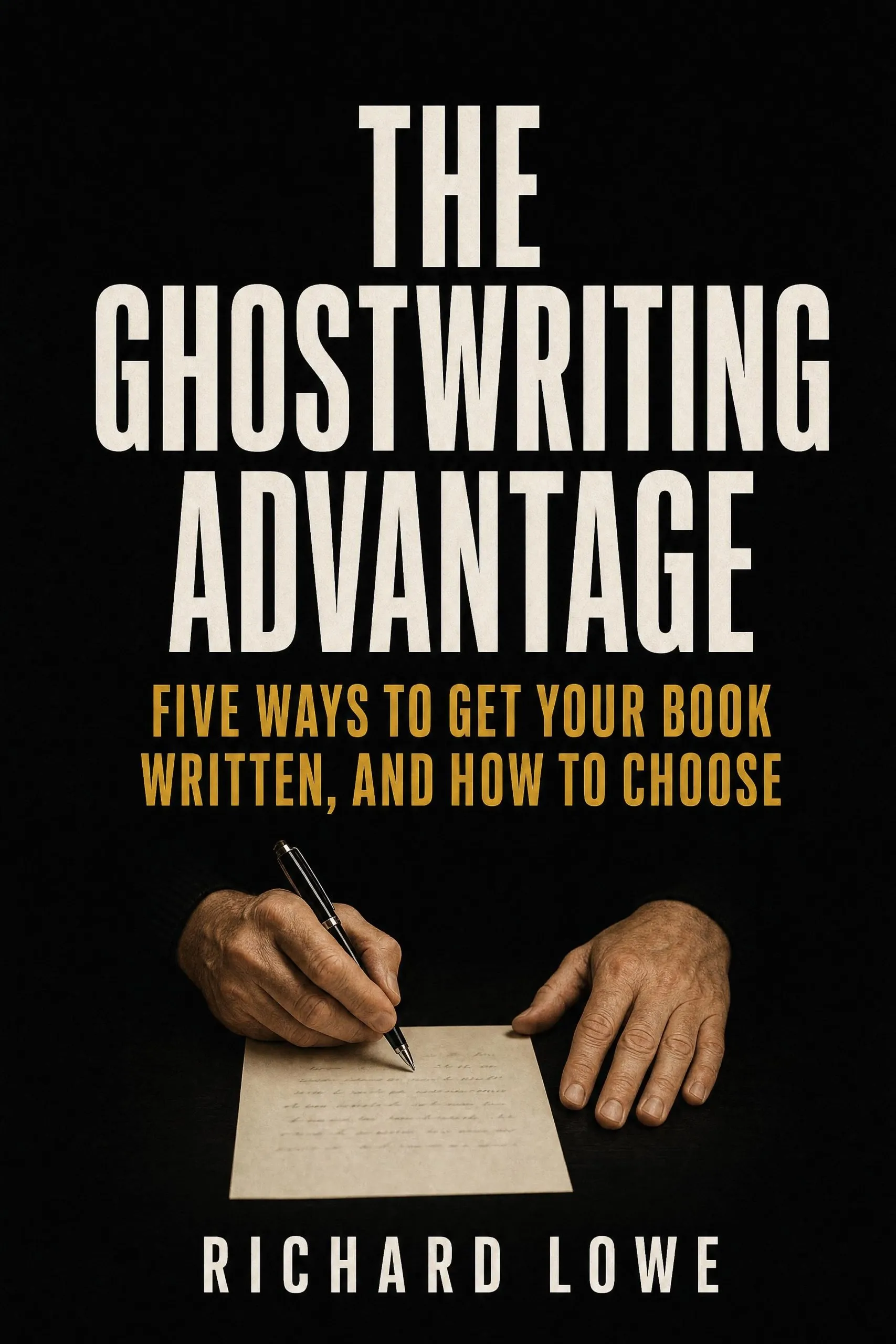
Some chapters need a ghostwriter and some need a coach. The Ghostwriting Advantage covers the ghostwriting side, how to get your book written for you.
Frequently Asked Questions
Work With a Book Coach
If you want to write the book yourself with a professional guiding the process, book coaching keeps it on track from outline to publication. Explore Book Coaching Services.
