TL;DR
5/10. A competent compact everyday dictionary, affordable, portable, and adequate for quick student and general lookups, from a reputable publisher. It rates modestly because it lacks the depth and nuance a serious writer needs, and its everyday-lookup purpose is now handled as well or better by free online dictionaries. A fine little dictionary for its narrow job.
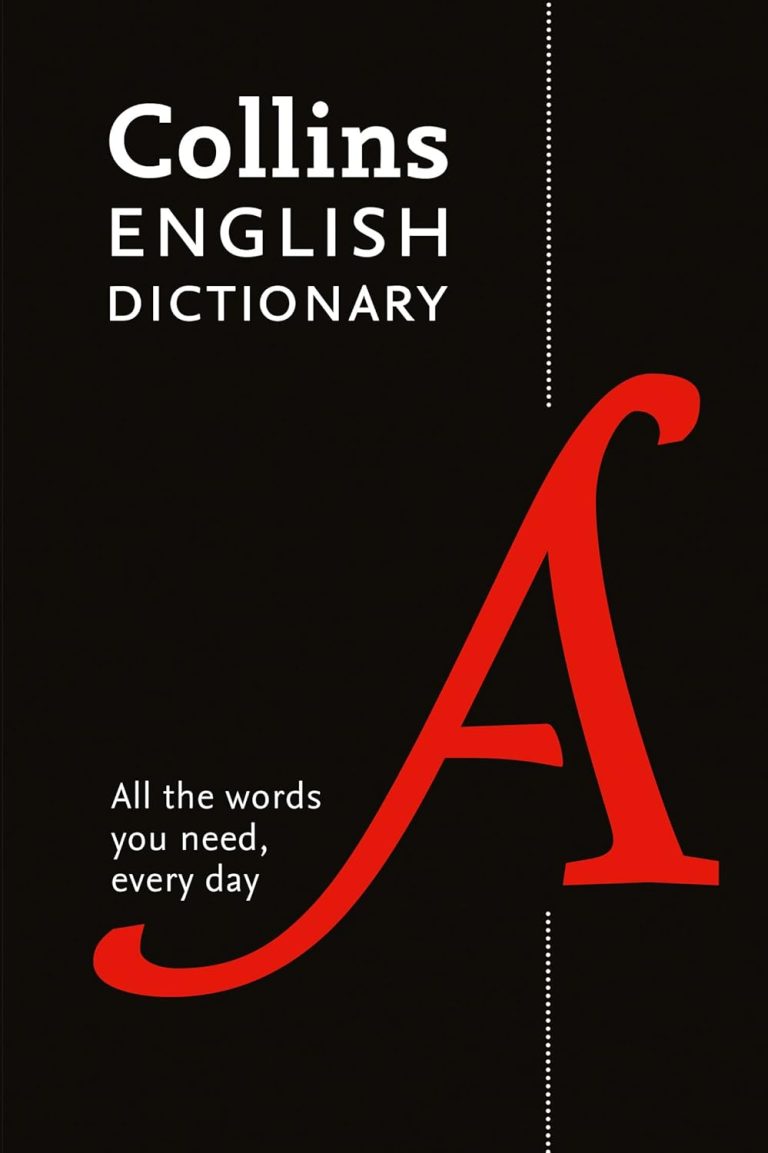
Not every dictionary is meant for the desk of a working writer. The Collins Essential Paperback English Dictionary is honest about being something more modest. A compact, affordable, everyday dictionary built for quick reference and student use, marketed for school and general daily needs with around 200,000 words and phrases. Judged for what it is, an inexpensive, portable, no-frills reference, it does its narrow job competently. Judged against the full-size dictionaries a serious writer leans on, it’s plainly the lighter tool, and the rating reflects that honest scope.
A fair assessment matches the dictionary to its purpose. This is a budget everyday and study dictionary, not a flagship desk reference, and it should be measured against that intention.
What a compact dictionary does well
The book’s value is accessibility in the most practical senses: it’s affordable, portable, and easy to use, covering the everyday words and phrases a student or general reader needs for quick lookups, spellings, basic meanings, common usage. For its target user, someone wanting a cheap, handy dictionary for school or daily reference instead of deep lexicographical work, it delivers exactly that.
There’s a real place for a no-frills, grab-it-off-the-shelf dictionary that answers the common question fast, without the bulk or cost of a full-size volume. Within that modest brief, Collins, a reputable dictionary publisher, produces a competent compact reference.
Keep reading
Choosing the right dictionary for the job: matching a compact everyday dictionary to quick lookups.
The limits of the format
The constraints follow directly from the compact design.
An essential or pocket dictionary includes fewer words and far less depth than a full-size volume. It omits rarer terms. It abbreviates definitions. It has little of the etymology, shades of meaning, usage notes, and distinctions between near-synonyms that a writer often needs for precise word choice. For a serious writer working on questions of exact meaning, tone, and shades of difference, this lighter coverage will frequently fall short, sending them to a fuller reference.
It’s a quick-answer tool, not a precision instrument. A writer trying to separate two near-synonyms with it hits a wall fast, and a dictionary that can’t help with that is no use for the work I care about.
Keep reading
Word choice: when you need depth a pocket dictionary lacks: the nuance and distinction work a compact dictionary can’t support.
The bigger context
The wider caveat, true of every print dictionary now, weighs especially on a compact one: free, full, continuously updated online dictionaries answer exactly the quick everyday lookups this book is designed for, instantly and at no cost. The practical case for a budget print dictionary is therefore weaker than it once was, since its core use, the fast common-word check, is exactly what a phone now does better.
It retains some appeal for a student needing a permitted physical reference, or anyone who prefers print, but for most everyday lookups the free digital tools have largely overtaken the niche this book was built to fill.
Is Paperback English Dictionary Essential worth reading?
It’s a competent compact everyday dictionary that does its modest job, affordable, portable, and adequate for quick student and general lookups, from a reputable publisher. It gets a modest rating because of its limited scope: it lacks the depth, fine distinctions, and range a serious writer needs, and its core everyday-lookup purpose is now handled as well or better by free online dictionaries.
For a student wanting a cheap physical reference or a reader who likes print for quick checks, it serves; for a writer doing precise work on word choice and usage, it’s too light, and a fuller dictionary or a good online tool will serve far better. It’s a fine little dictionary, and fine is the ceiling. A writer deserves a sharper tool.
Explore the hub
The Writing Hub: word choice, usage, and the rest of the craft, gathered in one place.
Frequently Asked Questions
Other Books From – Writing Reference