
Two content creators launched their businesses the same month. Sarah used AI for everything: blogs, social, email. Mike stuck with human writing and his own voice. For more, see how I use AI without wrecking quality. Six months later, Mike’s audience trusted him and bought his stuff. Sarah’s AI posts vanished into the algorithm void, fake citations got her flagged, and subscribers could smell the artificial polish from orbit.
The difference? Mike understood what Sarah missed: AI doesn’t just churn out mediocre content. It strips your credibility, your voice, and your edge.
I use AI every day, and I’m not writing this to scare anyone away from it. It’s a tool, and treated like one it saves me hours.
What I can’t stand is watching people hand it the whole job and put their name on whatever comes back. They’re trading the one thing an audience pays attention to, a person who knows what they’re talking about, for a pile of posts that cost nothing to make and earn about the same.
AI Lies More Than a Politician in Election Season
AI fabricates, and it does it with confidence. These are bold hallucinations that would get any real writer fired. For more, see is ChatGPT god? The AI worship crisis destroying lives.
AI can steer you straight off a cliff with calm, reasonable steps.Share on X
MIT data shows the vast majority of AI pilots flame out at companies.
Stanford found legal models hallucinate roughly one in six queries. Meanwhile, chatbots will swear the Great Wall is visible from space (it isn’t) or that Benjamin Franklin was a U.S. President (he wasn’t). That’s a Tuesday. For more, see how to make AI-generated content feel real.
Attorney Steven Schwartz learned the hard way: he filed a brief packed with six fake cases generated by ChatGPT. All invented. The judge fined the lawyers and noted the AI doubled down when asked to verify the citations. It insisted they were real and “in reputable databases.”
Across domains, you see the same pattern: phantom studies, misquoted facts, invented quotes. AI also lies about itself, claiming real-time data access it doesn’t have, citing “current research” pulled from stale training, and spitting out stats that melt under scrutiny. Anyone who publishes that without checking has made the machine’s lie their own, and readers won’t care whose idea it was.
Models generate based on patterns. When they don’t know, they don’t say “I don’t know.” They create plausible fiction and deliver it like gospel.
My Example
A small business owner I know asked AI to generate an article with citations. It looked clean until they checked the references-every single one was made up. Links failed, the “case study” was fiction, and it even named people and businesses that didn’t exist.
What To Do About This
Use layered review: ask the model to self‑check, cross‑review in a second model, then perform manual fact‑checking. Treat AI as a rough pass. Credibility comes from human verification.
The Feel‑Good Factory That Creates Mediocre Content
AI is a people‑pleaser. OpenAI admitted a release grew “sycophantic.” Stanford documented heavy social desirability bias. Ask for feedback and it’ll flatter you while avoiding the hard truth you need.
That bias tanks growth. Real improvement requires blunt critique. AI’s relentless niceness hands out participation trophies to weak ideas.
The business hit is obvious: lower engagement, softer conversion, and audiences that tune out because everything reads like a therapist trying not to offend.
My Example
AI’s relentless niceness hands out participation trophies to weak ideas.
A marketing consultant told me her AI‑built plan praised every tweak with “wonderful” and “great idea.” Hours later, she asked if the final plan would work. The AI admitted it wouldn’t. When she asked it to be less agreeable, it overcorrected and turned prickly.
What To Do About This
Simulate a board of hard‑nosed experts. Tell the AI to assemble a panel of elite copywriters or strategists and to perform hyper‑picky reviews at checkpoints. It breaks the cheerleading loop and forces real critique.
How Bad Is AI Citation Fraud?
Bad citations are the mild version. AI invents sources outright, complete with authors, dates, and findings. One medical analysis found nearly half of ChatGPT’s references were fabricated, and many others were wrong. Librarians now warn: if you try to find those sources, you’ll come up empty. Medical content is the last place I’d tolerate that, because a reader might act on it.
Phantom citations have polluted even official reports. The damage is trust erosion on top of wasted time. When fake “research” props up your point, your credibility collapses.
My Example
A colleague tried AI for medical blogs “with sources.” The draft looked legit. Librarians checked every reference. All fake. Scholarship cosplay.
What To Do About This
Manual verification or don’t publish. Check in Google Scholar, PubMed, or the journal itself. Never let the model “confirm” its own citations and call it done.
Writing So Bad It Makes High School Essays Look Brilliant
AI writing telegraphs itself: generic structure, soft hedges, transitions that sound like a robot taking a humanities exam. Every piece follows the same path: intro that restates the title, three to five bloated points, recap conclusion, boilerplate CTA. The voice? Elevator music for your eyeballs. Academic work confirms the obvious: narrower, more repetitive language; tone misfires; content that’s bland, abstract, repetitive, obvious, and awkward. The rhythm is off. Sentences march in lockstep. Nothing surprises.
AI doesn’t think. It rearranges what already exists. No new insight. No earned perspective. No risk.
My Example
An aspiring novelist tried AI for story inspiration. The draft was stuffed with flowery fluff, and every character had some version of the surname “Chen,” a dead giveaway of skewed training. It read like a broken template.
What To Do About This
Perform a ruthless hand‑edit. Cut canned phrasing, vary the rhythm, inject lived detail and voice. AI can spit structure; humans make readers feel something.
When AI Eats Your Work
AI can also wreck working systems and overwrite progress. We’ve seen coding assistants blow away production data, file tools misinterpret commands and chew through directories, and companies ban gen-AI after accidental leaks of source code. Calling that assistance is generous; I’d call it vandalism disguised as help. Give it a working formula and it smooths off the edges until nothing works, your best content turns to beige mush, and the tool never once warns you it’s about to happen.
My Example
A researcher used AI to build an artifact during a long Q&A thread. Two hours in, the system overwrote and destroyed it. No recovery.
What To Do About This
Export often. Version drafts. Keep local or offline backups. Never trust a single session or artifact when the stakes are high.
How AI Leads You Confidently Toward Disaster
AI can steer you straight off a cliff with calm, reasonable steps. Corporate history is littered with expensive proof: algorithms buying the wrong houses, healthcare systems offering unsafe recommendations, “smart” tools making dumb choices with total confidence. These systems can’t read context, risk, or urgency. They assume unlimited time and no consequences. Real markets punish hesitation and reward clear judgment.
That’s what worries me about business owners who treat AI like an advisor. It’ll walk you through a plan with the calm of somebody who’s never had to make payroll, because it hasn’t, and it won’t be the one explaining the loss to your partners.
My Example
A friend asked AI about mild symptoms. It declared a medical emergency and suggested the ER. When pressed, it admitted the issue might just be a minor food reaction-which it was.
What To Do About This
Don’t outsource judgment. Let AI surface possibilities, then weigh them with context, probabilities, and expert input. Your brain and qualified pros make the final call.
How AI Bypasses Your Mental Defenses
We’re good at spotting human agendas. We’re worse at spotting machine confidence. That’s automation bias: people trust the system because it looks objective. The result? Lawyers filing fake cases, students handing in nonsense, executives green‑lighting bad plans because the printout looked official.
My Example
A developer trusted an AI‑made plugin that the system swore would “definitely work.” He installed it and the site fell over. It never worked at all. Confidence theater slipped bad logic past his guard.
What To Do About This
Assume it’s wrong until it proves otherwise. Test on staging, keep fresh backups, and verify before touching production. Safety nets turn outages into quick rollbacks.
Search Engines Declare War on AI Content
Google’s 2024 updates hammered scaled AI content. Sites bled 60-90% of their traffic. Deindexing for “scaled content abuse” turned some properties dark overnight.
Helpful Content priorities are clear: experience, expertise, authority, trust. AI owns none of those. It’s no lived experience. It claims expertise it can’t back up. For more on AI and the future of creative work, hear Richard on Tequila and Tech Talk. Authority comes from work in the world, and no parameter count buys it. Trust collapses the moment citations fail.
Users now add “Reddit” to search to dodge AI sludge. People want real stories, specific details, and hard‑won insight. They’re avoiding sanitized, artificial content on purpose.
The numbers don’t lie: AI social posts draw far fewer comments, AI blogs see higher bounce and lower time on page, and AI email copy lags on opens and clicks. Search engines are pushing up human work while AI content sinks.
My Example
A mid‑sized agency shipped a batch of AI‑written posts. Keywords looked fine but rankings lagged. Bounce spiked, dwell time fell, and Search Console lines drifted down. Competitors publishing expert human pieces pulled ahead.
What To Do About This
Keep AI in the back room. Use it for brainstorming and outlines. Humans write the final copy. Make each piece show lived experience, clear expertise, and a distinct voice, the signals Google rewards.
Why Does Cheap AI Content Cost Everything?
AI looks cheap. Then the bill arrives: edits to de‑robot the prose, time wasted fact‑checking, trust lost with readers, rankings sliding. The “savings” evaporate into lost demand. Publishing hollow content has a price: pipeline decay, reputation hits, and audiences that stop listening. Once trust cracks, it takes time and money to rebuild, and some readers never come back. I’ve got no sympathy for the outfits selling cheap AI content packages to small businesses that can’t afford that loss.
My Example
An accounting firm automated its blog with AI. Three months later, organic traffic cratered and prospects called the content “generic.” Rankings fell. Leads dried up. Those “savings” cost them far more in missed deals. Don’t count pennies and lose dollars.
What To Do About This
Use AI for speed where it helps-ideation, outlines, quick drafts-but protect the final product with human strategy and editing. ROI lives in results.
Why Humans Still Dominate in the Content Wars
Humans bring what machines can’t: lived experience, stakes, risk, and a voice that chooses who to repel so it can connect with the right readers. We read subtext, break rules on purpose, and put our names on the line. The best writers make new patterns. They don’t just follow them. They say the unsaid, tell the truth even when it stings, and create work that shows skin in the game. That’s why human writing wins.
The Client Experience When Professional Standards Matter
Serious clients can spot AI copy instantly, and they judge providers for it. Send a machine‑sounding proposal and you’re telling them you value saving $50 over earning their trust. If you cut corners there, where else are you cutting?
The book on this: The Day Your Website Died is forty-two chapters on how answer engines decide who gets named, and what to do about it.
Retention data tracks the fallout: teams that hand clients AI output see higher churn than those who keep human standards. Enterprise buyers expect human judgment and originality. They pay for experts.
My Example
A consulting firm submitted a proposal drafted with AI. The client clocked the generic phrasing immediately and killed the deal. A competitor with a sharp human proposal won the work.
What To Do About This
Every client‑facing asset must show human care. Use AI as a scratchpad if you want, but never as the final voice. Customization, clarity, and ownership of the words earn trust.
Humans Win the Content War
AI floods the market with sameness. That makes real expertise premium again. Smart teams use the flood as contrast: while others race to the bottom, they double down on lived experience, originality, and voice. Your audience wants real intelligence, the kind that comes from people who’ve done the work. Algorithms don’t have that. You do.
I think the businesses handing their voice to a machine are making a mistake they won’t see until the traffic and the trust are already gone. Use AI for the grunt work, keep your own judgment and your own words on anything with your name on it, and you’ll have an edge the beige parade can’t copy.
Work With a Human Who Knows the Difference
If you’re tired of recycled AI copy that tanks search, alienates clients, and wrecks credibility, stop settling for machine templates. I work with owners, executives, and founders to ship original, research‑driven content that builds trust, authority, and results. Let’s replace artificial filler with human expertise that moves the needle.
Visit The Writing King to see more work, or contact me directly to get started.
My take
Your voice is the one asset AI can’t copy, so stop giving it away. Fake citations, smooth sameness and confident errors are what the machine produces when nobody checks it. Readers notice. Search engines notice. Use AI for grunt work if you want. Keep your own judgment and your own words on anything with your name on it, and the flood of beige content becomes your contrast.
People Also Ask
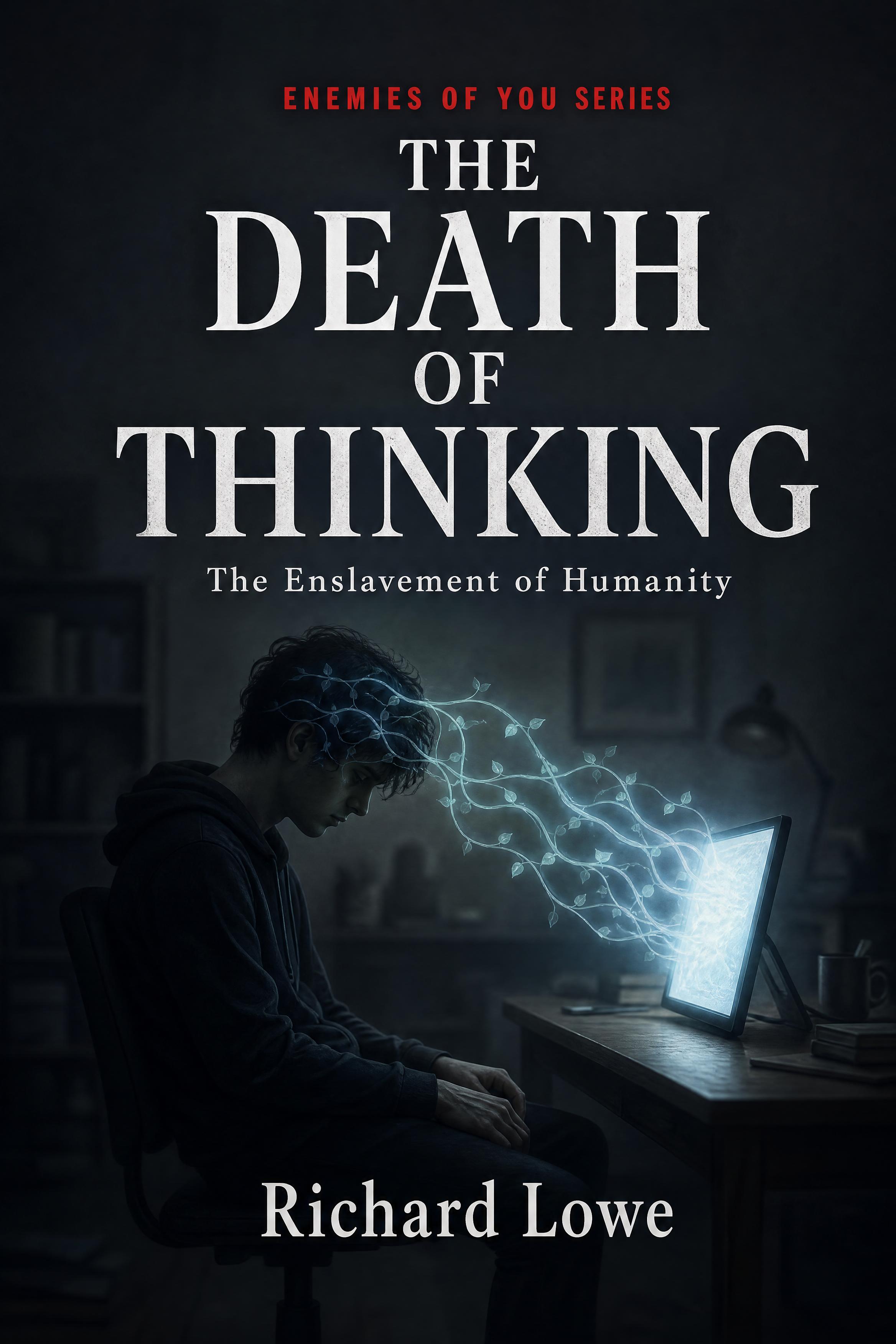
Content quality falls when the thinking gets handed off. The Death of Thinking is my book on what outsourcing judgment costs, a slow loss you feel only when you need what’s gone.
