TL;DR
7/10. An excellent American dictionary with a real point of difference for writers. Its Usage Panel reports the consensus of expert users on contested questions. The word histories and the illustration reward browsing on their own. That writer-relevant guidance rates it a notch above utilitarian dictionaries, with only the usual print-versus-online caveats.
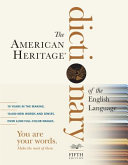
The American Heritage Dictionary of the English Language is one of the major American dictionaries, and it’s a distinctive personality among them: it’s the dictionary famous for its Usage Panel, a standing board of respected writers, scholars, and other expert users whose votes on disputed questions of usage are reported right in the entries.
That feature makes it more than a definitional reference, and it’s why I’d pick it over a plainer dictionary. It walks you through the contested questions of good usage. They’re the questions writers wrestle with.
Combined with rich word histories and lavish illustration, it’s an excellent dictionary, and rates a notch above the more utilitarian volumes for exactly that added value. What sets it apart is its stance on the oldest argument in lexicography. Should a dictionary describe how people do use words, or prescribe how they should? This one makes an elegant attempt to give the writer both.
The Usage Panel
The dictionary’s signature feature is its handling of disputed usage. It neither records all usage silently nor dictates a single rule. It convenes a panel of accomplished users of the language and reports their judgment, often as a percentage, on the contested questions, the words and constructions where careful writers disagree and where a writer wants guidance beyond a definition.
For a writer that’s uniquely valuable. It admits usage is contested. It shows where the consensus of skilled users falls. And it respects your judgment by informing instead of commanding. Grammar scolds who hand down one rule for everything are tiresome. These usage notes show you where skilled writers split and let you make the call, and that’s what a writer needs from a reference.
Keep reading
Word choice and usage: settling the contested questions: the Usage Panel’s guidance, in the craft of getting disputed usage right.
Word histories and the pleasures of depth
Beyond usage, the dictionary is known for the richness that makes it a pleasure as well as a tool.
Its etymologies and word histories are notably full, including the famous tracing of words back to reconstructed Indo-European roots, and the editions include generous illustrations. That makes browsing rewarding instead of merely functional. For a writer, that depth, the story behind a word, its precise current senses, its tone and connotation, all supports the kind of informed, precise word choice that distinguishes strong prose.
The Indo-European roots are the best part, and a curious writer could lose an hour in them. The depth has practical craft value beyond the simple pleasure of it.
Keep reading
Getting the most from a dictionary as a writing tool: using a rich dictionary for usage, history, and nuance as well as spelling.
What are the weaknesses of The American Heritage Dictionary of the English?
The caveats are those of any print dictionary now, softened by this one’s distinctive value. Free online dictionaries handle quick lookups instantly and at no cost, so the everyday case for a print volume is weaker than it was, though the Usage Panel guidance and the rich word histories are exactly the kind of edited, considered content that the quick free tools often lack. That preserves more of this dictionary’s value than a utilitarian one’s.
A print edition also dates as the language adds words and senses, where online references update continuously. And as a reference it’s a tool to consult, not a guide to writing well, though its usage notes come closer to teaching than most. A print dictionary going stale is the nature of the beast, and it hurts less here than it would with a plainer volume.
Is The American Heritage Dictionary of the English worth reading?
It’s an excellent American dictionary with a real point of difference for writers: the Usage Panel’s reporting on contested questions of usage, plus rich word histories and generous illustration, make it more than a lookup tool, a considered guide to good English and a pleasure to browse. It rates a notch above the more utilitarian dictionaries for exactly that added, writer-relevant value.
It loses a little only for the realities every print dictionary faces, free online tools for quick lookups and the dating of any fixed edition, though its usage guidance is exactly what those quick tools lack. For a writer who cares about usage and the life of words, it’s a first-rate choice. A dictionary with real character and real value.
Explore the hub
The Writing Hub: word choice, usage, and the rest of the craft, gathered in one place.