TL;DR
6/10. A useful, focused craft guide to one important and frequently mishandled element of fantasy: writing convincing magic. It offers practical, practical advice on building consistent magic systems, giving magic the rules, limits, and costs that make it generate drama instead of dissolve it. A fair, helpful primer, held to the middle by being a short, narrowly focused, self-published guide limited in depth.
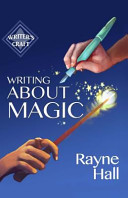
Writing About Magic by Rayne Hall is a focused craft guide for fantasy authors on one important element: how to handle magic in fiction. Crammed with information, tips, and plot ideas, it addresses the practical questions of writing convincing magic. How to build a magic system. How to make spells and powers work within consistent rules. How to use magic to drive plot instead of solve problems too easily, and how to avoid the common pitfalls that make fictional magic feel arbitrary or unsatisfying.
The focus is the appeal. Sloppy magic is one of the fastest ways to wreck a fantasy plot, and a guide aimed squarely at that problem has picked the right target.
Making magic work
The book’s value is its practical, focused attention to the craft of fictional magic. Hall addresses the real challenges.
Designing a magic system with internal consistency. Establishing rules and limits so magic doesn’t become a plot-solving cheat. Using magic to create instead of dissolve conflict, and weaving it into story and worldbuilding convincingly, offering concrete tips and plot ideas instead of abstract theory.
For a fantasy writer struggling to make their magic feel meaningful and consistent instead of arbitrary, this targeted, practical guidance addresses exactly the kind of specific problem that a general fantasy-writing book often treats only in passing. Its narrow focus lets it go deeper on magic than a broader guide could. That’s the smartest choice Hall made.
Keep reading
Magic systems with rules, limits, and real consequence: Hall’s practical approach to fictional magic, in the craft of fantasy world-building.
Avoiding the magic pitfalls
A particular strength is its attention to the common ways fictional magic goes wrong. Magic that can do anything resolves tension too easily and drains the stakes. Magic with no consistent rules feels arbitrary. Magic disconnected from character and plot becomes mere decoration. Do-anything magic is a cheat, plain and simple, and Hall is right to hammer on limits, costs, and consistency. Handled that way it generates drama instead of dissolving it.
For a writer whose magic feels too convenient or too vague, this focus on the discipline that makes magic work dramatically is useful, practical craft.
Keep reading
The craft of writing fantasy that holds together: Hall’s magic-system discipline, in the wider work of writing convincing fantasy.
What are the weaknesses of Writing about Magic?
The caveats are about depth and scope. It’s a short, narrowly focused guide, useful on its single topic but limited in depth, more a practical primer on handling magic than an exhaustive treatment, and a writer wanting a thorough exploration of magic systems may find it a starting point instead of the final word. As a self-published guide, it’s also one author’s practical approach instead of a definitive or widely vetted craft text, valuable but not authoritative.
And by design it covers only magic, one element of fantasy writing, so it’s a supplement to broader craft and worldbuilding resources instead of a complete fantasy-writing education. The thinness is a weakness, since a topic this central deserves more room than Hall gives it, but within its lane it delivers practical help.
Is Writing about Magic worth reading?
It’s a useful, focused craft guide to one important and frequently mishandled element of fantasy: writing convincing magic. It gets a fair rating for its practical attention to building consistent magic systems, giving magic the rules, limits, and costs that make it generate drama instead of dissolve it, and avoiding the common pitfalls that make fictional magic feel arbitrary or too convenient.
It’s held to that level by being a short, narrowly focused, self-published guide, useful on its single topic but limited in depth, one author’s practical approach instead of a definitive text, and a supplement to broader fantasy craft instead of a complete education. For a fantasy writer whose wizards fix every problem with a wave of the hand, it’s a needed slap on the wrist. It won’t make anyone an expert, but it goes after the dumbest habit in the genre.
Explore the hub
The Writing Hub: fantasy, magic, world-building, and the rest of the craft, gathered in one place.
Frequently Asked Questions
Other Books From – Being an Author