TL;DR
7/10. A thorough, useful alphabetical reference to Middle-earth. It maps the immense depth of Tolkien’s legendarium, the lands, peoples, histories, and languages, for readers and as a demonstration of the world-building standard Tolkien set. Held from higher by the interpretation any single-compiler guide to so vast and scholarly a subject necessarily involves.
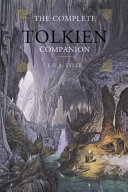
The Complete Tolkien Companion by J.E.A. Tyler is a complete reference guide to Tolkien’s Middle-earth, an alphabetical encyclopedia of its lands, legends, histories, languages, and peoples drawn from across his legendarium. For readers of The Lord of the Rings, The Hobbit, and The Silmarillion, and for writers studying perhaps the most influential fantasy world ever created, it’s a detailed companion to one of the richest fictional universes in literature.
Middle-earth is uniquely suited to this kind of treatment. Few fictional worlds have anything like its depth of invented history, geography, and language, and most fantasy settings would look thin as paper next to it. A companion to a shallow world is a waste of ink. A companion to this one makes complete sense to me.
A guide to the deepest of fictional worlds
The companion’s value is organizing the staggering depth of Middle-earth into an accessible, lookup-friendly reference. Tolkien built a world with millennia of invented history, dozens of peoples and languages, vast geography, and a detailed mythology. That’s far more than any single novel conveys, and a reader can easily lose track of names, lineages, places, and events across the legendarium. Tyler’s alphabetical companion lets a reader find who or what something is, trace a history, or untangle the relationships among the world’s elements. That deepens both the understanding and the enjoyment of the books.
Flipping back through the books to work out who somebody’s grandfather was is a chore, and this companion kills it. For finding your way through the sheer density of Middle-earth, it’s exactly the kind of map a reader of the deeper Tolkien needs.
Keep reading
Tolkien’s world-building: the depth that defined fantasy: the Middle-earth depth this companion maps, in the craft that shaped the genre.
Watch: J.R.R. Tolkien Book Review | Comparison of Complete Tolkien Guide and Encyclopedia of Tolkien | LOTR, The LOTR Gamer
The world-building lesson
For a writer, the companion is valuable as a guide to Tolkien and also as a demonstration of what the deepest world-building looks like.
That Middle-earth can sustain a thick reference volume at all, that there’s this much consistent invented history, language, and lore to catalog, is itself the lesson: it shows the great depth that made Tolkien’s world the template for the entire genre, and the kind of richness, much of it never appearing directly in the stories, that gives a fictional world its sense of reality.
Seeing it laid out is an education in the difference between a sketched setting and a fully imagined world. Most fantasy writers stop at the sketch and call it finished. That’s lazy. Tolkien set the standard, and this book shows exactly how high it sits.
Keep reading
World-building: the iceberg of invented depth beneath the story: Tolkien’s vast unseen lore as the model, in the craft of a world that feels real.
What are the weaknesses of The Complete Tolkien Companion?
A few honest notes. Tolkien’s legendarium is famously complex and was edited and expanded over decades, much of it published posthumously, and Tolkien scholarship is deep and sometimes contested, so any single-compiler companion involves interpretation and selection and may not satisfy the most exacting scholars or fully reflect every nuance of the source material. It’s also, by nature, a specialized reference for those engaged with Tolkien’s world, essential to them and irrelevant to others, and a reference to consult instead of read through.
These are the normal limits of a companion to a vast, scholarly subject instead of flaws, and the book remains a useful and well-regarded guide.
Is The Complete Tolkien Companion worth reading?
It’s a thorough, useful reference to Tolkien’s Middle-earth, valuable to readers for finding their way through the immense depth of the legendarium and to writers as a demonstration of the world-building standard Tolkien set, the richness that made his world the template for fantasy. It gets a fair, solid rating, held from higher by the inherent challenges of any single-compiler guide to so vast and scholarly a subject, the interpretation involved, the difficulty of fully capturing a complex, posthumously expanded legendarium, and its nature as a specialist reference.
For a reader going deep into Tolkien or a writer studying world-building at its richest, it’s a rewarding companion; for the casual reader, it’s more than they need. Any fantasy writer who thinks their own world is deep enough should page through this and feel a little humbled. That’s a damn good use of a reference book.
Explore the hub
The Entertainment Hub: Tolkien, fantasy world-building, and the genre’s foundations, gathered in one place.