TL;DR
10/10. One of my favorite science fiction novels and a technical masterwork. A vividly realized alien artifact carries the whole book on pure wonder. The pacing is great, and unusually there’s no antagonist at all, just the adventure into the unknown. The founding Big Dumb Object novel and a model of how mystery and awe alone can drive a story supremely well.
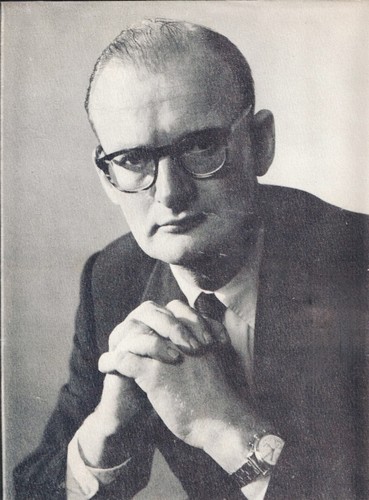
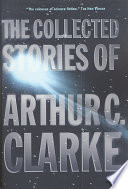
Rendezvous with Rama is among the best books I’ve ever read, and from a pure technical standpoint it’s a ten out of ten, easily. A fifty-kilometer cylindrical object enters the solar system from interstellar space, and a crew is sent to explore it before it swings around the sun and is gone. That’s the whole of Arthur C. Clarke’s 1973 classic, and it’s more than enough, because the object itself is among the great creations in science fiction.
The book swept the genre’s major awards. Hugo, Nebula, Campbell, and more. It also founded the Big Dumb Object subgenre, the story built around the exploration of a vast, enigmatic alien artifact. How well it’s built has never stopped impressing me.
Clarke was writing in the rational, hard-SF tradition at its purest: physics, exploration, and awe, executed with a craftsman’s control that, to me, makes Rama a technical masterwork.
The object as the masterpiece
What makes the book endure is Rama itself, an alien world so vividly and rigorously imagined that it acts as the novel’s true protagonist. Clarke renders the interior with clarity and scientific imagination. The cylindrical sea. The strange bands and structures. The biots. The eerie absence of any Raman. It generates real awe, the pure sense of wonder that’s science fiction’s signature pleasure.
The mystery of what Rama is, who built it, and why drives the exploration, and Clarke’s gift is making the reader feel the scale and strangeness of the thing as the crew maps it. All the world-building went, quite literally, into building a world, and as an act of imagination it’s a masterpiece.
Keep reading
The sense of wonder: science fiction’s signature pleasure: Rama as the purest example of awe driving a story, in the craft of wonder.
Watch: Rendezvous with RAMA - Arthur C Clarke (1973), In The Eyes of the Abyss.
An adventure with no antagonist
Something I find interesting and admire about the book is that there’s really no antagonist at all. There’s no villain and no enemy.
No conflict in the conventional sense. Just the adventure into the unknown, the crew and the reader confronting something vast and inexplicable and trying to understand it before it slips away. That’s an unusual thing to pull off, and Clarke makes it work completely: the mystery itself supplies all the tension a story needs.
For a writer, it’s a strong demonstration that you don’t always need an opponent to drive a narrative, that wonder, mystery, and the drive to understand can carry a novel entirely on their own. The pacing is great, the story is great, and it does it all without a single bad guy.
Keep reading
Hard science fiction: when the idea carries the story: Rama as proof that wonder and mystery can drive a novel without an antagonist.
The craft of it
What I keep coming back to is the sheer technical control. The pacing never sags despite the absence of conventional conflict; the discovery unfolds at exactly the right rhythm, each revelation timed to keep the reader leaning forward. Clarke manages the hardest trick in this kind of story, sustaining momentum on curiosity alone, and he does it with prose that’s clean, clear, and never showy, getting out of the way so the wonder can land.
People sometimes note that the human characters are thin, and it’s true that they’re functional instead of deep, but to me that’s beside the point and almost a feature: Rama is the character, the mystery is the story, and Clarke knew exactly what book he was writing. It’s a model of doing one thing supremely well.
Is Rendezvous With Rama worth reading?
It’s a ten out of ten and one of my favorite science fiction novels, a technical masterwork and a sublime act of imagination, the founding Big Dumb Object novel, an exploration of an alien artifact so vividly realized that it sustains the book on pure wonder, with no antagonist and no need for one. The pacing is great, the story is great, and the craft of sustaining a whole novel on curiosity and awe is something I have rarely seen done better.
For anyone who values the real sense of wonder that’s science fiction at its best, or any writer who wants to see how mystery alone can drive a story, it’s essential. I’ll read it again. A real masterpiece.
Explore the hub
The Entertainment Hub: science fiction classics and the ideas that drive them, gathered in one place.
Frequently Asked Questions
Other Books From – Fiction




About the author