
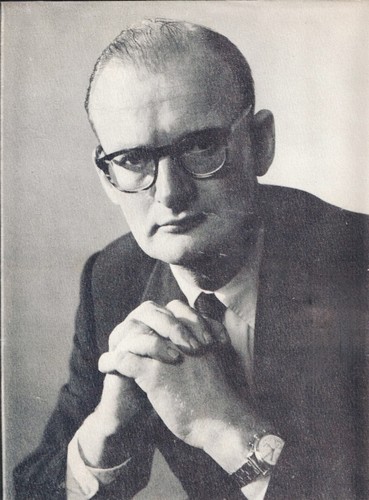
Sir Arthur Charles Clarke was a British science fiction writer, futurist, and one of the three figures, along with Isaac Asimov and Robert A. Heinlein, who defined the genre's twentieth century. Born in Minehead, Somerset, in 1917, he served as a radar officer in the Royal Air Force during the Second World War, took a first in physics and mathematics at King's College London after demobilization, and moved to Ceylon, now Sri Lanka, in 1956. He lived there until his death in 2008 at the age of 90.
In a 1945 Wireless World article titled "Extra-Terrestrial Relays," Clarke proposed using satellites in geostationary orbit as global telecommunications relays. He worked out the physics, the orbital mechanics, and the practical implications years before the first satellite was launched. The geostationary orbit at 35,786 kilometers above the equator is now widely known as the Clarke Orbit, and it carries most of the world's communications and weather satellites.
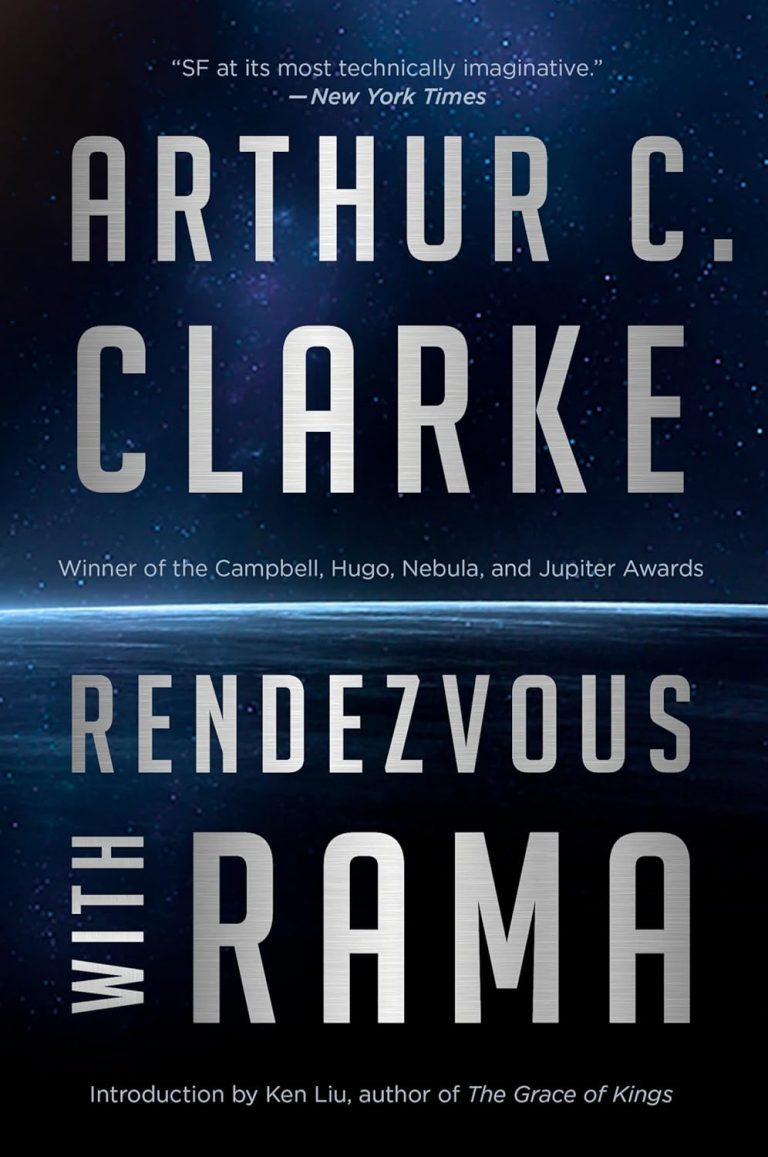
His fiction is built on a similar combination of rigorous science and a sense of cosmic awe. Childhood's End (1953) and The City and the Stars (1956) established him as a major novelist. 2001: A Space Odyssey (1968) was developed jointly with Stanley Kubrick, the film and the novel produced in parallel and released together. Rendezvous with Rama (1973) won the Hugo, Nebula, John W. Campbell Memorial, and British Science Fiction Awards. The Fountains of Paradise (1979) won the Hugo and Nebula and laid out the engineering for a space elevator in the kind of detail that has since influenced real research programs.
Clarke's Three Laws, formulated in essays across the 1960s and 1970s, are now standard reference points in discussions of technology and the limits of prediction. The third is the most quoted: "Any sufficiently advanced technology is indistinguishable from magic." He published more than seventy fiction and nonfiction books across his career, including How the World Was One (1992), a history of global telecommunications, and Profiles of the Future (1962, expanded over four decades), which holds up well as a forecasting exercise.
He was knighted in 1998 for services to literature and held the Sri Lankabhimanya, Sri Lanka's highest civil honor. He was an avid scuba diver and underwater explorer in the waters off Sri Lanka, founded an institution for modern technologies in his adopted country, and remained an active writer and public voice on science and the future until shortly before his death.
Arthur C. Clarke
Arthur C. Clarke
Professional ghostwriting for executives, founders, coaches, and authors who want to get the book done right. 113+ books authored. 54+ ghostwritten for clients.
Ready to discuss your book?
BOOK YOUR PRIVATE CONSULTATIONNo pitch. No pressure.
© 2026 Richard Lowe. The Writing King. All rights reserved.