The Master of Storytelling Restraint
You know that moment in The Matrix when Neo’s staring at the red and blue pills? Keanu doesn’t say much. Doesn’t need to. One look tells you everything, the weight of choice, the fear of truth, the courage to leap into the unknown. That’s not acting. That’s storytelling mastery.
Writers spend forever hunting for the perfect word. Keanu Reeves just found something way better: no words at all. While other actors beg for more lines, Keanu’s out here proving that shutting up might be the most powerful move in storytelling.
This isn’t some accident of casting or lucky genetics. Keanu has spent decades perfecting the lost art of narrative restraint, and every writer, screenwriter, novelist, and storyteller needs to steal his secrets.

The Weird Kid Who Became Hollywood’s Zen Master
Let’s get real about Keanu’s origin story. This guy got expelled from the Etobicoke School of the Arts in Toronto. His own explanation: he was “just a little too rambunctious and shot my mouth off once too often.” He has dyslexia, and he has said, “Because I had trouble reading, I wasn’t a good student.” Early on, agents told him his first name was “too ethnic,” and for a while he auditioned as K.C., or “Casey,” Reeves.
Most people would’ve crumbled. Keanu? He said “screw that” and leaned into exactly what made him different.
Born in Beirut, raised in Sydney, New York and finally Toronto, Keanu learned the storyteller’s first lesson: words carry weight. When you’ve moved countries more than most people change jobs, you figure out fast that good writing, like good conversation, goes way deeper than just filling pages with words. You observe. You absorb. You understand your audience before you craft your message.
His breakthrough role? Playing a slacker time-traveler in Bill & Ted’s Excellent Adventure in 1989. Hollywood tried to lock him into the “dumb surfer dude” box forever. Instead, Keanu pulled a character arc that would make any novelist jealous, he completely rewrote his own story.
Point Break. Speed. The Matrix. John Wick. Each role pushed further from what people expected, like chapters in a book that keeps surprising you. That’s story structure at the deepest level, not career management.
The most powerful moment in any story comes when someone stops talking.Share on X

Why Writers Should Study Keanu’s Silence
Keanu figured out what most writers miss: The most powerful moment in any story comes when someone stops talking.
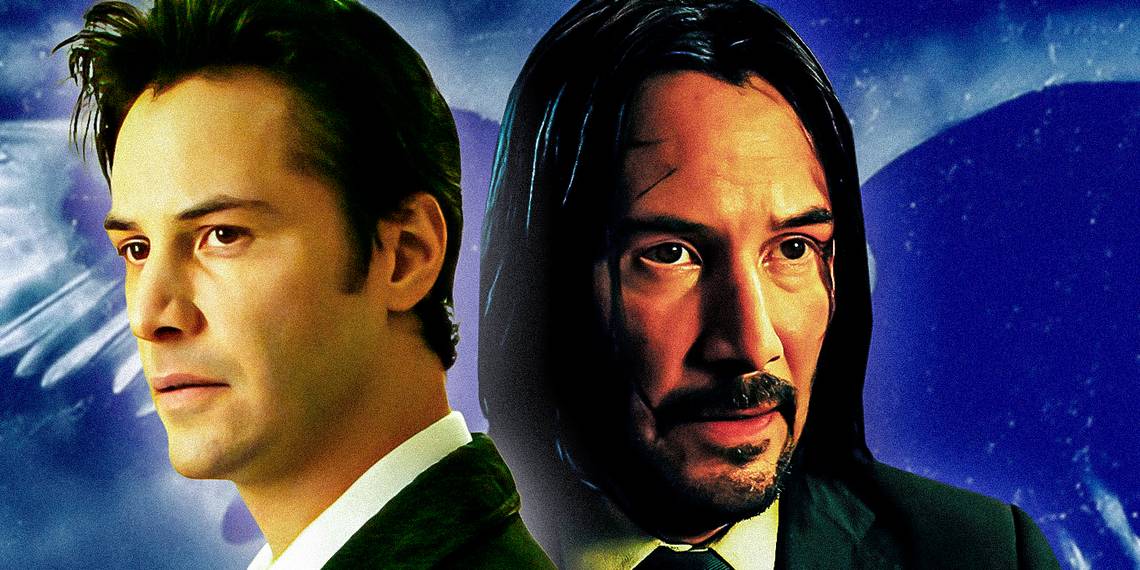
Watch John Wick lose his dog. Keanu doesn’t launch into some dramatic grief speech. He just… breaks. Quietly. You feel that gut-punch loss more than any overwrought monologue could deliver. It’s like he deleted half the script and somehow made it twice as powerful. By Chapter 4 he more or less did. He and director Chad Stahelski stripped out roughly half of Wick’s scripted dialogue, and the Wall Street Journal counted fewer than 400 words for him in a film close to three hours long. Co-writer Michael Finch told the paper, “It’s a shock when you work with him how dedicated he is to not speaking.”
Hollywood suits hate this. They want characters explaining their feelings every five minutes. Keanu just stares at them and lets the audience do the work, and people lose their minds over it.
Keanu Reeves cut about half of John Wick’s scripted lines for Chapter 4. The pause is where the story lives.Share on X
Think about your favorite Keanu moments. Neo discovering he’s “The One.” John Wick deciding to come out of retirement. That moment in Speed when he realizes the bus can’t stop. None of these scenes work because of dialogue. They work because of what’s left unsaid, the white space on the page that lets imagination fill the gaps.
The Secret Every Storyteller Needs to Learn
What drives people wild about Keanu: He thinks his audience has a brain. Radical concept, right? Most people panic and explain everything to death. They think if they don’t spell it out, nobody will get it. Keanu just gives you a look and trusts you to figure it out, and suddenly you’re emotionally invested in ways you can’t explain. His silence creates this weird space where you start filling in the gaps with your own feelings. Before you know it, you stop watching Neo and become Neo. That’s no accident. That’s genius.
Every time someone cosplays as Neo or quotes John Wick, they’re celebrating more than a character. They’re celebrating their own interpretation of that character. Keanu’s restraint made room for their imagination, the same way great novels let readers paint their own mental pictures instead of drowning them in description.
How This Changes Everything for Your Writing
For your first novel or for emails that need to sound less boring, Keanu’s got the cheat codes:
- Cut the Explaining: Delete every third explanation. If people can figure it out, let them. Their brain gets a little dopamine hit from solving the puzzle.
- Let Things Breathe: Stop cramming words into every space. Sometimes the most important thing happens in the pause between sentences.
- Make Your Characters Messy: John Wick is a killer who only wants to stay retired. That contradiction makes them real instead of cardboard. What makes your people weird and interesting?
- Trust People Aren’t Idiots: Stop explaining every joke and reference. Smart people will get it. Everyone else wasn’t paying attention anyway.
This stuff works whether you’re writing a thriller or a grocery list. And if you’re really struggling with overcoming writer’s block, remember that sometimes the best thing you can write is nothing at all. Less really can be more, if you know what you’re doing.
The Consistency That Matters
What drives people to devotion: he seems to be the same person off-screen. No big persona. Just consistency. After The Matrix Reloaded, he bought each member of the twelve-person stunt team a Harley-Davidson. He said, “I just wanted … to give a bigger thank-you to all these guys who helped me make this.” In 2022, when a groom invited him over at the bar of the English hotel where he was staying, he joined the couple’s wedding reception and posed for pictures. None of that reads like calculated PR to me. That alignment between public image and private character? That’s the holy grail of personal branding. Most people exhaust themselves maintaining different versions of themselves for different audiences. Keanu cracked the code: Be the same person everywhere. His “Internet’s boyfriend” status didn’t come from some social media strategy. It came from decades of small, consistent actions that revealed his character. That’s how real influence builds.
Why Hollywood Needs More Keanus (And So Do You)
In an age of Instagram oversharing and LinkedIn humble-bragging, Keanu’s restraint feels like a superpower. He proves you don’t need to broadcast every thought to build genuine connection.
Watch Keanu in any interview. The man listens before talking, like he’s reading the whole conversation before jumping in. He takes his time with an answer instead of rushing to fill the air.
In our age of hot takes and instant responses, this makes him seem like some kind of mystical sage. Really, he’s just being a decent human who thinks before speaking.
Want to stand out as a writer? Do what Keanu does. Let your stories end without tying every loose thread into a neat bow. Trust your readers to follow complex ideas without holding their hand. Admit when you don’t have all the answers instead of faking expertise.
In a world drowning in content, the writers who master restraint become impossible to ignore. The same principle applies whether you’re crafting convincing dialogue or building real relationships with your audience.
Your Turn to Master the Art of Less
Keanu didn’t become legendary by writing longer speeches. He figured out that the best stories happen in the quiet moments between the obvious parts, but he crafted those quiet moments like a master sculptor.
Your writing deserves that same level of intention. Whether you’re building a business, working on your first novel, or trying to write emails that don’t suck, the rules stay the same: Trust your readers. Get comfortable with silence. Let your own voice do the talking instead of drowning it in unnecessary words. We don’t need more writers screaming for attention with overwrought descriptions and fancy vocabulary. We need more storytellers like Keanu, confident enough to whisper and make people lean in to listen.
And if you’re struggling with authentic character development, study how Keanu brings depth to every role through what he doesn’t reveal instead of what he does.
Keanu Reeves proves that the most powerful stories come from knowing when to hold back. If you’re ready to master honest storytelling and build authority in your field, I can help you craft a book that captures your unique voice without the noise. Just like Keanu trusts audiences to understand his restraint, you can trust readers to connect with your real story.
Book a free consultation today to discover how strategic storytelling can transform your personal brand and establish you as a thought leader who has something worth saying.
Ready to Write Your Own Story?
Keanu Reeves’ mastery of storytelling restraint proves the power of honest communication. If you’re ready to build your own gripping narrative and establish yourself as a thought leader in your industry, I can help you craft a book that captures your voice while making you unforgettable. Just like Keanu uses restraint to create powerful stories, you can use honest storytelling to redefine your career and leave a lasting impact.
Book a free consultation today to see how I can help you create your authoritative book and build your personal brand through the power of honest storytelling.
Want to Know More?
- Ghostwriting Case Studies
- Ghostwriter Code of Conduct
- About
- Why I Give a Damn
- Celebrity Ghostwriting
- Schedule a Book Discovery Call
Reeves proves that the most powerful stories come from knowing when to hold back, a principle I explore extensively in “The Ghostwriting Advantage.” The best leaders understand that clear communication requires both strategic thinking and expert execution. If you’re ready to build your own engrossing narrative and establish yourself as a thought leader who commands respect, professional ghostwriting can help you create a book that captures your voice while making you unforgettable.
External Links
- Keanu Reeves IMDb Profile
- Keanu Reeves Wikipedia
- Keanu Reeves Cut His John Wick: Chapter 4 Dialogue Down to 380 Words – Business Insider via Yahoo
- Keanu Reeves Cut Roughly Half of His Dialogue From the John Wick 4 Script – SlashFilm
- Keanu Reeves Crashes British Couple’s Wedding – ET Online
- Keanu Reeves, Internet Boyfriend – Nylon