
TL;DR
7/10. A useful, eye-opening guide to digital privacy and self-defense, lent real weight by the author’s unmatched insider credibility as a former famous hacker turned security consultant. A defensively oriented book valuable to anyone online, including writers, though its 2017 technical specifics date fast and need verifying against current sources. The underlying awareness endures.
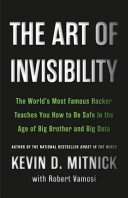
The Art of Invisibility by Kevin Mitnick is a practical guide to digital privacy and personal security from a uniquely qualified author: Mitnick was once the world’s most famous computer hacker, later turned respected security consultant, and here he turns that insider knowledge toward helping ordinary people protect themselves online. The book argues that every step we take online is tracked, stored, and exploited by corporations and governments, and offers concrete techniques for reclaiming privacy.
The framing matters. This is a consumer-protection and privacy book, teaching people to defend themselves, instead of an attack manual. Mitnick’s reformed-insider perspective is exactly what gives the defensive advice its authority. The companies harvesting our data count on people not understanding how much they’re giving away, and that business model disgusts me. A reformed hacker walking ordinary readers through how exposed they are is the kind of wake-up call I want more people to get.
The insider’s guide to privacy
The book’s value is its authoritative, practical account of how digital surveillance works and what an individual can do about it. Mitnick explains, from real expertise, the many ways people get tracked and exposed online.
Through their devices, their accounts, their communications, their habits. Then he lays out concrete defensive measures, from the basic and essential to the advanced, that a person can take to protect their data and privacy.
The credibility of the source is the point. This is advice on digital security from someone who spent years on the other side, then made a career of defense. It carries a weight generic privacy tips don’t. For a reader unaware of how exposed they are, it’s eye-opening. Mitnick’s history is why I trust him here. Generic privacy tips read like someone who’s never watched an attack unfold wrote them, and you can tell. He’s seen it from the other side, and that turns the advice from theory into something you can act on.
Explore the hub
The Technology of Writing Hub: digital tools, privacy, and security, gathered in one place.
Watch: Kevin Mitnick The Art of Invisibility Audiobook, Fadahed Jate
Why does The Art of Invisibility matter to writers?
Privacy and security aren’t abstract concerns for writers, who increasingly conduct their professional lives online, maintain public platforms, communicate with clients and publishers, and may, depending on what they write, have real reasons to protect their identity, sources, or safety. Managing a digital footprint, securing communications, and controlling exposure are practical professional knowledge for anyone working in public. The book’s tiered advice lets a writer choose the level of protection their situation warrants.
For a writer dealing with sensitive material, a public profile, or simply wanting basic digital hygiene, it’s directly useful.
I’d push every writer with a public platform to take this chapter seriously. You’re putting your name and sometimes your sources out in the world, and the people who’d exploit that don’t care that you think of yourself as small fry.
Keep reading
The writing life: protecting your work and your privacy online: the digital self-defense a public-facing writer should understand.
Is The Art of Invisibility still current?
The unavoidable limitation is that technical security advice dates faster than almost any other kind of information. The book is from 2017, and specific tools, apps, settings, vulnerabilities, and techniques have changed considerably since, so you should check the granular how-to against current sources before you rely on it, and some recommendations may simply be out of date.
The lasting value is the underlying awareness, understanding that you’re tracked, that privacy requires active effort, that defensive thinking matters, and the general principles of digital self-defense, which age far better than the specific steps. Treat the mindset as durable and the specifics as a starting point to verify. The dated specifics worry me, because a reader who follows 2017 instructions today can end up with a false sense of safety, and that’s worse than knowing you’re exposed. Take the mindset and verify every tool before you trust it.
Is The Art of Invisibility worth reading?
It’s a useful, authoritative, eye-opening guide to digital privacy and self-defense, lent real weight by Mitnick’s unmatched insider credibility and valuable to anyone, writers very much included, who lives and works online. It loses ground for the inherent fate of technical security advice: its 2017 specifics date quickly, so the granular how-to must be verified against current sources even though the underlying awareness and principles endure. Treat it as a powerful wake-up call and a sound grounding in defensive thinking, with the specific techniques checked for currency.
For digital privacy awareness, it’s well worth reading. I’d put an aging book by a man who knows the game ahead of whatever security settings a corporation picked for you, every time. For current technical steps, supplement it with something recent.
Explore the hub
The Writing Hub: the writing life, technology, and the rest of the craft, gathered in one place.
Frequently Asked Questions
Other Books From – Computers

About the author
